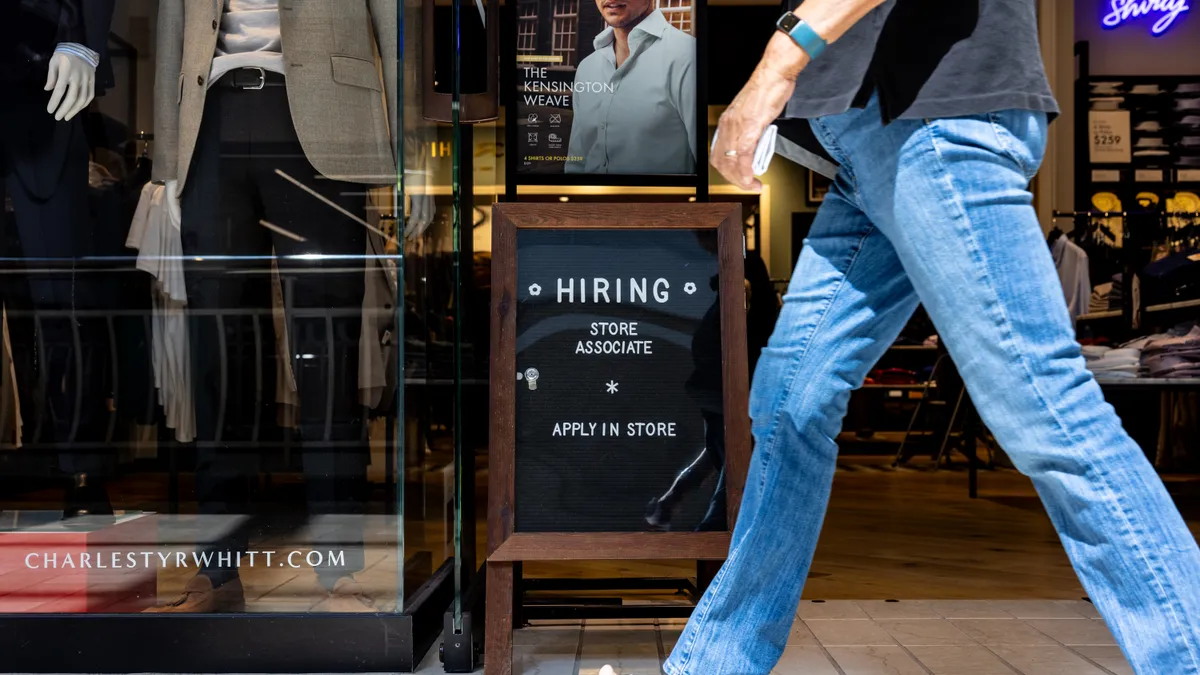
The uncertainties of 2025 are top of mind as employers calibrate their 2026 talent plans. But there’s one potential positive: It’s an employer’s market these days.
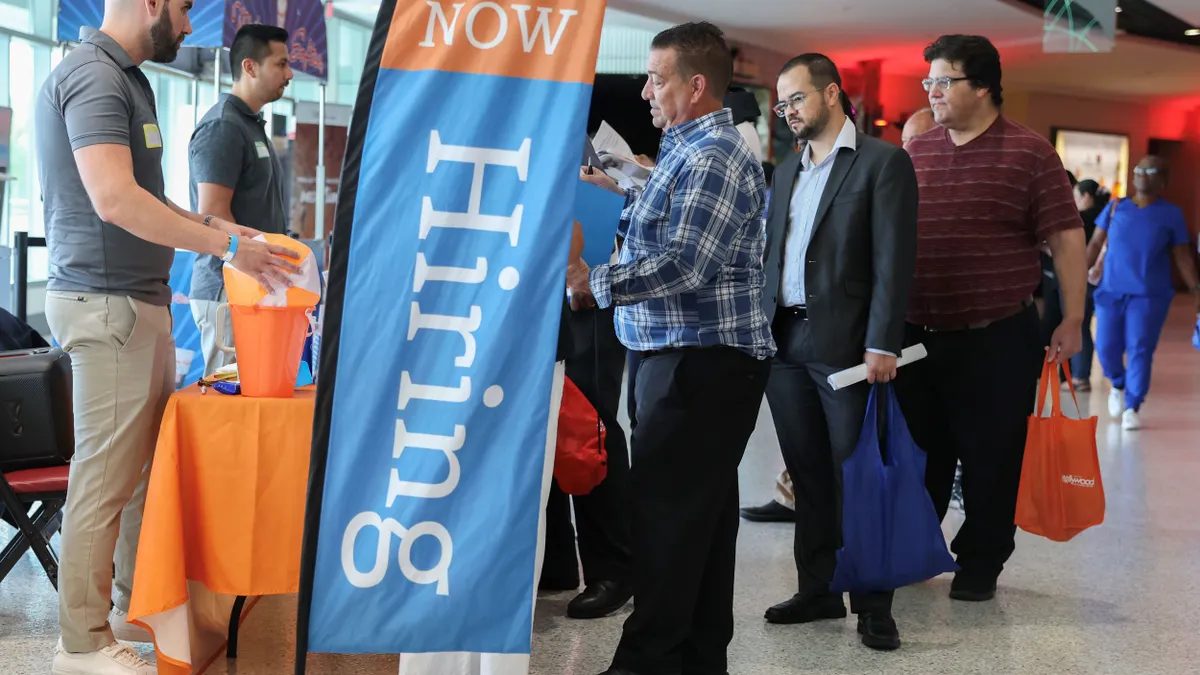
“The balance of power has shifted,” Robert Hosking, executive director of the administrative and customer support practice at Robert Half, told HR Dive. Employers are turning to precision hiring over the massive hiring sprees of years past, various reports indicate, all in the hunt for specific, high-demand skills.
But even if 2026 is the year hiring intentions rebound, no one wants to make the same mistakes of the post-pandemic years and hire too many people, experts told HR Dive.
“There’s reluctance about hiring because everyone is trying to feel out the economic situation,” Jamie Kohn, senior research director in the human resources practice at Gartner, said.
At the end of the day, the work must get done, she continued, and hiring trends reflect that pressure.
Hiring is more focused
Moving into 2026, employers intend to be more deliberate in their hiring plans, Hosking said. Even tech employers — in need of skilled talent — are reconsidering how they approach acquisition, a recent Experis report noted.
“We still have the scars of 2021,” Kohn said. “At that point, when we were coming out of the pandemic-induced recession, everyone started hiring all at once and the cost of talent skyrocketed. No one wants to be caught unaware.”
As a result, companies are now attempting to hire only who “they absolutely need,” she continued.
As for who companies are looking for, data indicates they’re focused on hires in digital, finance and HR fields, Aileen Alexander, CEO of DSG Global, told HR Dive. These are teams that are keenly important for companies attempting any kind of transformation — something that’s top of mind in the AI era.
More applicants means more work
In an employer’s market, hiring managers tend to have their pick from a pool of applicants. Still, “I don’t think any recruiter would say the work has gotten easier,” Kohn said. Companies have more applicants — but not quality applicants, she said.
Thanks to artificial intelligence, job seekers are capable of tailoring their resume to look exactly like the job description. Fake applicants are put forth by bots, Hosking said, and some programs are even applying for real people, unbeknownst to those individuals.
On top of that, great candidates may be “immediately rejected because AI is determining their application doesn’t look as good as one that was created by AI,” Hosking said.
The value of the in-person interview has only increased because of these behaviors, he continued, as behavioral-based questions are a prime way to consider an individual’s capabilities.
Candidates are more cautious, but that’s changing
Workers have been largely disinterested in leaving their current jobs, a phenomenon some have branded “job hugging.”
“The data indicate that workers are staying because they feel increasingly satisfied with their organizational culture and compensation,” Eagle Hill Consulting’s president and CEO said in October 2025, though market uncertainty also played a role, other reports showed.
That unwillingness to budge has made closing the deal with candidates more difficult, Kohn said. While pay expectations have actually decreased, she noted, workers “haven’t been interested in saying ‘yes’ to a new company unless it is worth the risk.”
But that may shift as 2026 continues, Hosking said. Employees want career growth and job progression. Employers that don’t offer as much may see more workers walk out this year, he continued.
Succession remains a sticking point
After the pandemic lockdown years, turnover was sky high. “Organizations had a tough time managing success and growth because they were constantly trying to rebuild jobs,” Hosking said.
In an employer’s market, succession becomes a top priority. Recruiters are keen to seek people with “the human skills,” Alexander said; people who are resilient, ready to learn and operate with empathy are highly sought after.
As innovation and transformation continue, leadership recruiting has opened up to executives with more varied backgrounds, including those outside their relative industries, reflecting that need for agility, she noted.
Skills are a hot ticket — and only getting hotter
Employers are keenly seeking certain skillsets, particularly anything tied to AI implementation. That goal is complicated by the fact that “no one has the skills we need because the skills are new,” Kohn said.
And though employers have power in the hiring market right now, few are willing to pay up for top talent, save for very specific instances, she continued.
“Companies are being very targeted right now where they are willing to pay a premium for skills,” she said. “I think that will continue to be the case as companies are still pretty cost constrained.”
These circumstances have prompted employers to look at upskilling differently, Hosking said. “If they don’t have the skill internally [...] they can work with existing teams or individuals to upskill that capability.” Workers who aren’t being challenged in the way they want, for example, could be prime candidates for such a program, he said.
But employers do not have the option of doing nothing — or holding job postings open for six months in search of the perfect candidate, Kohn said.
“I think we need to accept that there are many people in the job market who are capable of learning the skills,” she said, “but they may not be ready Day 1.”