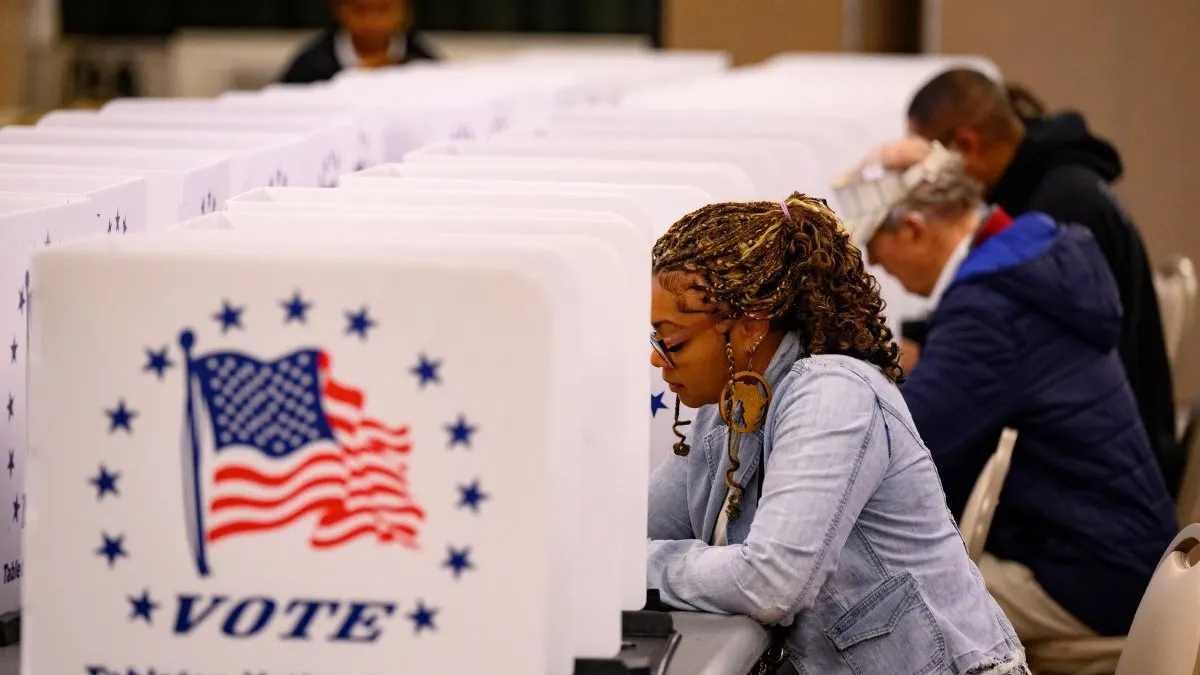
Americans took to the polls in Tuesday’s midterm elections to decide several high-stakes federal, state and local races. But workplace issues also figured into state ballot initiatives, and the success of some measures translates to an even more complicated legal landscape for employers.
Ten states asked voters to decide whether to adopt initiatives on a range of issues, from prohibitions on certain diversity, equity and inclusion programs to measures that either guaranteed a right to, or prohibited, abortion. Others dealt with state government employment issues, restrictions on gender-affirming care for minors and union organizing.
Below, HR Dive has provided a recap of these contests.
Abortion rights, reproductive healthcare access net some wins
Multiple states’ voters took to the ballot box to decide constitutional or other legal provisions for access to abortion and similar reproductive healthcare services. For the most part, ballot measures seeking to safeguard access succeeded.
Voters in both Nevada and Virginia, for example, approved amendments to their respective state constitutions guaranteeing citizens a right to abortion, with limited exceptions.
How states voted on HR issues on Election Day 2026
Nevada’s Question 6 would permit a right to abortion up until the beginning of fetal viability, with the exception that an abortion after that point would be permitted if the procedure is deemed necessary to protect a pregnant person’s life or health. Similarly, Virginia’s Question 1 proposed an amendment that would protect abortion until the third trimester of pregnancy, while permitting abortion care when medically necessary to protect the health of the pregnant person or in cases where a fetus is not viable.
The topic of abortion rights is relevant in the employee benefits context. In the aftermath of the U.S. Supreme Court’s 2022 decision in Dobbs v. Jackson Women’s Health Organization, Inc., employers signaled they might support increased paid time off, travel benefits and similar offerings for employees seeking an abortion or other reproductive healthcare. The conversation reemerged following the 2024 presidential election; WTW experts at the time cautioned employers that any new legal limits on reproductive care could affect employers’ benefit plans.
In Missouri, voters rejected Amendment 3, an initiative that would have undone a previous decision by voters to amend the state’s constitution to create a right to reproductive freedom. Conversely, voters in Idaho rejected a near-identical version of Missouri’s existing reproductive freedom amendment that would have guaranteed abortion rights up to the point of fetal viability.
A mixed result for anti-affirmative action push
As a broader backlash against DEI programs swelled during the first half of the 2020s, affirmative action became a notable target for litigation and regulatory actions. Perhaps the most significant example of this shift came courtesy of the Supreme Court’s 2023 decision striking down race-conscious university admissions programs.
Federal regulators followed suit once President Donald Trump returned to office. Trump revoked a 1965 executive order outlining the federal government’s longstanding affirmative action requirements and nondiscrimination guidance for federal agencies and contractors. That led the U.S. Equal Employment Opportunity Commission to rescind its own 40-year affirmative action guidelines, and the U.S. Department of Labor eliminated similar requirements.
Anti-affirmative action measures appeared in statewide elections Tuesday, too, but with mixed results. Arizona voters sank a proposition that would have banned the state from granting preferential treatment in employment or discriminating on the basis of race or ethnicity, among other provisions. Notably, the same proposal would have banned the state from requiring certain DEI-related commitments and training.
In Wisconsin, however, voters approved Question 3, which similarly prohibited preferential treatment by the state in employment and other contexts on the basis of race, sex, color, ethnicity or national origin.
LGBTQ+ rights take center stage in several states
Employers have seen massive legal shifts on the subject of workplace LGBTQ+ rights within the last few years, dating back to SCOTUS’ 2020 Bostock decision which determined the illegality of discrimination on the basis of sexual orientation and gender identity. The legal limits on those rights continue to be debated in federal courts and, as the new election results displayed, in states nationwide.
Voters in Arizona approved Proposition 318, the provisions of which include a requirement that educational institutions and athletic associations in the state segregate bathrooms and other private spaces by biological sex at birth. The proposal is notable given debate at the federal level as to whether similar kinds of policies cut against federal antidiscrimination laws.
On the employee benefits front, Colorado and Missouri voters were asked to weigh in on proposed gender-affirming care bans for minors. Missouri’s effort — which formed part of the aforementioned Amendment 3 — failed. Colorado’s Proposition 135, which would prohibit surgeries that alter minors’ biological sex characteristics and the use of health insurance or government funds for such procedures, was too close to call at press time.
The latter component of Prop 135 is notable given that employers have faced questions about their health insurance coverage of gender affirming care for minors in the wake of recent federal court decisions, according to SHRM.
Meanwhile, Vermont voters passed Proposal 4, which proposed amending the state constitution to guarantee equal treatment under the law regardless of race, ethnicity, sex, religion, disability, sexual orientation, gender identity, gender expression or national origin.
Vermont approves a constitutional right to unionize
Voters in the Green Mountain State also approved Proposal 3, which would grant citizens of the state the right to join or organize a labor organization for the purpose of collective bargaining. The news follows several successful union organizing efforts; in 2025, the U.S. saw its largest annual growth in union membership since 2008, according to a report by the Illinois Economic Policy Institute.
In a more niche result, Massachusetts voters signed off on a ballot initiative permitting employees of the state’s Committee for Public Counsel Services to bargain collectively.