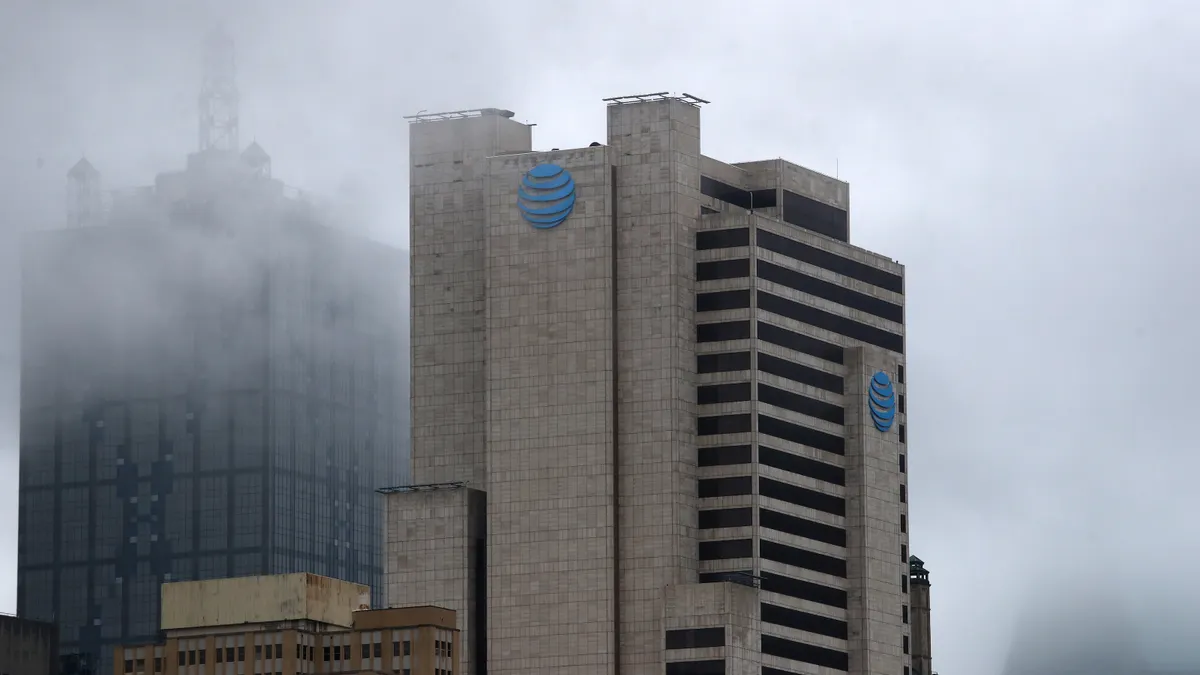
To hurry along its bid for wireless spectrum licenses from UScellular, AT&T promised the Federal Communications Commission it would end all DEI-related initiatives — a move that some strategists say threatens its talent strategies.
AT&T took care to note that it ended its DEI programs “not just in name but in substance.”
Its letter also outlined the company’s approach to workplace culture, L&D practices and employee resource groups, emphasizing that no demographic quotas are currently a part of its talent strategies or supplier initiatives.
This wide-reaching condemnation of DEI was “short-sighted,” Josh Zinner, CEO of Interfaith Center on Corporate Responsibility, told HR Dive via email. DEI has been shown to “deliver lasting value” to the companies that embrace it, he said. “This decision will make it harder for AT&T to recruit the most talented workforce and risks doing lasting damage to its brand with the wider public.”
Similarly, shareholder watchdog organization As You Sow called for AT&T to retract the policy change immediately, calling the telecommunication company’s move “a direct breach of the AT&T board’s fiduciary duty.”
The board is “clearly caving to political pressure, which puts shareholder returns at risk. We expect our board to make decisions based on pecuniary measures, not politics, and request that they retract this policy change immediately,” Andrew Behar, CEO of As You Sow, said in an email.
AT&T joins a broader trend
AT&T’s letter reflects the broader effort of business leaders working to balance workforce needs and the evolving employment law landscape resulting from President Donald Trump’s DEI-related executive orders.
For example, the “not just in name but in substance” line is a nod to an employer branding tactic recommended by workplace experts. Some DEI professionals were certain that changing the name of DEI programs would be enough.
Tractor Supply and John Deere seemingly kicked off a trend of broad DEI rollbacks, however, with Harley Davidson, Lowe’s and Ford, among others, following suit. That onslaught, however, has seemingly slowed this year.
The only other company that made big, loud anti-DEI moves in 2025, apart from JPMorgan trading DEI for “DOI,” was Paramount. The media company promised the FCC it would end DEI programs to lockdown the Skydance merger — perhaps setting a precedent for the AT&T situation.
What this means for HR
AT&T giving in to the federal government’s demands has wide-reaching implications for private workforce management, according to several corporate strategists and corporate responsibility advocates.
AT&T shaping its talent strategy based on federal pressure is indicative of a new era in the DEI wars, if the reactions of shareholder analysts and corporate strategists are any indication.
“Companies must now find ways to structure recruitment, training and internal mobility in ways that are fully compliant while still addressing skills gaps, demographic representation concerns and cultural expectations from employees and customers,” OneStopESG, a marketplace for ESG software, services and manufacturing, said in a blog post.
AT&T, for its part, said its programs would continue to be open to all, in compliance withTitle VII of the Civil Rights Act of 1964. Several employment law attorneys have told HR Dive in recent months that HR practitioners have likely not been running afoul of Title VII in their DEI programming and that “DEI” is often conflated with “affirmative action.”