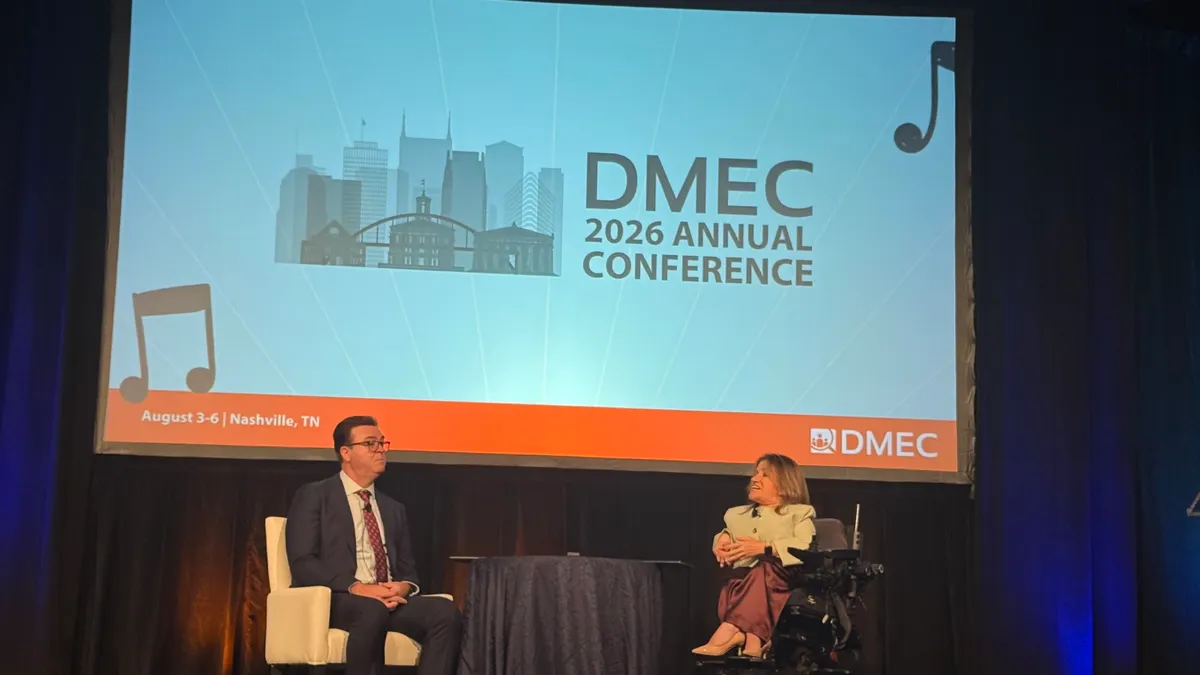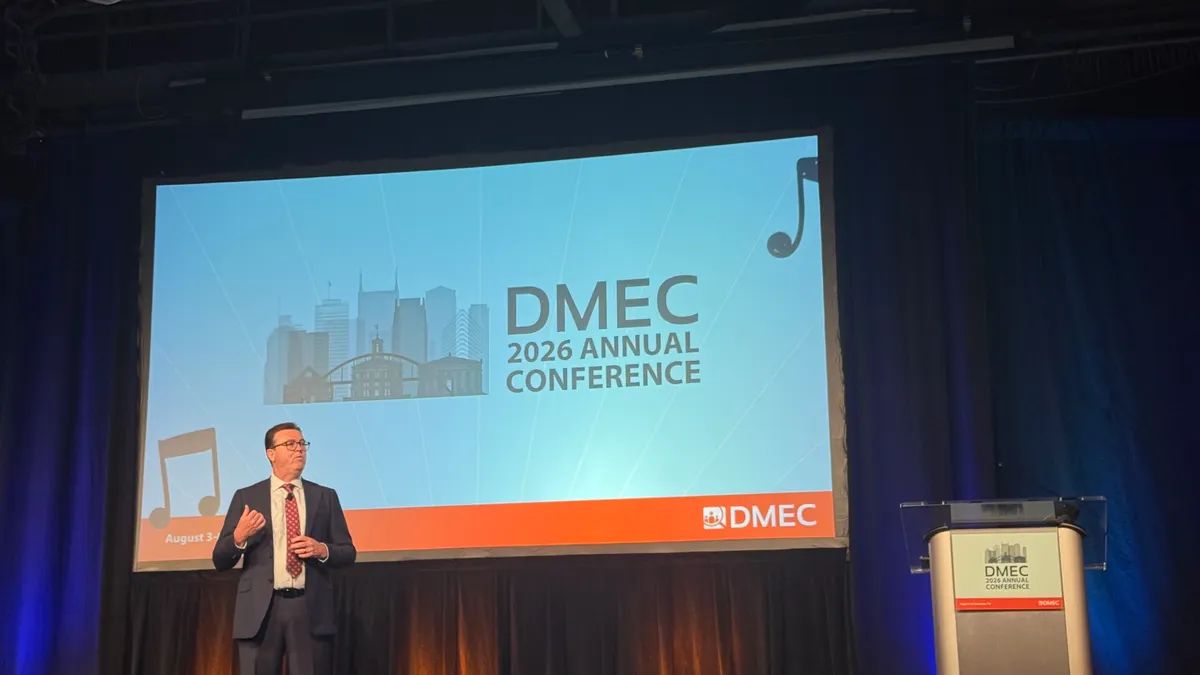
NASHVILLE, Tenn. — Bryon Bass is now in his third year leading the Disability Management Employer Coalition, but he’s no stranger to the space. Bass worked in the absence and disability management industry for two decades before becoming CEO of the organization boasting 22,000 members in the U.S. and Canada.
“These last three years were really about laying the foundation. Now you get to see what we’re building on top of it,” Bass told the more than 800 attendees Monday at the 2026 DMEC Annual Conference in Nashville, Tennessee.
Bass sat down with HR Dive to expound on trends in the industry and the future facing leave management professionals.
Editor’s note: This conversation was edited for clarity and length.
HR DIVE: What is the biggest challenge facing leave management professionals?
BRYON BASS: The biggest challenge continues to be the ever-changing laws and regulations that continue to come into play. We just need to continue to watch these policy signals to see what's happening.
The next emerging challenge is: What's artificial intelligence doing? How's AI changing the way we interact with each other and the work that we do? We don't know that yet, and we're trying to figure it out. We know that we need to keep the human in the loop. The question is: Where are there opportunities to utilize AI in a way to make an interaction from a human-to-human perspective even more effective and beneficial?
What are some of those opportunities?
When we think about the laws and the various eligibility and entitlement rules that are out there, especially for the multi-state employer, AI certainly will help the employer that doesn't have a third-party administrator or an insurance provider or a software solution of their own to potentially understand what all those requirements are and help them to be a bit more effective in how they're managing their programs.
But that said, we also know that there are limitations; in some of the testing that's been done by folks in the field, at best they're seeing 65% accuracy.
How is the role of the professional changing in the field?
The role of the practitioner has and should have always been centered around the experience of the employee and ensuring that they're being provided with accurate information that they can use, that they understand the expectations and that they have someone who can guide them or navigate them through these various factors. I don't think that changes fundamentally. What does change is how we are using technology in a different way to spend more time on the human interaction aspect of things.
Is the role of the leave management professional gaining more traction in the workplace, with the C-suite?
There are things that are happening in society in terms of the introduction of more and more paid family leave at the state level, and as a result, the awareness of leave is heightened.
You're seeing the C-suite understand that leave is a part of doing business, and if it's a part of doing business, then how do we account for that financially and in budgeting processes and things of that nature? On the other hand, you may have some C-suites that think it’s detrimental to the business, and they're maybe resistant to encouraging individuals to take the leave. It's a cultural thing.
Those who see leave as a strategic objective of the organization are the ones that are going to be the most successful at the end of the day. We need to continue to explain to the C-suite what the value of leave is.
We know leave is going to happen, right? It's going to happen. The question is: How do we prepare work groups and leaders when that happens? When individuals do take a leave, they don't necessarily have someone that comes in and picks up the work that that person was doing prior to going out on leave. Instead, the workload increases for those who are left behind, and then they end up going out on a leave a few months after the individual who was just on leave comes back because now they're stressed out and they're burned out. It's this domino effect because the business hasn't adequately prepared.
What are some of the barriers for disability accessibility in the workplace?
We still have a stigma that if you're disabled, you're less than. People don't take the time to understand that individuals who are disabled are differently abled. We still design for the able-bodied person more than we think about the population as a whole.