Dive Brief:
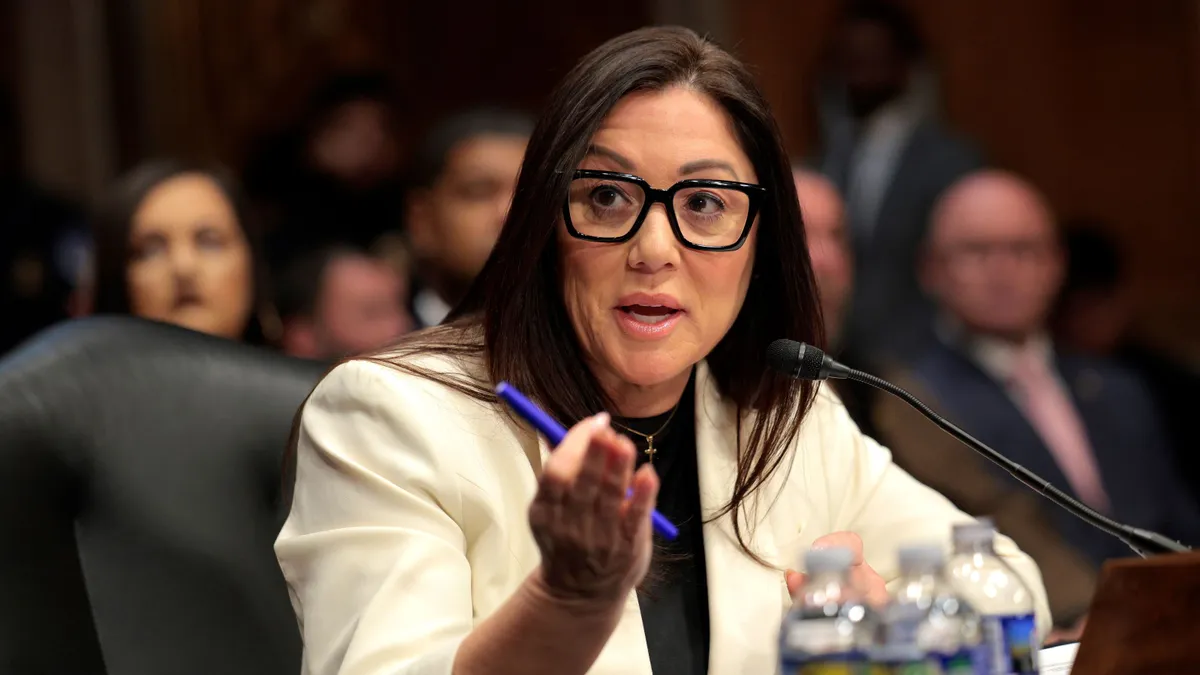
- Secretary of Labor Lori Chavez-DeRemer resigned on Monday, she confirmed in a post to her official X account, ending her tenure after just over one full year leading the U.S. Department of Labor.
- Chavez-DeRemer’s departure followed recent reports that the agency’s inspector general had launched an investigation into her potential misconduct, including contact between her family and department staff. Similar previous inquiries reportedly led to the departure of employees including Chavez-DeRemer’s chief of staff and deputy chief of staff.
- Chavez-DeRemer said in her post Monday that under her watch, DOL “created new pathways to mortgage-paying jobs, prepared workers to excel in the age of AI, took steps to lower prescription drug costs, promoted retirement security, and so much more.” A White House spokesperson did not immediately respond to a request for comment.
Dive Insight:
The political whirlwind that beset Chavez-DeRemer’s time at DOL contrasted with the relatively positive, bipartisan reaction to President Donald Trump’s decision to nominate the former Oregon congresswoman. Labor groups, including the International Brotherhood of Teamsters and the Amalgamated Transit Union, praised Chavez-DeRemer’s nomination, and 17 Democrats joined all but three Republicans in voting to confirm her as secretary.
During her brief time heading the department, Chavez-DeRemer oversaw a return to the more business-friendly posture that characterized DOL’s output during the first Trump administration. This could be seen, for example, in the agency’s 2025 launch of an expanded opinion letter program to answer stakeholders’ compliance questions regarding various federal laws within DOL’s purview.
The Labor Department struck a similar position in its enforcement of the Fair Labor Standards Act, continuing a regulatory back-and-forth played out over the course of consecutive presidential administrations.
In February, the agency announced it had rescinded the Biden administration’s 2024 independent contractor rule and would seek to replace it with a new rule centered on an “economic reality test” for determining worker classification. Later, DOL advanced a revised joint employer rule that observers also expected to benefit employers.
DOL continued to penalize employers found to have violated federal employment laws, though. Its wage-and-hour enforcement alone in 2025 resulted in the agency’s highest annual total of recovered back wages over the last five years, even as its Wage and Hour Division concluded fewer overall compliance actions than in 2024, according to a January announcement.
In a separate X post Monday, White House Director of Communications Steven Cheung said that Deputy Secretary of Labor Keith Sonderling would become the acting head of DOL. Sonderling, a former commissioner of the U.S. Equal Employment Opportunity Commission, has long been seen as an employer-friendly pick given his background as a management-side labor and employment attorney, according to a 2025 Littler Mendelson analysis.