Dive Brief:
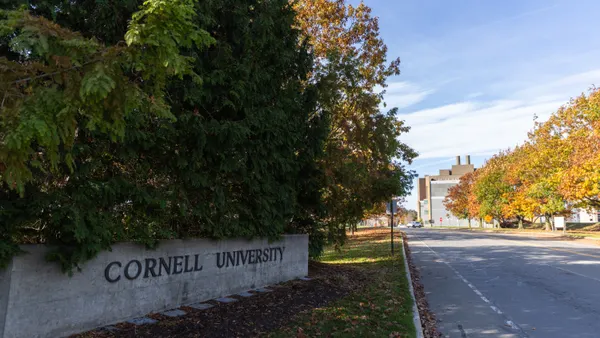
- A former academic with a science background cannot move forward with his lawsuit alleging Cornell University engaged in discriminatory hiring practices rooted in its diversity, equity and inclusion policies, a New York district judge determined Monday (Wright v. Cornell University).
- According to Judge Glenn Suddaby, the plaintiff lacked standing to bring his claims because evidence showed he “had no intention of reentering academia after publicly announcing his departure from it after April 2020, much less specifically to apply for a position” with Cornell.
- While the plaintiff argued the hiring approach was discriminatory in its preference for minority candidates, Suddaby stopped short of evaluating these arguments, focusing on the initial concern of whether the plaintiff was in the position to bring the lawsuit. The case highlights the importance of establishing standing in hiring-related claims.
Dive Insight:
“In situations where a plaintiff is challenging a discriminatory hiring process or program and there is a reason as to why he or she is unable to apply for that program, they can establish standing to sue by demonstrating ‘that they are able and ready to apply, but a discriminatory policy prevents them from doing so on equal footing,’” the court explained.
Suddaby determined the plaintiff in Wright was “perhaps able but not ready” to apply, given statements he made on social media, in quotes provided to The Daily Caller and in a Wall Street Journal editorial. All “uniformly reference that he had left academia,” the court said.
The plaintiff also stated his disinterest in applying for roles at institutions that required DEI statements, which further eroded the case for standing, the court found.
“The documented fact that Plaintiff was so opposed to the use of any sort of DEI initiatives by academic institutions that he chose not to apply to openings with institutions that included a DEI component in their application process strongly indicates that he was not reasonably ‘ready’ to apply for employment with Defendant, an institution that had an expressly stated commitment to certain DEI initiatives,” Suddaby said.
“We are reviewing the order, and we are dedicated to continuing the fight on behalf of [the plaintiff] against unlawful discrimination,” Richard Lawson, litigation vice-chair for the America First Policy Institute, said in a comment to HR Dive.
HR Dive also reached out to Cornell for comment, but did not hear back by press time.
Due to the lack of standing, Suddaby managed to sidestep the arguments about DEI-based discrimination, which have gained some traction in both the federal court system and at the nation’s top equal employment opportunity enforcement arm.
On Friday, a Florida judge cleared the way for a group of White male current and former Danaher Corp. employees to move forward with a lawsuit alleging the company’s DEI policies discriminated against them on the basis of race and sex. The judge in that case found that four of the plaintiffs successfully showed they were rejected for less qualified applicants because of Danaher’s DEI policy.
DEI-based discrimination — mainly against majority-group plaintiffs — has also been a central focus of the U.S. Equal Employment Opportunity Commission during the second Trump administration. The New York Times and Harvard University are among the high-profile targets EEOC has pursued as it has sought to investigate DEI’s allegedly discriminatory impact on hiring practices.