Dive Brief:
- Organizational design should take neurodiversity into consideration, real estate development and operational services firm JLL suggested in a July 10 report.
- Noting that workplaces traditionally focused on operating models that championed standardization, “common ways of working” and “predictability,” Dima Najib-Costa, JLL co-head of people experience for the Middle East and Africa, said the ubiquity of artificial intelligence in the workplace is centering cognitive diversity in “an important strategic conversation about the future of work.”
- JLL also noted research suggesting that 15% to 20% of the global population is neurodivergent, adding that, at larger firms, this figure “can represent thousands of employees whose brains process information, communicate or respond to environments differently.” Yet members of this population are largely silent about their status as neurodivergent workers, JLL said, presenting a distinct challenge for HR.
Dive Insight:
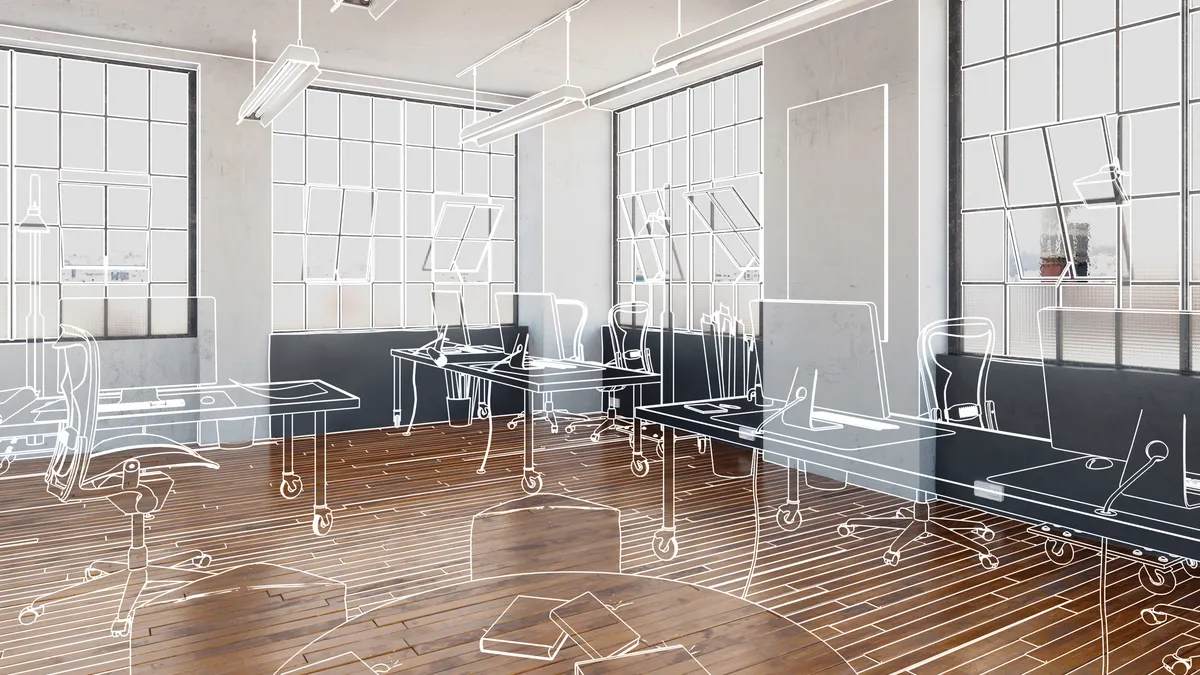
The future of workplace design is not just about optimizing square footage or ensuring utilization rates are high, the JLL report noted. Now, the goal is increasingly about understanding how workplace environments support different modes of thinking. Previously, the old school of design acknowledged that different activities required different workplace settings. The new school of design will embrace that “the same activity can require different environments depending on the cognitive preferences of the individual performing it,” Najib-Costa wrote.
For example, one worker might need to prepare for a presentation in an “energetic” setting, with co-worker collaboration. Another worker may need to prepare for the same presentation in a quiet environment with few distractions. “Neither approach is inherently superior. They simply represent different cognitive pathways toward the same outcome,” Najib-Costa said.
Beyond considering the physical design needs of a diverse workforce, Najib-Costa presented a key takeaway: “There has never been an ‘average’ mind.” The humanity of the workforce is increasingly important in the future of work. SHRM’s chief knowledge officer spoke to HR Dive recently about the importance of human skills in an AI landscape, stressing the capacity for empathy as something that sets humans apart from machines.
HR may need to bridge the gap when it comes to their workforce’s empathy and understanding for neurodiverse workers. According to a 2024 report from Eagle Hill Consulting, the majority of U.S. workers said they’re unfamiliar with the term “neurodiversity” and only about 1 in 5 are aware of a “neurodivergent” co-worker. Eagle Hill Consulting President and CEO Melissa Jezior said in a statement at the time that some employers were acknowledging the value of neurodiverse talent in their business outcomes.
“Neurodivergent employees often add tremendous value to a company with unique talents such as innovative problem solving, heightened attention to detail, sharp math and data analytics skills, reliability and perseverance,” Jezior said in a statement. Eagle Hill highlighted autism, attention deficit hyperactivity disorder, dyslexia, dyscalculia and Tourette syndrome as examples of neurodivergence.
Jezior added that despite some employers acknowledging the benefits of a neurodiverse workforce, certain individuals can also “face a multitude of big obstacles in the workplace — stigmas that create an inhospitable work environment, social and communication difficulties, sensory sensitivities that make a typical workplace overwhelming, or executive functioning challenges that can hinder their organization, time management and productivity.”
Notably, in the same Eagle Hill study, more than half of workers told researchers that sensitivity training on this neurodivergence would be “valuable,” with 56% of respondents saying specifically they would be interested in being trained on managing neurodivergent employees.