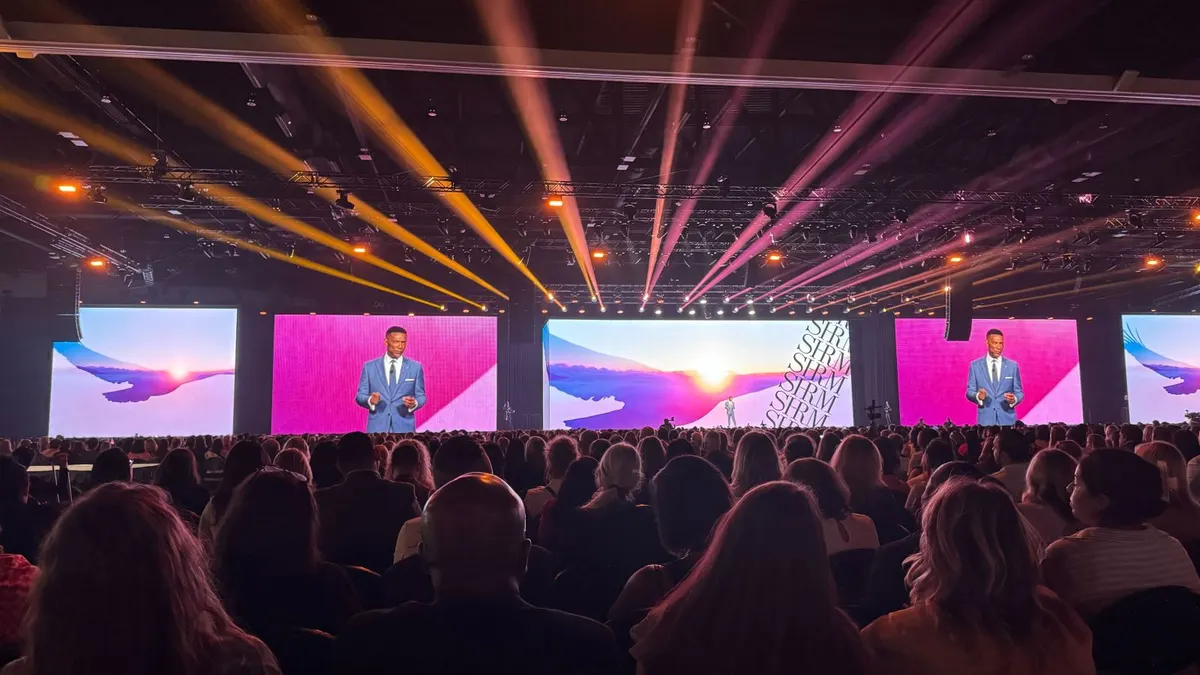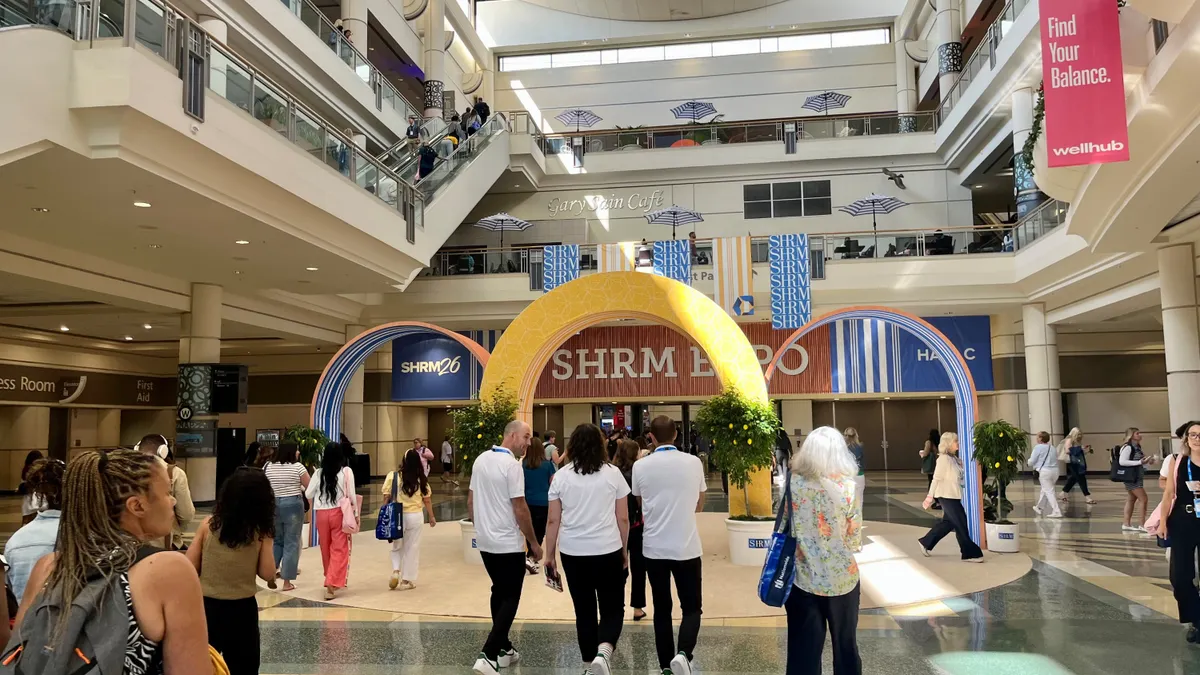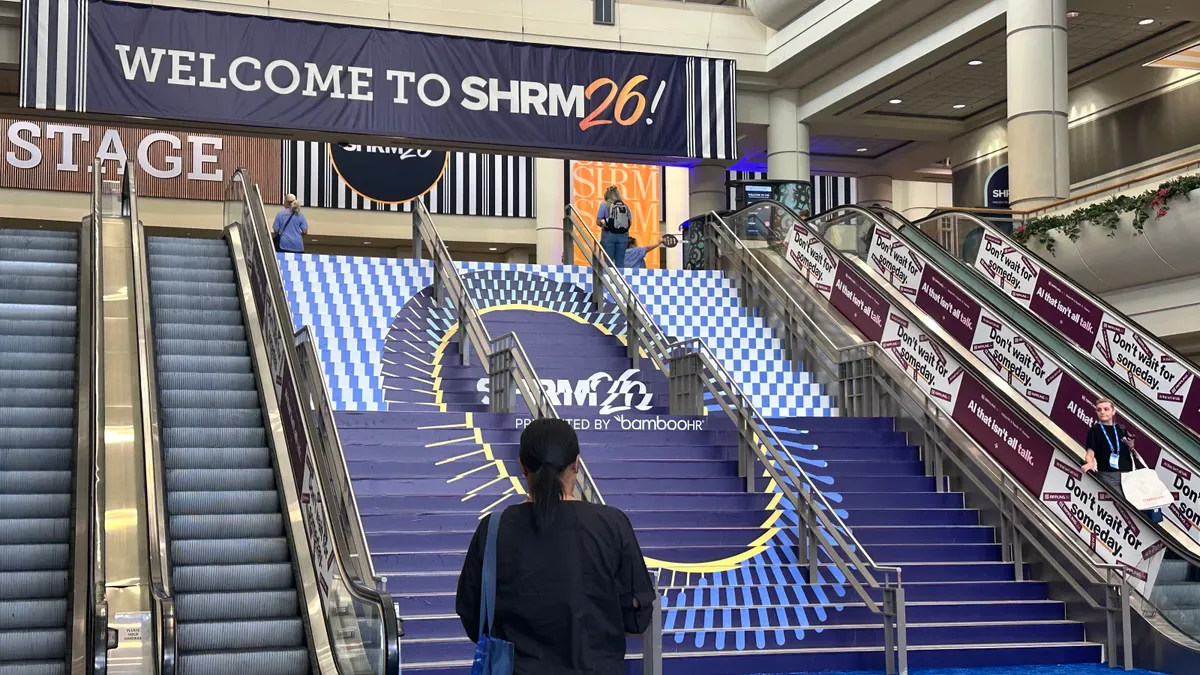
ORLANDO, Fla. — Artificial intelligence isn’t going anywhere. But what role do humans play in the AI age? Several SHRM26 sessions ironed out the human-AI interplay in varying ways. SHRM’s Chief Knowledge Officer Alex Alonso spoke to HR Dive about the future of the HR profession regarding AI, including the projected role of a “Chief Work Officer” to manage AI-assisted workflows.
Alonso also had ideas about the importance of human skills at a time like this. First and foremost, he said, there will be emphasis on the aspects of humanity that one can’t get from a “prompted environment.”
“It's hard to simulate what your response will be when met with something like co-workers mourning,” Alonso told HR Dive. In general, he said, AI will have some difficulty demonstrating empathy at all.
“Most workers are only looking for three types of empathy from their people managers,” Alonso explained. “Tell me that you understand anything about me as a human — more about me than my name or what I wear to work every day. No. 2 is: Tell me that you know what my career objectives are. AI, to this point, has not really developed the skills to do that.”
And lastly, Alonso said, “When I screw something up, commit to me that you're gonna help me fix it. We've all had a good manager — and I hope at least at one point in your career — or mentor like that.”
Despite being bullish on AI’s potential, Alonso said, “I don't see how AI gets to that just yet.”
Previously, a SHRM26 speaker told the Orlando, Florida, audience that there are five key tenets to maintaining humanity while leading in the AI age: Awareness, acceptance, authenticity, abundance and appreciation. A recurring theme throughout the conference was how HR can be a fast adopter of AI, while not losing sight of the first letter of the profession.