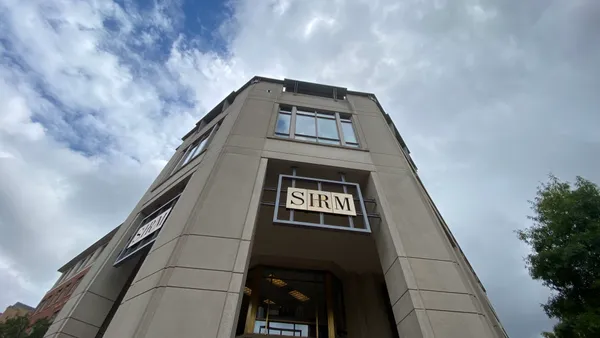
A federal judge denied on Thursday SHRM’s motion for summary judgment in a lawsuit alleging violations of the Americans with Disabilities Act and the Virginia Human Rights Act (Torres v. SHRM).
U.S. District Judge Patricia Tolliver Giles said there is “a genuine dispute of material facts” on the plaintiff’s disability discrimination and failure to accommodate claims.
In a December 2025 lawsuit, a candidate alleged that SHRM rescinded a job offer after she requested to have her trained service dog accompany her to the office as a reasonable accommodation. She said her service dog was necessary to alert her “before her blood glucose level rises or falls to a dangerous degree due to her Type 1 diabetes,” per the complaint.
“SHRM is an organization in the business of human resources management and advises its membership on the requirements of the ADA. Despite that, it brazenly disregarded its statutory obligations and rescinded its offer of employment to [the plaintiff] after she requested a reasonable accommodation to bring her trained service dog with her to work,” according to the December lawsuit.
In the Thursday filing, the judge encouraged the parties to contact a magistrate judge’s chambers to schedule a settlement conference and advised them they would have to cover the court costs of bringing in a jury if they reach a settlement but don’t inform the court in “sufficient time to avoid the expense of bringing in the jury.”
A hearing is set for Oct. 1 in the U.S. District Court for the Eastern District of Virginia, per court documents.
“The court's ruling means a jury, not SHRM, will decide whether the company broke the law when it pulled [the plaintiff's] job offer after she requested a disability accommodation. We're confident that once jurors hear the evidence, they'll conclude that rescinding an offer because someone asked for an accommodation is exactly what Virginia and federal law prohibit," said Mary Kuntz, the plaintiff's attorney.
SHRM said the organization is disappointed in the ruling and will continue to “defend [its] position vigorously,” in an emailed statement.
SHRM said it did not turn down the plaintiff’s request for an accommodation and that it followed proper procedure.
“We requested documentation, consulted her physicians, engaged legal counsel, and proposed multiple specific, good-faith alternatives, including accommodations for her continuous glucose monitor and insulin pump, additional breaks, food and drink access, and flexible leave,” SHRM said. “This was a genuine, sustained and interactive process and indeed an acceptance of her disability, with a disagreement over one specific, preferred accommodation.”
Editor's Note: This story has been updated to include comments provided by SHRM and the plaintiff's attorney.