Employers knew the second Trump administration would disrupt immigration compliance efforts. Yet, as of 2026’s early weeks, even the attorneys to whom employers turn for guidance say they’re shocked by how quickly the White House’s plans have unfolded.
“What we’ve seen now is so much more than what we could’ve predicted,” said Cynthia Gomez, partner at Saul Ewing, describing the near-daily calls from clients about immigration concerns. Her colleague Kate Dosmanova, associate at Saul Ewing, said the scale and speed of the U.S. Department of Homeland Security’s enforcement efforts “far exceeded expectations” and is hitting employers on multiple fronts.
Glimpses of that panic come from Minneapolis, Minnesota, where U.S. Immigration and Customs Enforcement’s “Operation Metro Surge” continues to draw protests and unrest. The agency has reportedly detained workers as part of the operation, including a public works employee in nearby St. Paul who was on a job site at the time of his detainment, news outlet KMSP-TV reported.
Chris Thomas, partner at Holland & Hart, said ICE agents have swarmed his clients’ facilities in Minneapolis at times without their permission — and even without judicial warrants — to interrogate those present. In one such instance, he said, ICE detained a worker who had been legally present in the U.S.
Thomas said a judge ordered the employee released from custody following a successful habeas corpus filing. He declined to share additional details about the case but said it’s a sign courts may be willing to side with employees as well as employers that suspect ICE has acted unlawfully.
“We’re telling clients to do whatever you can to register an objection, to inform them that this is private property and that they object to any search [ICE] is conducting,” Thomas said. “Set the table for another day,” he said, adding that employers could do so by telling ICE that “this is a nonconsensual breach, and we object to what you’re doing here.”
Still, ICE’s actions reverberate beyond the initial shock of a detainment. Some of Thomas’ clients report that employees are fearful to even show up for work, and some question whether it is in the best interest of employees’ safety to remain open.
“It shows you the chaos of these moments,” Thomas said.
Elsewhere, ICE adopted aggressive new tactics. For instance, the agency last year ended its policy of avoiding “protected areas” such as hospitals, schools and places of worship. That move meant organizations that had previously never dealt with ICE before are now subject to the agency’s enforcement, said Catherine Wadhwani, partner at Fox Rothschild.
In Minnesota, Thomas said large companies have become more interested in adopting one specific change to their immigration protocols: hiring local legal counsel to support getting detained employees released from ICE custody. It’s a move Thomas said he largely has not seen employers adopt for fear of retaliation by federal authorities, but employers that are unhappy with ICE’s conduct are increasingly considering it.

‘Silence creates fear’
Employers have had some time to prepare for such operations. A common 2025 refrain among attorneys in the space was that HR departments should prepare formal, written plans instructing on-site staff what to do in the event of a visit from federal officers.
Other actions included conducting internal Form I-9 audits, checking with electronic Form I-9 vendors to ensure compliance and participating in DHS’ E-Verify program.
Despite the state of play, those pieces of advice largely stand, Gomez said. Education, she added, is “a huge component” of making employees feel safe at work, as is having a designated point of contact for them to call.
Employers also need to train managers not to panic in the face of a visit, Dosmanova said. Managers similarly should be aware of the organization’s protocols, legal support and on-call contacts. They should also communicate with employees about the situation; “silence creates fear,” Dosmanova said.
‘Many more’ Form I-9 inspection notices expected this year
For a story published last April, Thomas told HR Dive that ICE expected agents to meet weekly quotas for serving Form I-9 inspection notices to employers — as high as five employers per week. Such metrics appeared to show just how rapidly the agency intended to ramp up its enforcement efforts.
Speaking with HR Dive in recent weeks, Thomas said it was clear that ICE had not kept that pace in 2025 due to a lack of resources and manpower. But that could soon change now that the agency has more outside contractors, and employers may see far more I-9 inspections moving forward. “Based on the information we’ve got, we’re just at the beginning of the enforcement cycle now,” Thomas said, adding that his contacts at DHS have signaled that “2025 was the year to lay the groundwork. 2026 will now be the year in which they are focused on large-scale enforcement activity.”
That includes electronic I-9 inspections. At the beginning of 2025, attorneys who spoke to HR Dive said they were concerned electronic I-9 vendors were noncompliant with various federal regulations. But Thomas said there’s been a strong push to address concerns, including improving the I-9 audit trails.
Despite some relief, H-1B employers vexed by coming changes
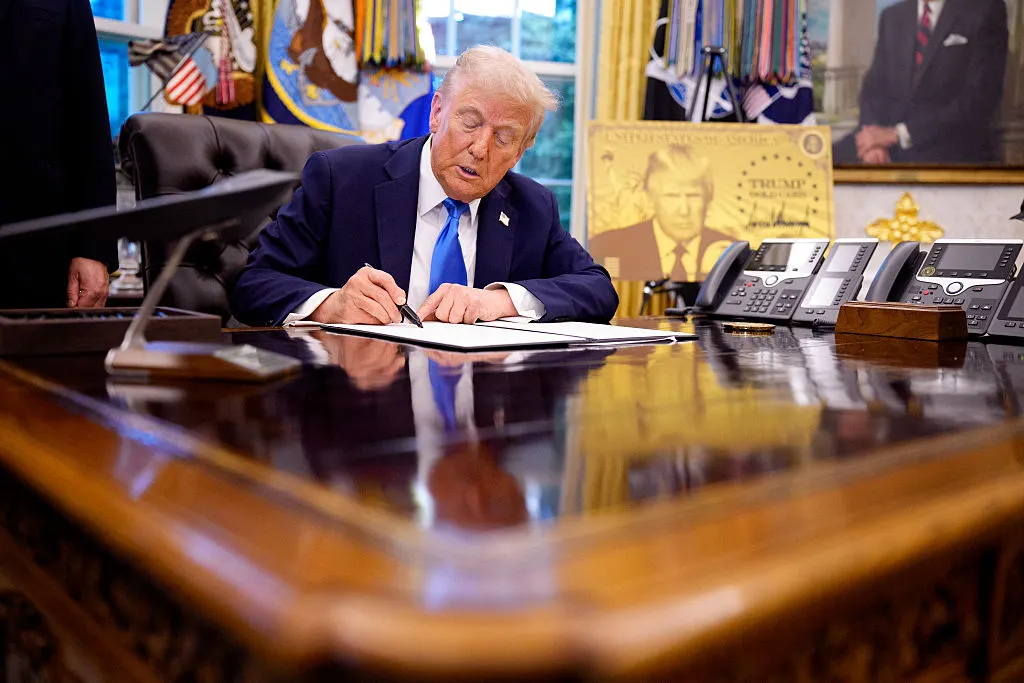
At the same time, the Trump administration shook up the federal government’s H-1B visa program for skilled foreign workers with the president’s September proclamation imposing a $100,000 fee on new visa petitions. So far, at least three lawsuits have been filed to challenge the fee. A federal judge permitted the proclamation to move forward last month on the grounds that it did not exceed executive authority.
The new requirement “really set off a panic” in the days after it was announced, according to Wadhwani, with employers unsure as to how their workforces would be affected.
U.S. Citizenship and Immigration Services provided some clarity in subsequent notices, indicating that certain workers already in the U.S. would not be subject to the fee and that employers could request exemption under “extraordinary rare circumstances.” But those addendums have done little to assuage concerns.
“It’s not something that many employers could even consider paying,” Wadhwani said. “They just don’t have it in their budget.”
So far, the H-1B program remains competitive, and participating employers await news from USCIS about the agency’s forthcoming lottery for selecting fiscal year 2027 H-1B petitions, said Gomez. That process, too, is set to change thanks to a DHS proposed rule implementing wage-based criteria for selecting petitions against the annual cap.
Those changes may have the effect of forcing employers to pay more for prospective visa holders than they otherwise would, Gomez added, particularly those foreign workers who would normally slot into the lower of the H-1B program’s four wage levels. But that may depend on the employer’s budget, and it might be willing to pay for such a candidate, she said.
Another factor employers are considering is the U.S. Department of Labor’s “Project Firewall” initiative, under which the agency will seek to crack down on abuses of the H-1B program. Thomas said the initiative’s announcement last fall caused “extreme concern” among organizations.
Given the changes, larger companies may ultimately decide to offshore some jobs they planned to fill with H-1B visa holders, Thomas continued. He said several employers have asked within the last few months about relocating such positions to neighboring Canada and Mexico, or to further locales like India.
Employers also may consider remote work abroad as a method of retaining foreign talent, Wadhwani said, though this comes with its own compliance considerations and expenses and would mostly be available to multinational companies or large employers with stronger finances.
“Smaller companies don’t have the option to go through more steps to employ somebody abroad,” she said.

For some, lack of workers is an existential risk
Each of the above factors can hinder employers’ talent plans, and some businesses were already struggling to find workers in 2025. Certain sectors, like long-term care, have been especially desperate for workers amid the Trump administration’s crackdown.
Three segments of employers have been particularly affected, according to Thomas.
The first encompasses businesses that received unlawful employment authorization documents they initially believed to be authentic, but which were later found to be fraudulent. These employers — primarily smaller construction firms — have terminated unauthorized workers and are struggling to backfill some roles. Many are concerned about their ability to survive, Thomas said.
A second group includes employers, especially in the food manufacturing sector, that relied heavily on employees who had been in the U.S. lawfully but whose status has been revoked under Trump.
Finally, there are H-1B employers that, because of a decline in foreign students enrolled at U.S. universities and DHS’ updated H-1B lottery, will have fewer potential recruits for high-skill roles.
“The damage is on all three levels,” Thomas said. “It’s really having an impact on everybody.”