Dive Brief:
- A manufacturer will pay $100,000 to resolve a U.S. Equal Employment Opportunity Commission lawsuit alleging that it demoted an employee with hearing loss in response to her request for reasonable accommodation, EEOC announced Friday.
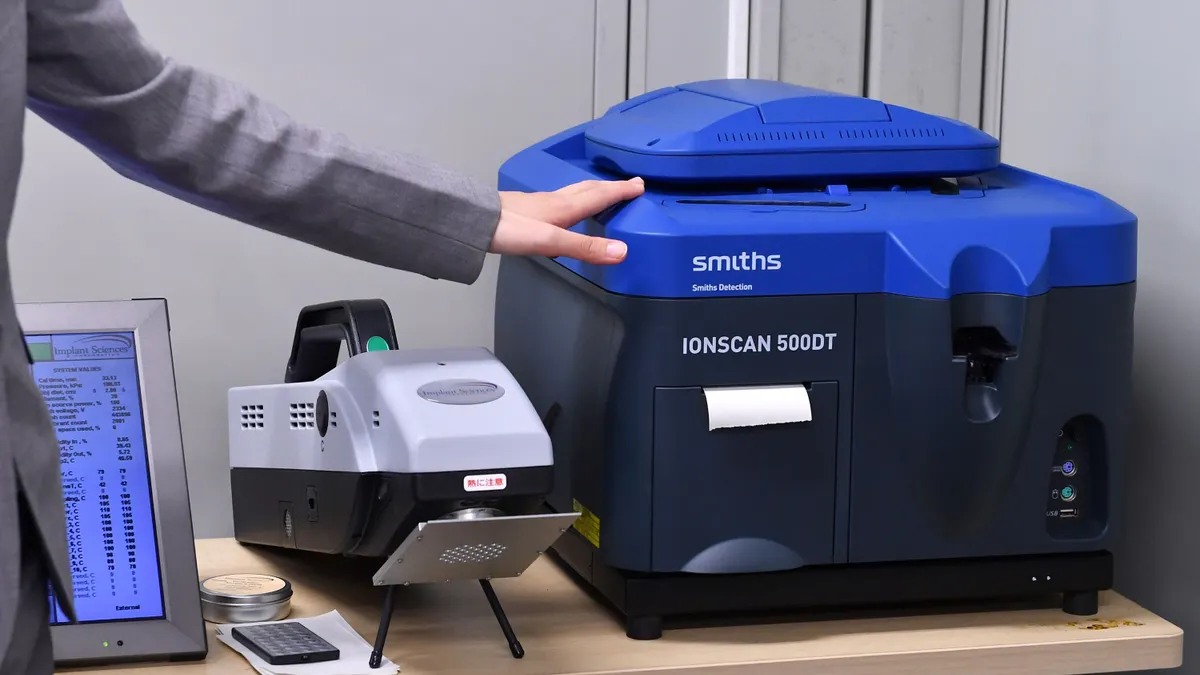
- In its August 2024 complaint, EEOC claimed that the employee’s requested accommodation — a custom-made piece of protective equipment to protect her residual hearing while working in a high-noise area of its facility, known as “the Bubble” — would have cost Smiths Detection, Inc. just $1,700.
- Instead, Smiths allegedly denied the request and demoted the employee to a position with reduced pay that did not require her to work in the Bubble. EEOC claimed that the reassignment unlawfully deprived the employee of equal employment opportunities in violation of the Americans with Disabilities Act. As part of the settlement agreement, the company denied EEOC’s allegations and did not admit liability.
Dive Insight:
EEOC has said that reassignment may be necessary in situations where an employee can’t perform the essential functions of their job due to a disability. But reassignment has also been referred to as the ADA’s accommodation of “last resort” and is generally granted only when no other effective accommodations exist.
Reassignment also should be restricted to positions that are equivalent in pay and status to the one currently held by the employee, or as close as possible to it, according to EEOC.
Smiths’ reassignment of the employee in the above case allegedly resulted in a loss of pay as well as a demotion from the employee’s previous position as a team lead, the commission said in a press release. The decision violated the ADA’s requirement that employers provide reasonable accommodations to qualified workers with disabilities, it added.
“Demoting an employee so as to avoid providing a reasonable accommodation does not discharge an employer’s obligation to provide a reasonable accommodation; it merely compounds the employer’s unlawful behavior,” Debra Lawrence, an EEOC regional attorney, said in the agency’s press release.
In addition to monetary relief, Smiths agreed as part of the consent decree to take steps such as reviewing and revising its ADA policies and conducting ADA training for all supervisors, managers and HR employees.
EEOC claimed that the custom-made hearing protection equipment the employee had initially proposed to Smiths would have constituted a fraction of its $2 billion annual revenue. But the company is far from the only employer to have faced legal penalties exceeding the relatively minor cost of a proposed disability accommodation.
In 2018, the 6th U.S. Circuit Court of Appeals upheld a $700,000 jury verdict in favor of a Dollar General cashier whom the company prohibited from keeping orange juice at her work station in order to accommodate her diabetes. The store failed to explore a reasonable accommodation for the plaintiff in the case aside from denying her request to keep the juice on hand.
The U.S. Department of Labor included as part a list of “myths” about the ADA that providing reasonable accommodation is necessarily expensive for employers. A Job Accommodation Network survey of employers conducted between 2019 and 2024 found that 61% of accommodations implemented during that time cost nothing to implement, and only 6% resulted in ongoing costs. JAN found the median annual cost of ongoing accommodations to be $2,400.