Legal tug-of-wars undeniably shaped diversity, equity and inclusion last year and it looks like navigating compliance enforcement will be the top DEI trend of 2026, too.
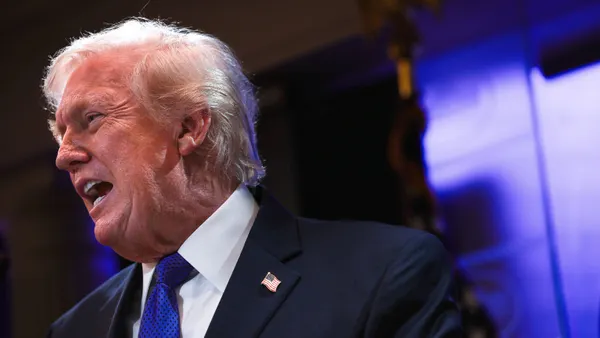
One year into President Donald Trump’s administration, the executive orders issued on Inauguration Day — and the U.S. Equal Employment Opportunity Commission’s guidance that followed — have undeniably shifted the tone in DEI work.
As Noreen Farrell, executive director of Equal Rights Advocates, told HR Dive, “We’ll likely see continued attacks on diversity programs, with the EEOC issuing more intimidating guidance that creates legal uncertainty.”
Still, long-standing federal law should be HR’s guide for all workplace practices, Farrell said via email. Employers who stay on the straight and narrow “will be positioning themselves for success when the pendulum inevitably swings back,” she told HR Dive via email.
Document, document, document
One HR move that will be crucial going forward: “Document the legitimate business justifications for your diversity and inclusion initiatives,” Farrell said.
When DEI is under the microscope, not only will the content of talent development programs be significant, but the way HR documents their talent strategy will be of utmost importance as well.
“Pay transparency, internal equity, documentation quality, and consistent performance management will matter more, not less, because companies want defensible decisions in a more contested environment,” said Saad Kassis-Mohamed, chairman of the WeCare Foundation, who oversees talent strategy for his firm.
“Focus on process metrics that show fairness, such as structured interview usage, time to promotion, attrition by cohort, participation in training, and manager accountability,” Kassis-Mohamed said. “You can improve opportunity without making promises you cannot legally make.”
Make programs scrutiny-proof
The outlook from DEI advocates going into 2026 holds a glimmer of hope. “HR professionals should know that state laws are getting stronger where the federal government is stepping back and courts are blocking the most egregious overreach,” Farrell said.
But in the meantime, HR should make its talent development strategy impenetrable to scrutiny.
“Don’t panic, but don’t be complacent either,” Farrell said. One political appointee shouldn’t override “decades of court-precedent-affirming programs that open doors and remove barriers to equal opportunity,” she said.
Do not improvise either, Kassis-Mohamed echoed. “Work closely with counsel and stay grounded in lawful, job-related practices that improve fairness and reduce risk.”
Notably, according to Kassis-Mohamed, “what is being challenged is not the idea of equal opportunity but the way programs are framed or executed.”
But, at the end of the day, amid the calls for strict compliance, the “H” in “HR” will remain crucial in finding a path forward.
“Keep the human element,” Kassis-Mohamed said. “In a polarized climate, people still need psychological safety, clear expectations, and managers who can lead diverse teams. If HR can equip managers to handle conflict, give good feedback, and run fair processes, that is inclusion work that survives headlines.”