Dive Brief:
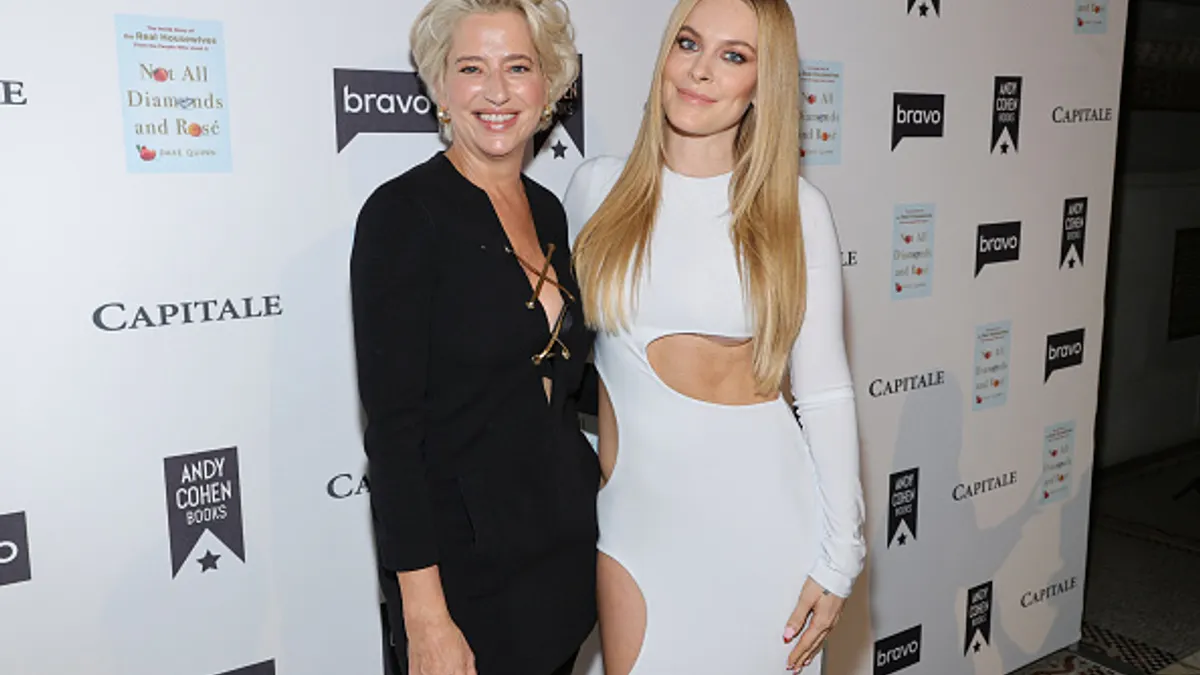
- A former “The Real Housewives of New York” cast member and a fashion designer, Leah McSweeney, can proceed with a disability discrimination lawsuit against Warner Bros. Discovery Inc., Nbcuniversal Media LLC, Bravo Media LLC and others because the defendants waived their right to seek arbitration, a federal judge ruled Monday.
- The defendants filed two motions to dismiss the claims and didn’t bring up arbitration for more than a year after the lawsuit, Mcsweeney V. Cohen, et al., was filed, U.S. District Judge Lewis Liman held.
- “A party can be deemed to have acted inconsistently with the right to arbitrate by asking the Court to devote its limited resources to dispose of a complaint and only after those resources have been expended to seek ‘to proceed in another venue — arbitration’ and to assert that the Court never should have done that work in the first place,” the judge wrote, citing a 2025 2nd U.S. Circuit Court of Appeals decision. Attorneys for the plaintiff and the defendants didn’t respond to a request for comment.
Dive Insight:
Building on a 2022 U.S. Supreme Court decision, the 2nd Circuit ruled in Doyle v. UBS Fin. Servs. Inc. that “courts should evaluate the question of whether a party has waived its right to arbitration ‘by focusing on the following question: Did the moving party knowingly relinquish the right to arbitrate by acting inconsistently with that right?’”
Like in McSweeney, the defendants in Doyle had filed a motion to dismiss without seeking a motion to compel arbitration, the district court judge said.
“In Doyle, the Second Circuit held that defendants had waived their right to compel arbitration by their post-litigation conduct,” per the district court judge.
Before asking the court to compel arbitration, the defendants in McSweeney had first asked the court to dismiss the case on merits “by raising challenging and difficult issues of First Amendment law,” the judge said.
“And it was not until after they had taken that gambit and lost, and after they confronted what might have appeared to be the daunting specter of civil discovery in federal court, that they changed course and asserted that the Court should never have exercised its authority in the first place,” per court documents.
The lawsuit is another instance of a reality show network filing to compel arbitration against a cast member. In an April 2024 lawsuit, an appeals court refused to compel arbitration in a sexual assault lawsuit filed against “Love is Blind” producer Delirium TV LLC by a season five participant.
In that case, the Court of Appeals for the First District of Texas affirmed a trial court’s ruling that sexual assault claims are covered by the Ending Forced Arbitration of Sexual Assault and Sexual Harassment Act of 2021, which creates an exemption from arbitration for sexual assault.