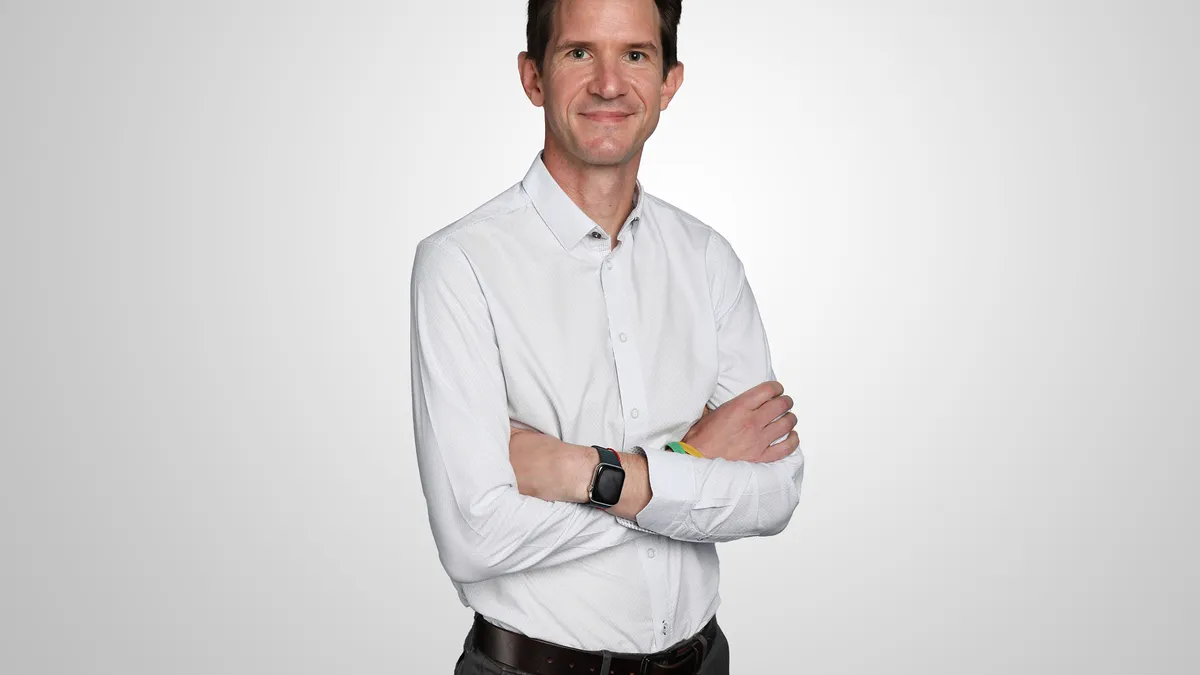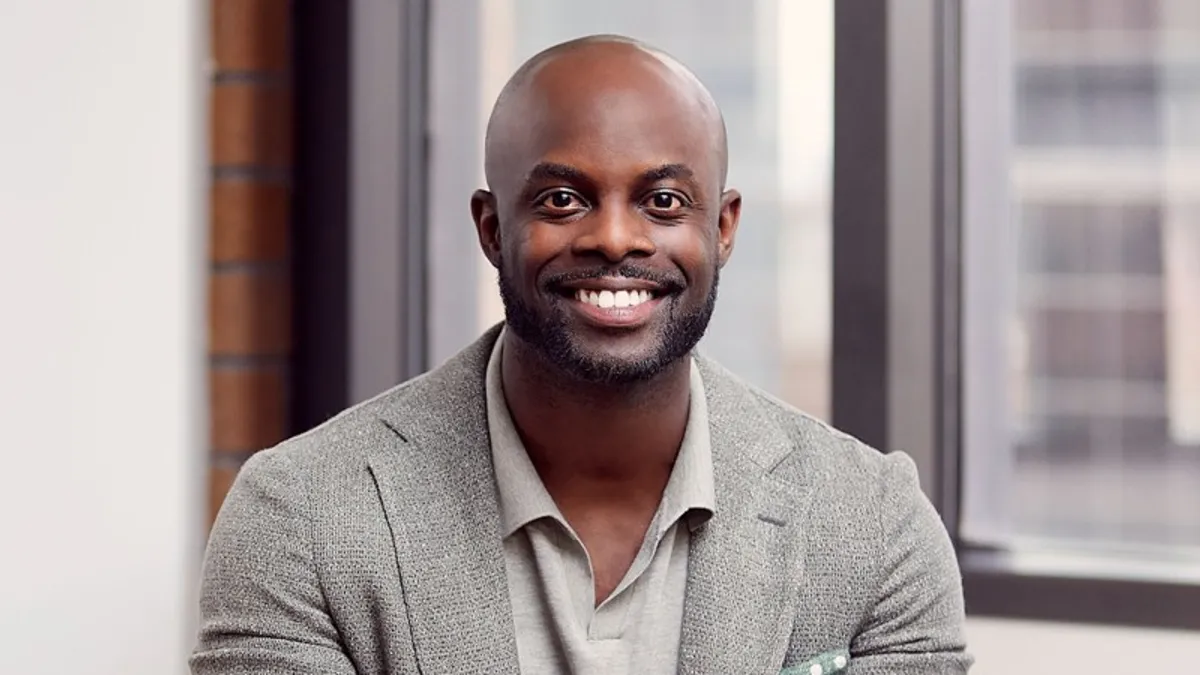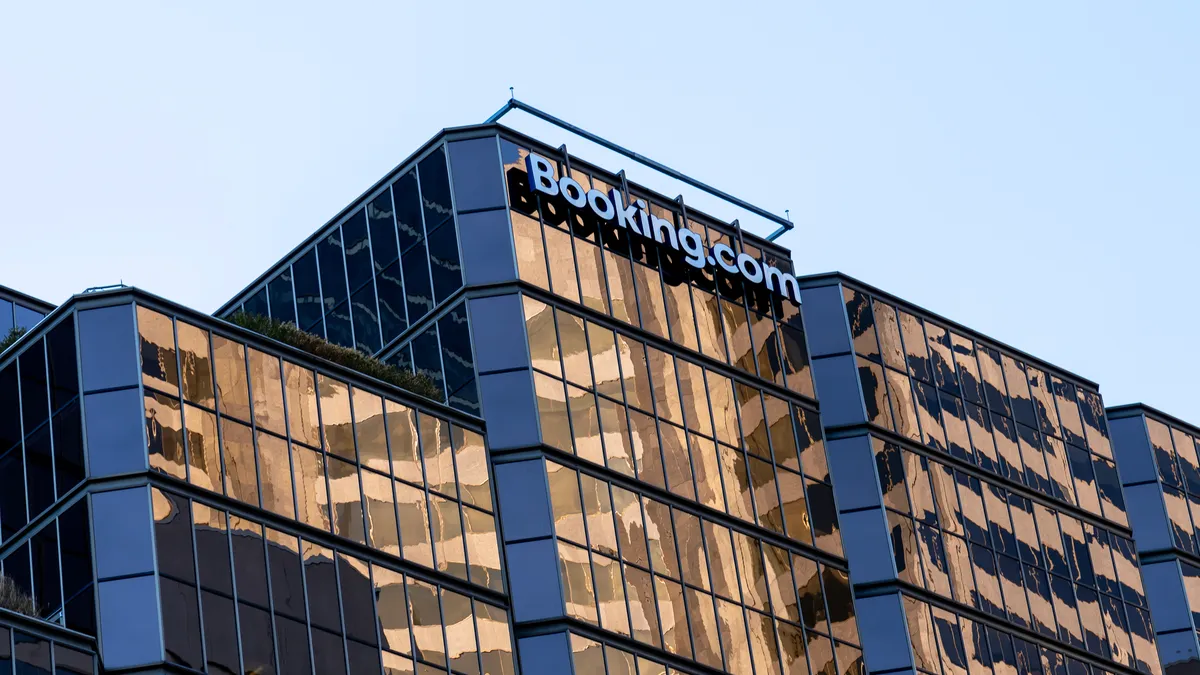
Easier is better: This is the core of what Paulo Pisano, CHRO of Booking Holdings, learned last year.
“In an environment where complexity has become a gravitational force across industries, we’ve seen firsthand that simplifying how work gets done is essential to helping organizations focus on fewer things and do them better,” Pisano told HR Dive via email.
The executive vice president of Booking Holdings, a company that includes Booking.com, KAYAK and OpenTable, among others, oversees an organization that hires across six continents. From Pisano’s perspective, HR is “uniquely positioned” to help simplify processes at work, which is crucial for reducing decision fatigue and fostering innovation.
“More than ever, delivering clarity, through strong communication, thoughtful design, and disciplined choices, is central to HR’s role as a strategic enabler of productivity in an increasingly complex workplace,” he said.
Read on to hear more lessons learned from Pisano — and his HR outlook for 2026.
Editor’s note: This conversation was edited for clarity and length.
HR DIVE: What was the biggest trend you saw overall in HR last year?
PAULO PISANO: HR leaders were navigating more change, driven by technology and the need to evolve ways of working.
The strongest organizations embedded HR more deeply into the business, grounding decisions in data, strong processes, and scalable technology — as well as increasingly drawing in talent from outside traditional backgrounds to strengthen commercial and operational capability.
What HR trends do you predict for 2026?
In 2026, one of the defining HR trends will be a shift from treating AI as a super-tool to embedding it as a foundational layer in how work gets done.
Leading organizations will move beyond automating individual tasks and start redesigning end-to-end workflows, with AI acting as a cognitive co-pilot throughout the process rather than a series of one-off solutions.
This is less about the technology itself and more about the human-AI partnership, strategically pairing AI’s speed and scale with essential human intelligence.
HR will start to play a more central role in reskilling and upskilling the workforce to focus on problem framing, critical data judgment, ethical stewardship, and decision-making.
Done well, this shift will unlock a step-change in productivity and quality — enabling work that is not just faster, but smarter, more creative, and more sustainable.
What advice would you give new CHROs who are looking to be better leaders?
Try not to do everything at once. The role comes with an incredibly broad remit, and it’s easy to confuse activity with impact.
Pick priorities and avoid diluting your energy — and that of your teams. Driving real impact requires a clear and sometimes challenging understanding of what the business genuinely needs, not always what it initially says it wants.
From there, it’s about focusing on the areas where HR can deliver the most value, and aligning teams clearly around those goals.
This builds credibility with the business, demonstrating that HR is disciplined, outcome-oriented and focused on what matters most.