
Can employees who work at schools or colleges that receive federal funding personally sue their employer for sex discrimination under Title IX? For years — and in most parts of the country — the answer to that has been yes.
However, the U.S. Supreme Court agreed to hear a case Monday that could change that answer.
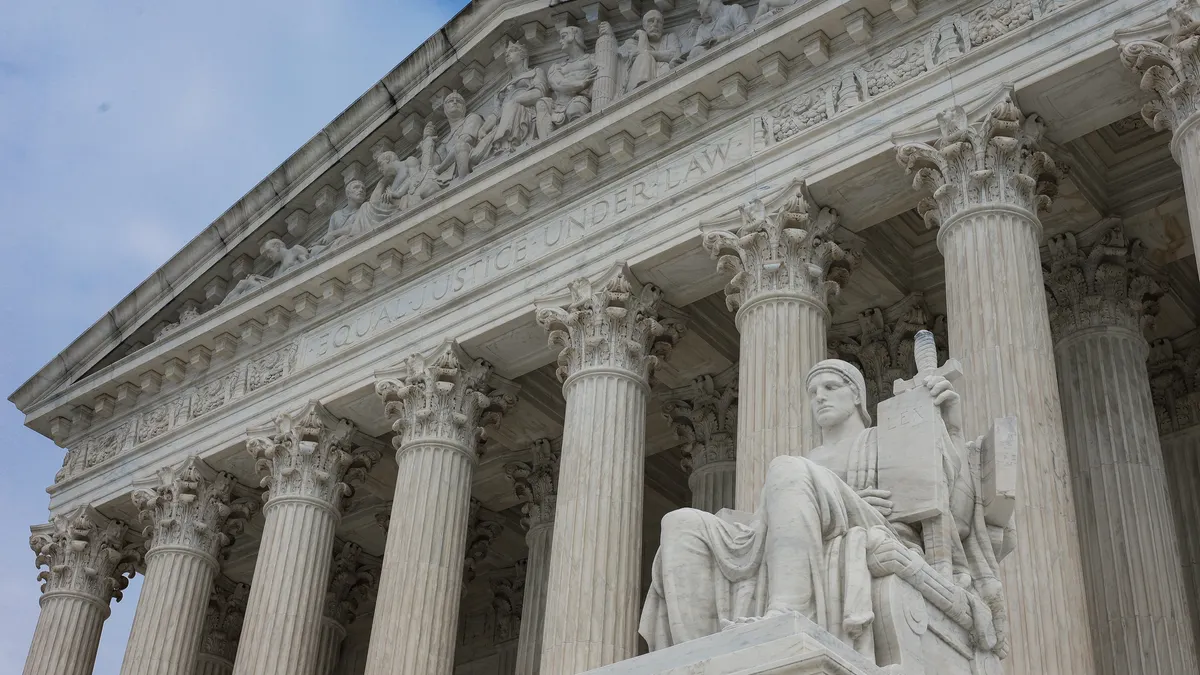
In Thomas Crowther v. Board of Regents of University System of Georgia, justices will decide whether school employees have a right to privately sue if their employer fails to enforce Title IX, the federal civil rights statute that protects students and employees against sex-based discrimination in federally funded education programs.
The case rose to the high court out of the 11th U.S. Court of Appeals, after that court decided in 2024 that Title IX's right to sue doesn’t apply to employees, diverging from at least eight other appeals courts.
The case was brought by two University System of Georgia employees — a basketball coach at Georgia Tech and an art professor at Augusta University — who said the university system discriminated against them on the basis of sex when it fired them.
Georgia Tech terminated women’s basketball coach MaChelle Joseph’s employment in 2019, shortly after Joseph filed an internal complaint alleging that the university was discriminating against her and her program by not providing the same resources as the men’s program.
The art professor, Thomas Crowther, was told his contract at Augusta University would not be renewed in 2021 after several students reported him for allegedly inappropriate conduct in class, including sexual harassment, and after a Title IX investigation was launched as a result.
Both Joseph and Crowther notified the U.S. Equal Employment Opportunity Commission of alleged discrimination, in addition to filing lawsuits with the U.S. District Court for the Northern District of Georgia under Title IX and other laws.
The two cases were combined before the 11th Circuit, which decided in 2024 that “because Title IX was enacted under the Spending Clause, it is dubious that recipients of federal funds would understand that they have knowingly and voluntarily accepted potential liability for damages for claims of employment discrimination under Title IX when those kinds of claims are expressly provided for and regulated by Title VII.” Title VII prohibits sex-based discrimination in employment settings.
The appeals court denied a rehearing in 2025.
The case is similar to one decided two decades earlier in 2005, Jackson v. Birmingham Board of Education, in which the Supreme Court ruled that a girls’ basketball coach at a public high school had the right to pursue private litigation under Title IX. The case arose after Roderick Jackson received negative work evaluations and was fired as the coach after complaining that his team was not receiving equal funding and access to athletic equipment and facilities.
“Since this Court’s decision in Jackson v. Birmingham Board of Education … every court of appeals to have considered the question presented here has answered yes,” lawyers for Joseph and Crowther said in their August 2025 petition to the high court. “The Eleventh Circuit held otherwise.”
The case was accepted for the October 2026 term.