Dive Brief:
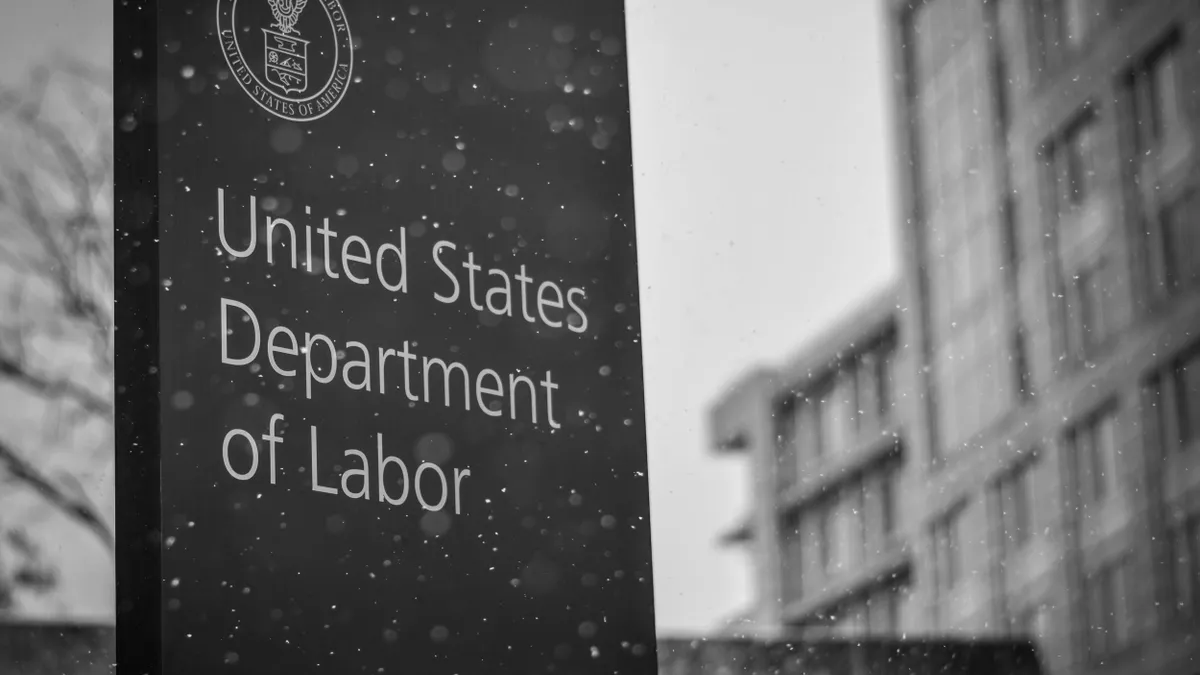
- The U.S. Department of Labor recovered more than $596,000 and debarred a subcontractor from federal contracts for three years for denying workers their full wages and fringe benefits as part of an alleged kickback scheme, the agency said Wednesday.
- DOL said Maryland-based J. Solano HVAC LLC — which worked on an affordable housing project in Washington, D.C. — promised to pay 31 sheet metal workers and pipefitter mechanics a full prevailing wage but required them to return any wages exceeding $30 an hour.
- DOL also found during its investigation that the employer wrongly classified some workers as low-skilled laborers. The alleged violations resulted in affected employees not being paid proper prevailing wage rates, including their basic hourly rate, holiday pay and fringe benefits, in violation of federal law.
Dive Insight:
Under the Davis-Bacon Act, covered federal or District of Columbia contractors are required to pay at least the locally prevailing wages, including fringe benefits, listed in the wage determination applicable to the contract, according to a DOL fact sheet.
Other frequent Davis-Bacon Act compliance issues include misclassification of laborers and mechanics, incomplete or inaccurate recordkeeping and failure to submit certified payrolls weekly.
Contractors may be found willfully liable for certain infractions of the law, a point that Nicholas Fiorello, DOL’s Wage and Hour Division district director for Baltimore noted in the agency’s press release announcing the J. Solano HVAC news.
DOL collected more than $14.1 million in back wages related to violations of Davis-Bacon and related acts during its 2024 fiscal year, according to public data. That total represented a decline from the more than $17 million collected in the previous fiscal year, though the agency also concluded a slightly higher number of compliance actions in 2024 than it had in 2023.
Prevailing wages became part of a tug-of-war between administrations in recent years. Under President Joe Biden, DOL issued a final rule that would have effectively increased hourly earnings for contractors and subcontractors on projects receiving federal funding, per Construction Dive. But amid opposition to the rule from industry groups and subsequent litigation, a Texas federal judge blocked it from taking effect.