Dive Brief:
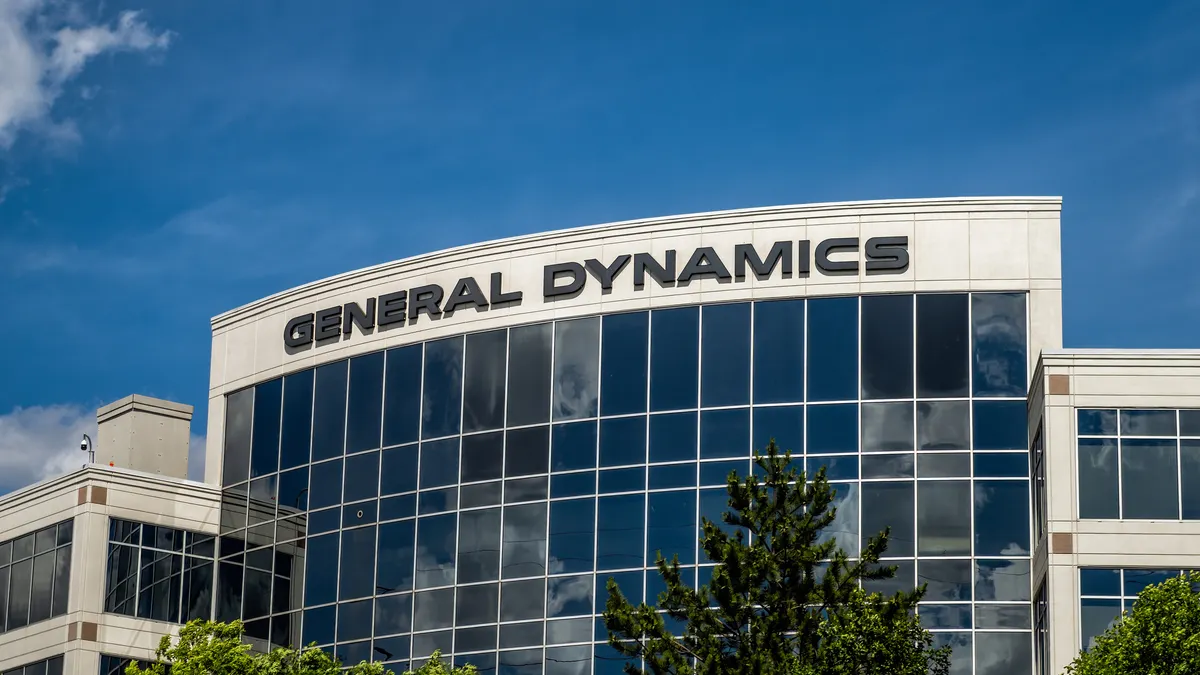
- The U.S. Supreme Court on Monday signaled it may weigh in on a dispute between shipbuilders and a class of employees over an allegedly unlawful no-poach agreement by inviting U.S. Solicitor General D. John Sauer to file a brief expressing the government’s view on the case, General Dynamics Corp. et al. v. Scharpf.
- In Scharpf, the 4th U.S. Circuit Court of Appeals reversed a lower court’s decision and held that the plaintiffs could proceed with their Sherman Antitrust Act claims despite the fact that the gap between the end of their employment and their filing of the claims exceeded the law’s four-year statute of limitations. Per the 4th Circuit, the plaintiffs plausibly showed that the companies engaged in fraudulent concealment of the no-poach agreement, thereby temporarily suspending the statute of limitations.
- Defendants petitioned the high court for a writ of certiorari in September, asking the justices to decide the question of whether plaintiffs adequately plead fraudulent concealment by alleging that defendants maintained an unwritten agreement not to recruit and hire each other’s employees.
Dive Insight:
Petitioners in Scharpf argued that the 4th Circuit’s decision amounted to a split with the 5th, 6th and 9th Circuits. In those circuits, allegations that defendants had a secret agreement, met in secret or kept others unaware of an agreement do not amount to fraudulent concealment, petitioners said.
Scharpf dates back to a Virginia lawsuit filed in 2023, whereas the plaintiffs’ proposed class encompassed affected employees employed by the defendant companies since 2000. The most recently employed of the two named plaintiffs ended her tenure with co-defendant Gibbs & Cox, Inc., in 2013. Despite the four-year statute of limitations imposed on Sherman Act claims, the plaintiffs argued that their claims were not time-barred because of the alleged fraudulent concealment.
Specifically, the plaintiffs alleged that the defendant companies concealed the existence, true nature and scope of the no-poach agreement, preventing plaintiffs from discovering facts necessary to prove their claims. They further alleged that the companies had an “unwritten rule” not to recruit one another’s naval engineers and that executives and hiring managers at the companies exchanged information and engaged in salary benchmarking that suppressed engineers’ wages.
The 4th Circuit held that the plaintiffs had shown that the companies “engaged in affirmative acts by creating an illicit no-poach agreement that they deliberately kept non-ink-to-paper,” noting that the complaint contained quotes from industry insiders who acknowledged the agreement’s existence.
In an amicus brief writing in favor of a petition grant, the U.S. Chamber of Commerce and the National Association of Manufacturers said the 4th Circuit’s decision “upends the settled rule” on fraudulent concealment, a doctrine that “requires more than keeping a secret; it requires affirmative deception.” The groups said permitting the decision to stand would expose employers to “indefinite liability for ancient conduct that cannot be fairly defended.”
The case touches upon an area of employment law that has increasingly drawn the attention of plaintiffs’ counsel and, briefly, federal investigators. Joint 2016 guidance published by the U.S. Department of Justice and Federal Trade Commission cautioned HR professionals that maintaining no-poach agreements may constitute criminal activity. Updated 2025 guidance from the same agencies contained a similar warning.
Parties to one notable no-poach case involving fast food chain McDonald’s agreed to end litigation last month. The lawsuit involved allegations that McDonald’s franchise agreements contained a no-poach clause restricting hiring between franchise operators, a practice that many employers in the industry have since ended.