Dive Brief:
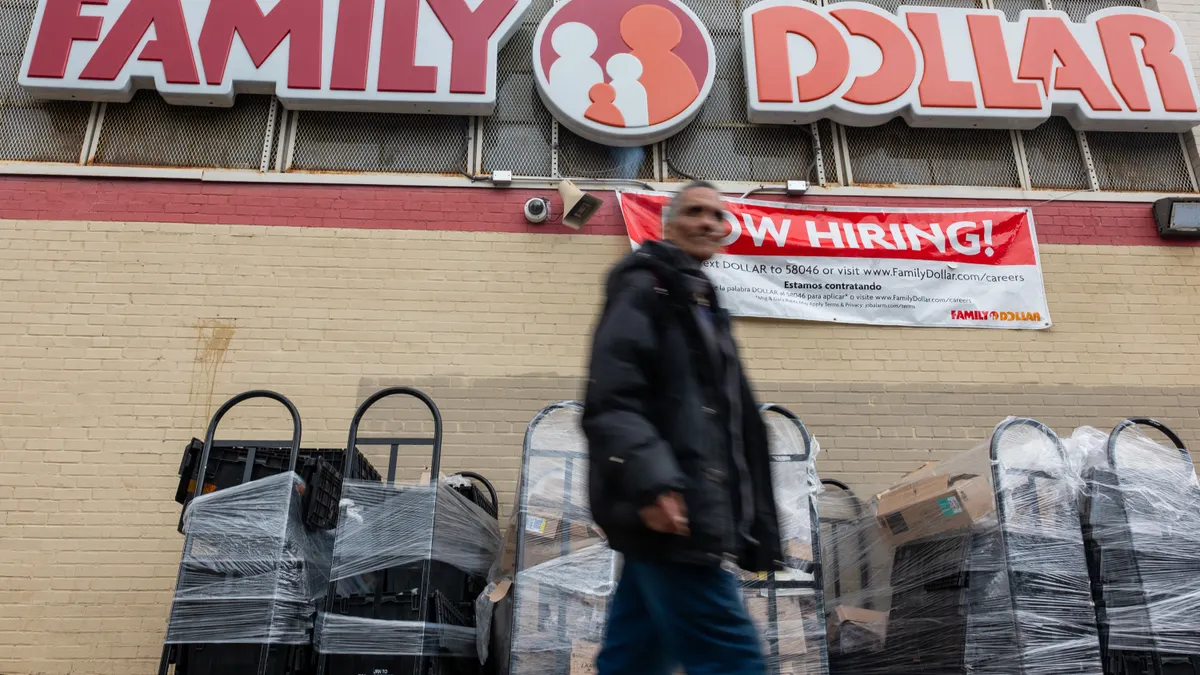
- Family Dollar Stores of North Carolina discriminated against a pregnant worker when it fired her for needing to take time off work and not immediately being able to produce a doctor’s note, the U.S. Equal Employment Opportunity Commission alleged on Monday.
- According to the complaint, the worker had endured negative comments and treatment from the store manager beginning from the disclosure of her pregnancy. When she experienced a number of symptoms on New Year’s Eve in 2024, and was told by her doctor to stop working until after her appointment on Jan. 3, 2025, the store manager allegedly demanded a doctor’s note and fired her when she did not provide one that night.
- EEOC has focused heavily on enforcement of the Pregnant Workers Fairness Act since it went into effect in June 2023. Amidst political upheaval over the past several years, pregnancy discrimination has emerged as a bipartisan priority.
Dive Insight:
The PWFA requires employers to provide reasonable accommodations for known limitations related to pregnancy, childbirth and related medical conditions, absent an undue hardship. PWFA also protects workers from being fired for needing or requesting an accommodation, the agency said in a news release, and protects workers from interference with their PWFA rights.
At her Jan. 3, 2025, appointment, the worker learned she had miscarried. The following day, the store manager created a document saying the worker had failed to notify the manager on duty that she would be late or absent from her shifts. On Jan. 6, 2025, Family Dollar determined that the worker was terminated for failing to communicate with the store manager and “abandoning her position.”
“Firing a worker for requesting time off to address urgent pregnancy-related medical concerns is not only unlawful — it is indefensible,” Catherine Eschbach, acting general counsel of EEOC, said in a statement in the same release. “To add loss of family income to the tragic loss of a baby is incredibly stressful. The EEOC will not hesitate to take decisive action when employers violate these protections.”
In EEOC v. Family Dollar Stores of North Carolina, LLC, part of the case hinges on the manager’s requirement that the worker provide a doctor’s note. On Dec. 31, 2024, the afternoon the worker said she’d been referred to a high-risk clinic and needed time off work, the store manager said she needed the note “as soon as possible” to send to the district manager.
The worker confirmed she’d requested the note and expected to receive it through her patient portal. While the store manager continued to press for the note on the evening of Dec. 31, 2024, the worker said the facility was closed for holiday, and the portal cautioned her it could take up to two business days to receive a response. She sent a screenshot of her confirmed Jan. 3, 2025, appointment, which was her only evidence of written communication, as she had received her doctor’s instructions via phone call.
“While the law allows employers to seek medical documentation to support a pregnancy-related accommodation in some situations, they may only do so when it is reasonable under the circumstances,” Melinda Dugas, regional attorney for EEOC’s Charlotte district, said in the agency’s release.
Family Dollar did not respond to a request for comment by press time.
EEOC has expanded on this element of the law in a guidance posted on its website. Other situations considered unreasonable include repeated requests for notes about a known condition, such as morning sickness, or requests for documentation when a situation is obvious, such as when an obviously pregnant worker requests a larger uniform.