Dive Brief:
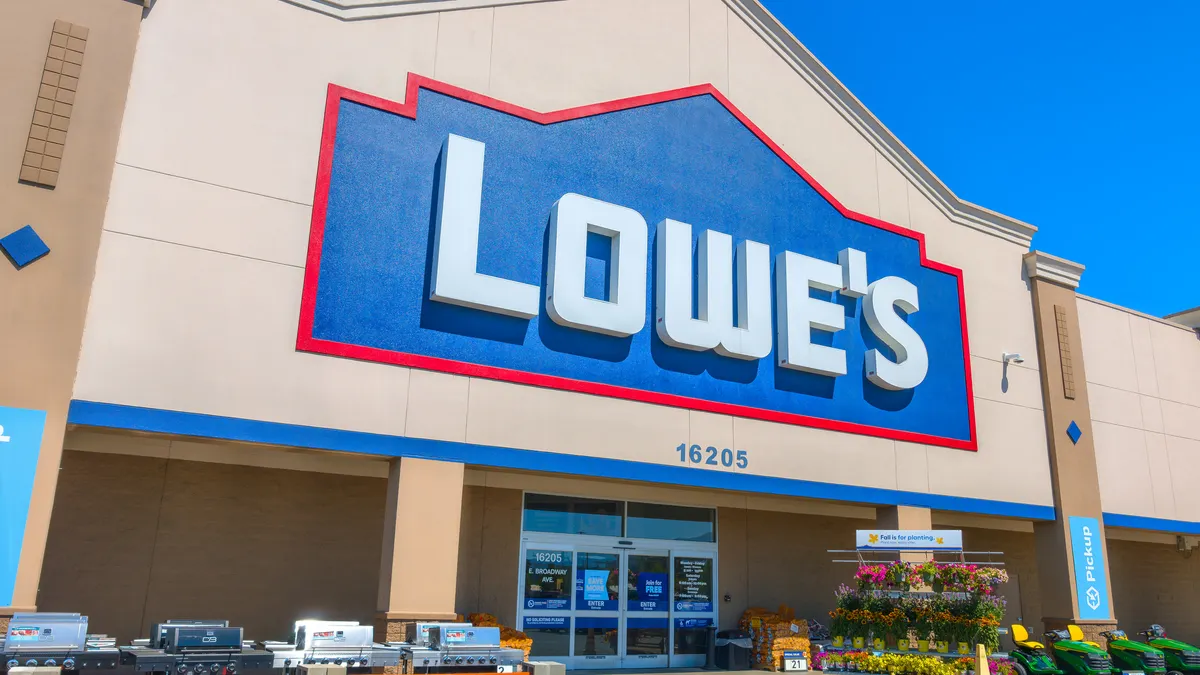
- A federal judge in the Western District of Texas granted in part and denied in part a motion for summary judgment from Lowe’s in a court case involving allegations of racism from a former Black employee, according to documents filed Aug. 11. The judge denied the defendant’s motion to strike and the lawsuit is to go to trial.
- The plaintiff was a Lowe’s assistant store manager from 2020 to 2022. She alleged she faced sexual and racial harassment, and that her employer violated both Title VII of the Civil Rights and the Texas Commission on Human Rights Act. She also alleged being denied brief time off via the Family and Medical Leave Act, which she requested due to testing positive for COVID-19, when a White co-worker “was allowed to take such leave around the same time,” per court documents.
- At the crux of Carter v. Lowe’s Home Centers, LLC is derogatory name-calling at work — an issue that can lead to damaging employment lawsuits when not taken seriously by supervisors.
Dive Insight:
The plaintiff alleged that, in November 2021, a fellow assistant store manager “subjected her to severe and pervasive sexual harassment,” according to court documents. She filed a complaint with her HR department and he was ultimately terminated.
Then, in June 2022, the plaintiff’s White co-workers allegedly made derogatory, race-related comments toward her. Their store supervisor “failed to take remedial actions” when the plaintiff reported harassment and discrimination from both co-workers and customers, the court documents said.
The plaintiff was written up after an altercation with a store associate that took place around June 2022. The plaintiff allegedly was barred from becoming operations manager, but Lowe’s promoted the other store associate instead.
The plaintiff recalled what the court called an “aggressive” incident with an “irate” customer. The customer called the plaintiff a racial slur and followed her around the store, according to the initial complaint. She followed protocol by directing the customer to leave the store and escorting him to the door, as well as calling the police per Lowe’s policy.
Her supervisor allegedly failed to complete the incident report immediately after the incident, and the disgruntled customer continued to return, threatening the plaintiff with physical violence. When her supervisor did finally submit a report, he manipulated certain co-workers’ witness statements and prevented the submission of such statements from others, according to the worker’s complaint.
HR Dive reached out to Lowe’s for comment and the employer did not respond back by the time of publication.
Uninvestigated complaints can be a minefield for companies. For example, the plaintiff in Pratt v. Wisconsin Aluminum Foundry alleged that she was terminated for raising employees’ bias and harassment complaints. Discrimination based on sex also played a role in this case.
Likewise, a Texas healthcare system is facing a lawsuit where the plaintiff alleged that she and other Black nurses faced race-based harassment on every shift. Brenyah v. Columbia Hospital Corp. of Bay Area not only raised the question of secondhand harassment, but brings to light how repeated use of racial slurs has been previously cited by courts as grounds for hostile work environment claims.
Notably, in 2019, the appeals court ruled in Mack v. Town of Pinetop Lakeside, et al. that the use of four racial slurs over a one-year period constituted an abusive work environment.