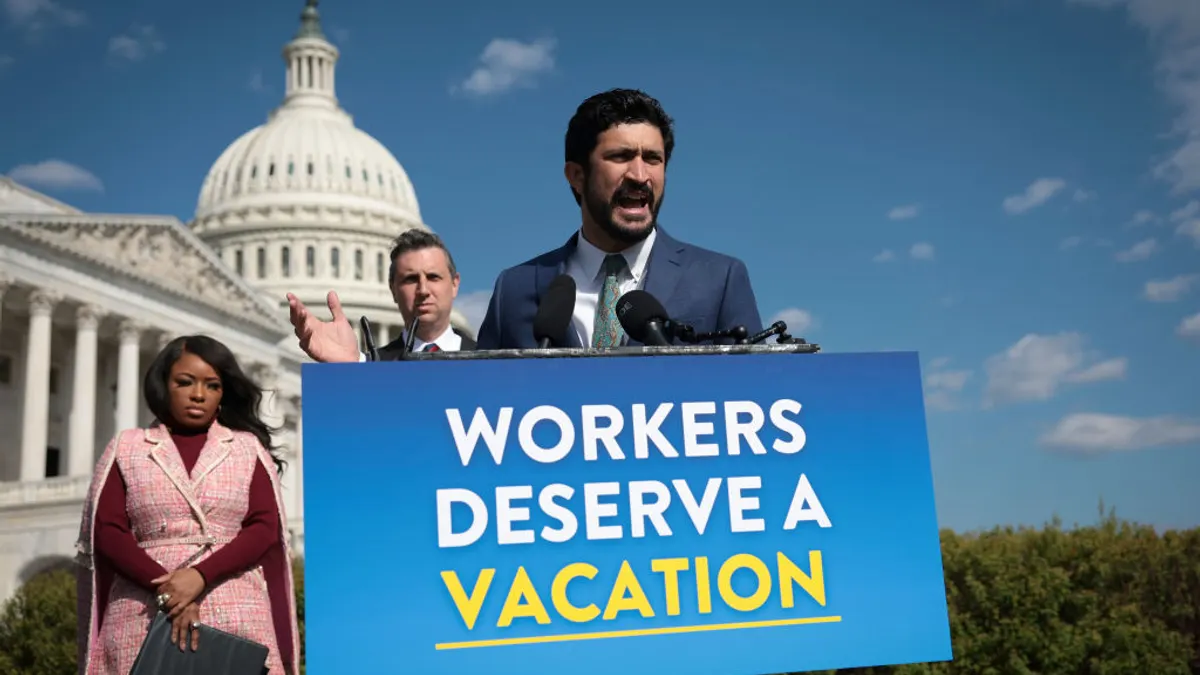
Increasing workers’ paid time off allotment by just a few days can make a big difference, recent research from Florida Atlantic University and Cleveland State University has shown.
Giving workers 6 to 10 days of PTO, not just 1 to 5 days of PTO, significantly reduced resignations — especially for men, a joint study by researchers from FAU and CSU suggested.
The gold standard, it seems, is 11 or more days of PTO. At that rate, both men and women were less likely to quit, research showed.
The report, “Does one week now prevent two weeks notice later? A longitudinal study of paid time off and employee retention,” published on Jan. 27 in the Journal of Strategy and Management, and is the result of researchers analyzing 18 years of data.
Why HR wins with PTO
Given the Great Resignation of 2021, strategies to reduce turnover will be crucial to keep in the HR toolbox, researchers implied.
“Moving forward, it will be crucial to carefully weigh the costs of offering PTO against the far greater costs of losing employees, so organizations can make benefits decisions that truly support both their workforce and their bottom line,” Candice Vander Weerdt, a corresponding author and a professor at CSU’s College of Business, said on Thursday.
The release of these findings coincides with another recent report by WTW, which suggests the majority of employers will invest in leave over the next two years. More than half of leaders said they’re prioritizing leave in hopes of attracting new employees and keeping current ones.
“Leave programs have become a strategic differentiator for employers competing for talent,” Alex Henry, group benefits leader at WTW, said on Monday. “Enhancing leave programs can be a cost-effective way to improve well-being, strengthen culture and meet the evolving expectations of a modern workforce.”
How private employers fill in public policy gaps
Global workplace experts have long suggested that the U.S. is behind in its approach to paid leave. While this conversation tends to highlight the lack of resources for working parents and caregivers, these observations have been applied to PTO in general.
Out of the nearly 40 high-income nations in the Organisation for Economic Co-operation and Development, the U.S. is the only one that doesn’t ensure PTO or paid parental leave for its people, FAU researchers pointed out.
Some states require five days as the minimum amount of PTO and no state mandates more than eight days, LeaAnne DeRigne, the study’s co-author and a professor at FAU’s Phyllis and Harvey Sandler School of Social Work, observed in a statement released Thursday.
But FAU and CSU’s findings show “that the strongest retention benefits occur well above those limits,” DeRigne said. “If policymakers and employers want to keep workers, they need to recognize that meaningful time away from work isn’t a luxury — it’s a proven strategy for stability.”