Dive Brief:
- As of Dec. 15, the U.S. State Department will be conducting “an online presence review” of H-1B visa applicants and their dependents. As a part of this policy, everyone under review is required to set their social media account settings to “public.”
- The goal, per the department’s announcement Wednesday, is to verify which visa applicants are “inadmissible to the United States, including those who pose a threat to U.S. national security or public safety.”
- One law firm noted that this new policy “marks a significant shift in consular screening for employment-based visa categories.”
Dive Insight:
This update in policy from the State Department comes on the heels of President Donald Trump signing the “Restriction on Entry of Certain Nonimmigrant Workers” presidential proclamation, which requires employers to pay $100,000 to file most H-1B visa petitions, on Sept. 21.
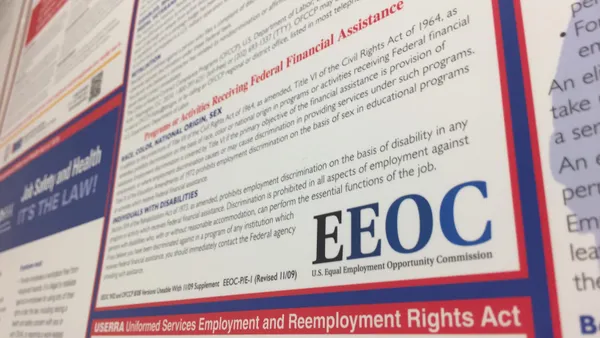
The U.S. Department of Homeland Security also brought back wage-based H-1B visa selection criteria that same month, and under Chair Andrea Lucas, the U.S. Equal Employment Opportunity Commission put out a technical assistance document in November on anti-American bias at work. The guidance called out job listings with phrases like “H-1B preferred” or “H-1B only.”
These moves align with this administration’s prioritization of American workers, as seen on the Department of Labor page celebrating America’s 250th birthday. “American Workers First is not just a slogan,” the DOL said. “It’s our promise to deliver results for the hardworking people of our great nation.”
Apart from fitting into White House’s vision for the workforce, the State Department’s new H-1B policy appears to be an extension of the administration’s overall immigration policy. Back in August, the U.S. Citizenship and Immigration Services updated its guidance to factor “anti-American” online sentiments in its immigration decisions.
Together, both immigration-related policies usher in a new era of social media screening. “The executive branch is really increasing the use of their discretionary authority under national security considerations across agencies,” Henry Lindpere, Manifest Law senior counsel, said in a statement Thursday.
The bottom line for HR, according to attorneys, is that recruiters and hiring managers will need to go over visa applicants’ social media pages with a fine-tooth comb.
“For employers sponsoring H-1B visas or firms that support visa applicants, the expanded vetting means more responsibility for advising applicants about their digital footprint,” law firm Wildes & Weinberg wrote in a blog post reacting to the news.
Now, due to the department’s policy, public content review “becomes part of compliance awareness,” the law firm said.