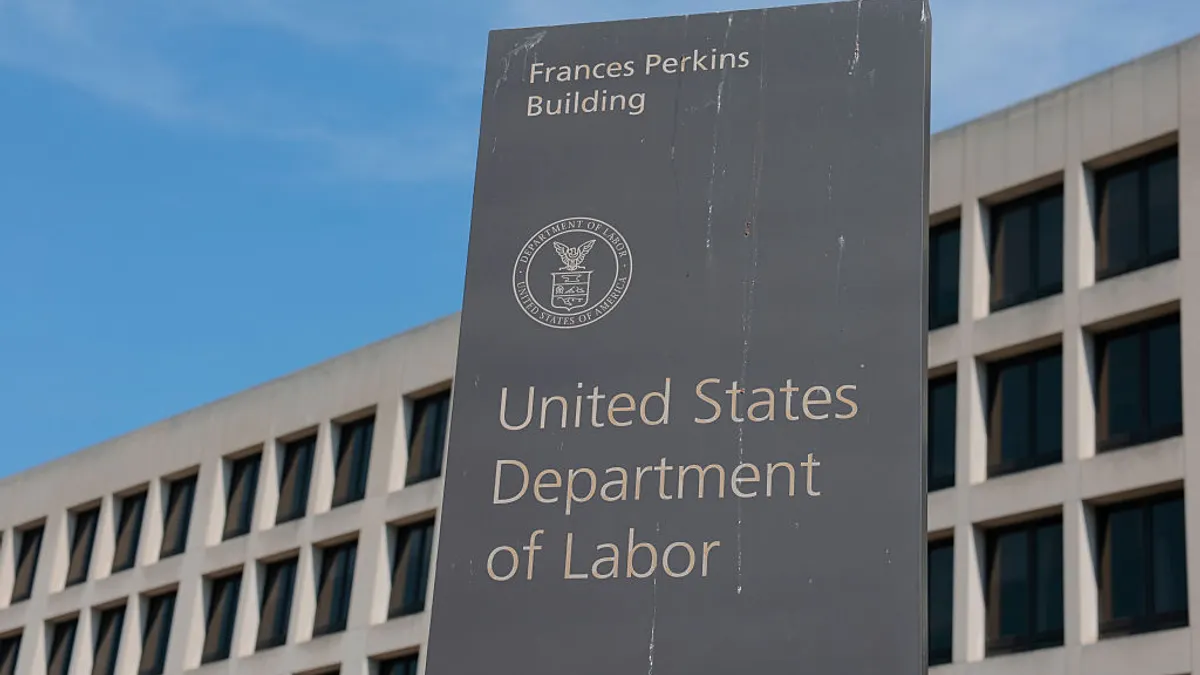
U.S. Department of Labor officials encouraged employers to self-report potential wage-and-hour violations via the agency’s Payroll Audit Independent Determination program, calling it a “real big win” for both employers and employees during a virtual event Thursday.
PAID gives employees access to back wages and other remedies in an expedited manner that avoids litigation and enforcement, which also benefits employers, said Andrew Rogers, administrator of DOL’s Wage and Hour Division.
DOL announced the program had been reopened last July, allowing employers to resolve potential violations of the Fair Labor Standards Act as well as the Family and Medical Leave Act.
The latter law is a new addition to PAID not included within the scope of its first iteration. FMLA violations covered under the program include denial of FMLA leave; failure to return an employee to the same job or an equivalent job upon return from leave; and penalization of employees for using such leave.
The program also may weigh in on FMLA disputes surrounding an employee’s medical certification and whether the reason for a leave request qualifies for the law’s protections, among other examples.
DOL initially launched PAID during the first Trump administration as a pilot program to allow employers to audit their pay practices and self-report FLSA violations. The Biden administration shelved the program over criticism that it allowed employers to avoid litigation and penalties, instead directing organizations to DOL’s outreach and educational resources.
A 2019 HR Dive analysis showed that, slightly more than a year after its launch, PAID program participants paid more than $4 million in back wages to approximately 7,500 employees. Rogers said Thursday that the initial run of the program resulted in the recovery of $11 million in back wages total.
PAID helps bring employers into compliance in a way that encourages them to resolve wage-and-hour issues instead of ignoring them or hoping they’ll go away, Rogers added. “It’s certainly showing in the early numbers that that value is continuing as we move forward from the relaunch,” he said.
Other benefits include the fact that under the FLSA, employers cannot be released from claims via private releases or agreements with employees as they can under other laws, said Kimberly Avery, regional director of enforcement at DOL.
“Only FLSA violations resolved through the courts or through the [DOL] offer a binding release, and this bars employees from further action on the same issue,” Avery said. “Resolutions achieved through the PAID program, since they are overseen by [DOL], offer employers these protections.”
The program is not open to employers under investigation for related issues or that are currently in litigation or arbitration that began before the employer applied for PAID. PAID also cannot be used to repeatedly resolve the same infractions, Avery said, and DOL can decline to accept an employer into the program.
Employees are not obligated to accept payments or remedies offered, according to DOL guidance. Avery also noted that, should employers pay back wages to employees before DOL reviews and assesses those owed wages, those employees have not waived their right to pursue private litigation for potential violations.
Some management-side attorneys have expressed concern that participation in the program could open employers up to state law claims or that a denied request to participate could draw attention to potential violations. DOL, for its part, however, said that a denied request will not serve as a basis for future investigation of a participating employer by DOL “unless Wage and Hour has a reason to believe that health or safety are at risk,” according to Troy Mouton, director of the Wage and Hour Division’s New Orleans district office.