Dive Brief:
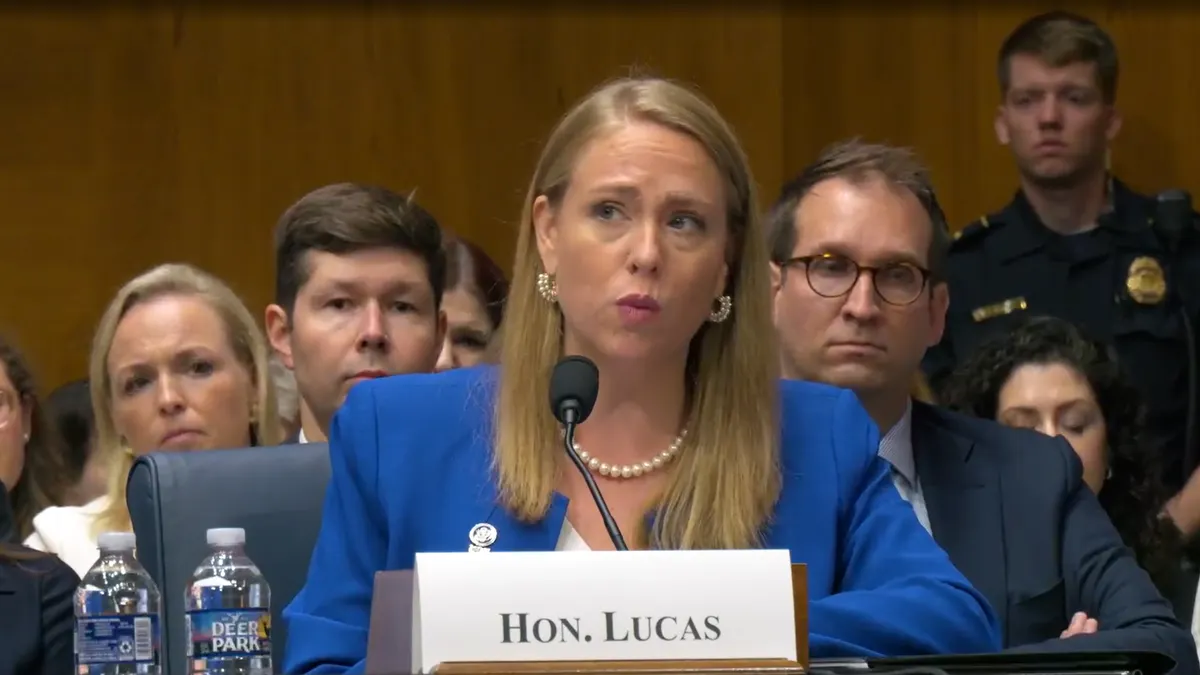
- The head of the federal agency that enforces workplace nondiscrimination laws on Wednesday called on White men to report workplace discrimination.
- “Are you a white male who has experienced discrimination at work based on your race or sex?” wrote Andrea Lucas on X. “You may have a claim to recover money under federal civil rights laws,” she said, urging applicants and employees to contact the U.S. Equal Employment Opportunity Commission as soon as possible.
- Lucas continued that the commission is committed to eliminating “ALL race and sex discrimination — including against white male employees and applicants.”
Dive Insight:
Lucas’ post underscores an emerging trend in EEO enforcement: a focus on what many have termed “reverse discrimination.”
While perhaps a misnomer — the U.S. Supreme Court held earlier this year that majority-group plaintiffs need not meet a higher bar to prove bias than their counterparts — the risk of an increase in discrimination claims from White and male employees exists all the same, sources say.
Are you a white male who has experienced discrimination at work based on your race or sex?
— EEOC Chair Andrea Lucas (@andrealucasEEOC) December 17, 2025
You may have a claim to recover money under federal civil rights laws. Contact the @USEEOC as soon as possible.
The EEOC is committed to identifying, attacking, and eliminating ALL race… pic.twitter.com/BYjbld5zdv
The high court’s ruling alone has the potential to accelerate such claims, a partner at law firm Duane Morris wrote in an op-ed for HR Dive. And coupled with the EEOC’s new focus, employers may well see an uptick not only in individual lawsuits but also class-action claims, according to a report from the firm.
Plaintiffs have tested the waters with mixed success in recent months. Texas A&M University-Texarkana in July agreed to settle a lawsuit alleging it forced a White, male employee to resign and replaced him with a younger Black woman, for example. In October, however, an appeals court agreed that a lower court properly dismissed a claim from a White camera operator alleging that diversity, equity and inclusion commitments at Warner Bros. entities showed race bias in the hiring process.
The predicted uptick in these claims means HR professionals should review their equal employment opportunity or anti-harassment policies, partner and chair of the employment practice at Stradley Ronon previously wrote for HR Dive. Such policies should clearly include two statements, she said: “assurance that such policies apply equally to all employees, and confirmation that employment decisions will not be made based on any applicant’s or employee’s protected class.”
Employers also should establish a clear complaint resolution process that allows workers to raise concerns and enables HR to respond quickly, she added. “Being attentive to employee concerns can prevent claims of reverse discrimination from growing into full-blown lawsuits.”