UPDATE: Aug. 14, 2026: Freestate Justice will appeal the Maryland district court’s decision in favor of the U.S. Equal Employment Opportunity Commission, an Aug. 10 court filing indicated. The request has been submitted to the 4th U.S. Circuit Court of Appeals.
Dive Brief:
- A federal judge agreed to dismiss an LGBTQ+ advocacy organization’s lawsuit claiming that the U.S. Equal Employment Opportunity Commission “abdicated” its duty to enforce federal workplace protections for transgender workers because the plaintiffs lacked standing, according to a decision issued Friday.
- FreeState Justice filed the lawsuit last July, alleging that EEOC unlawfully denied transgender workers access to its charge-investigation process and other enforcement protections as part of a “Trans Exclusion Policy.” But courts lack authority to review such discretionary agency decisions, Judge George Russell III held, quoting the November 2025 decision of a separate court in a lawsuit challenging alleged nonenforcement by EEOC.
- Russell dismissed the case without prejudice, writing that the EEOC’s decision to alter investigations of gender identity discrimination claims was “deeply troubling” but nonetheless unreviewable. FreeState did not immediately respond to a request for comment.
Dive Insight:
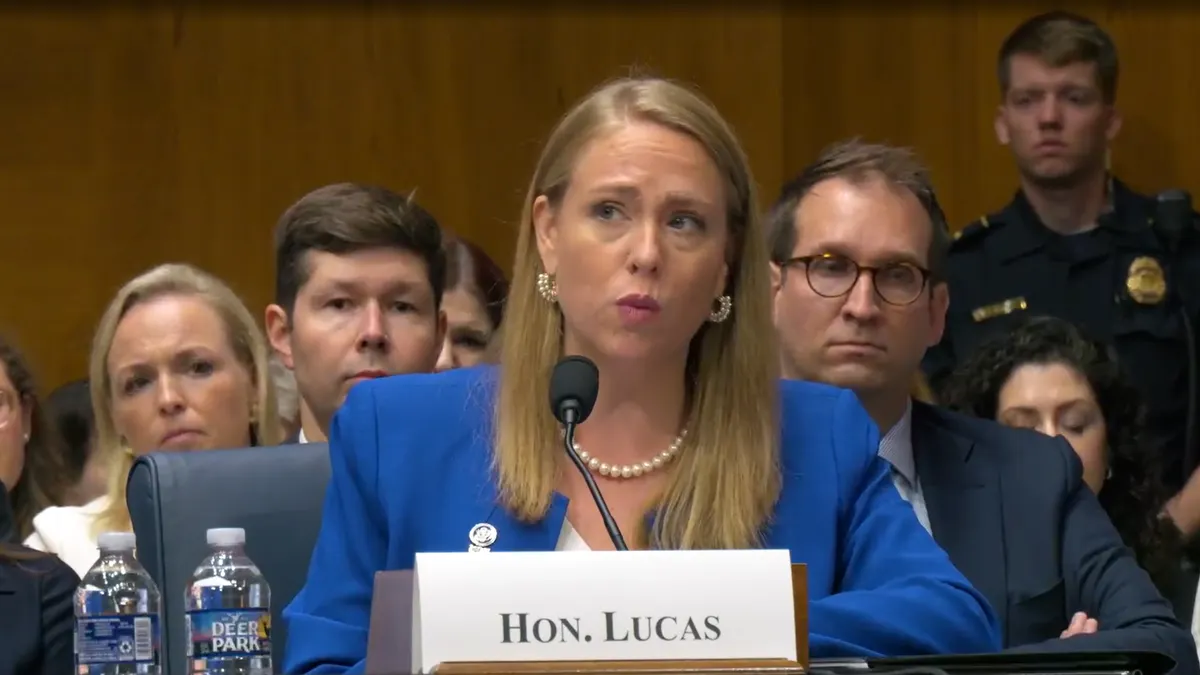
The ruling is yet another victory for EEOC and Chair Andrea Lucas as the commission implements a key component of President Donald Trump’s workplace civil rights agenda.
Under Lucas, EEOC has scaled back references to, and enforcement on behalf of, transgender workers. That goal is an extension of Trump’s 2025 executive order directing the government to promote the “biological reality of sex,” which Lucas went on to reference in an announcement of various EEOC initiatives pertaining to sex-based discrimination enforcement.
As an extension of that work, EEOC last year requested dismissal of nearly every discrimination lawsuit it had filed on behalf of transgender plaintiffs. LGBTQ+ rights organizations like Equal Rights Advocates roundly criticized this move, calling it a “dereliction of EEOC’s duty” under federal civil rights laws. Lucas went on to state that EEOC determined that it could not continue to pursue such cases while simultaneously following Trump’s order but that the commission would continue to accept charges from transgender plaintiffs.
EEOC had moved to dismiss FreeState’s lawsuit in late 2025 following a federal judge’s decision in Cross v. EEOC, which challenged the commission’s nonenforcement of disparate-impact discrimination. The agency argued that Cross “relied on many of the precedents that the Commission cites in its motion here,” adding that the federal judiciary cannot second-guess EEOC’s decisions regarding where it will allocate agency resources.
Russell ultimately agreed, writing that the court would adopt the same reasoning outlined in Cross. The ruling also cited a 2023 U.S. Supreme Court decision in a case involving state governments’ challenges to federal enforcement of immigration laws.
EEOC has continued to adopt Trump’s policy priorities with several decisions and actions intended to roll back recognition of or protections relating to transgender identity.
Earlier this year, the agency scrapped its Biden-era harassment guidance, which identified repeated and intentional misgendering as an illegal action. It has also sought to protect sex-segregated facilities, issuing a federal sector decision permitting agencies to require that transgender employees use bathrooms and intimate spaces that correspond to their sex at birth.
But that work has resulted in backlash including from former employees. In one such case, a transgender former EEOC employee sued the agency in April, alleging that Lucas created a hostile work environment that violated Title VII of the Civil Rights Act. That case is ongoing.