Dive Brief:
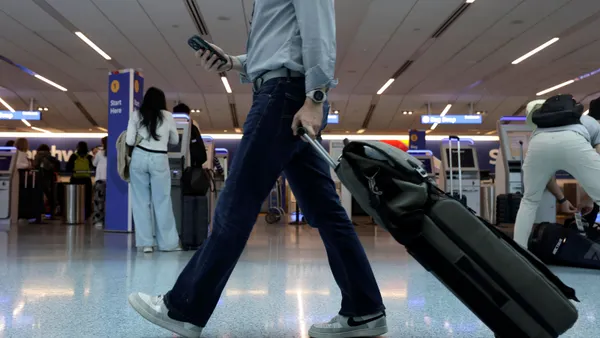
- Employers need not pay for an employee’s ordinary, midday travel between home and work, the U.S. Department of Labor said Wednesday.
- The agency reached that conclusion in one of two newly issued opinion letters addressing compensable working time.
- The letters are part of DOL’s 2025 recommitment to its opinion letter program, allowing stakeholders to request interpretations of how employment laws apply in specific situations.
Dive Insight:
DOL has in recent years used opinion letters to answer fact-specific employment law questions. Employer representatives have generally favored the program over alternatives because opinion letters have the potential to serve as a defense to litigation, they previously told HR Dive.
The agency’s Wednesday letter on midday commutes, FLSA2026-9, came in response to a question from an employer with a large, nonexempt workforce. The employees don’t regularly travel as part of their job duties, according to the letter, and can work from home when business needs permit.
They have not, however, been allowed to work in more than one location in a single workday because of concerns the Fair Labor Standards Act would require them to be paid for commuting in the middle of the workday. They haven’t been allowed, for example, to work from home in the morning to avoid rush hour, and come to the office at lunchtime to work the rest of the day on site.
The employer, however, said it wants to provide that flexibility, if it would not require additional compensation.
DOL, in response, assured the employer that the FLSA wouldn’t require pay in that scenario. “[A]ny time employees spend traveling between their home and their primary worksite within a workday may be excluded from recorded worktime, as long as such travel is otherwise a ‘normal’ or ‘ordinary’ commute that primarily benefits the employee,” the agency concluded.
The agency cautioned, however, that employees may be due pay for that time in circumstances outside the ordinary and that primarily benefit the employer — when an employee has gone home for the day and is called back for an emergency, for example. DOL also warned employers that its opinion should not be construed as a departure from its longstanding position that travel from worksite to worksite during the workday is compensable.
In a separate letter issued Wednesday, FLSA2026-10, DOL responded to a compensation question from an MRI engineer who worked at client sites from 8 a.m. to 5 p.m., but received service requests at home and scheduled the day’s client appointments before their shift. The employee then drove an employer-provided vehicle to job sites, often making work-related phone calls during the drive.
The agency concluded that the time spent receiving requests wasn’t compensable as it was incidental to the use of an employer-provided vehicle for commuting. The time spent scheduling appointments, however, was compensable, DOL said. And because the scheduling amounted to the beginning of the employee’s workday — and the employee lacked the freedom typically associated with commutes, sometimes even taking work calls during it — the drive time was compensable as well, DOL said.
It can be tricky to determine whether employee travel time is compensable, management-side employment law attorneys have said; DOL fact sheets and opinion letters offer some guidance, but as Wednesday’s letters illustrate, compensability decisions often require a detailed look at each specific scenario.