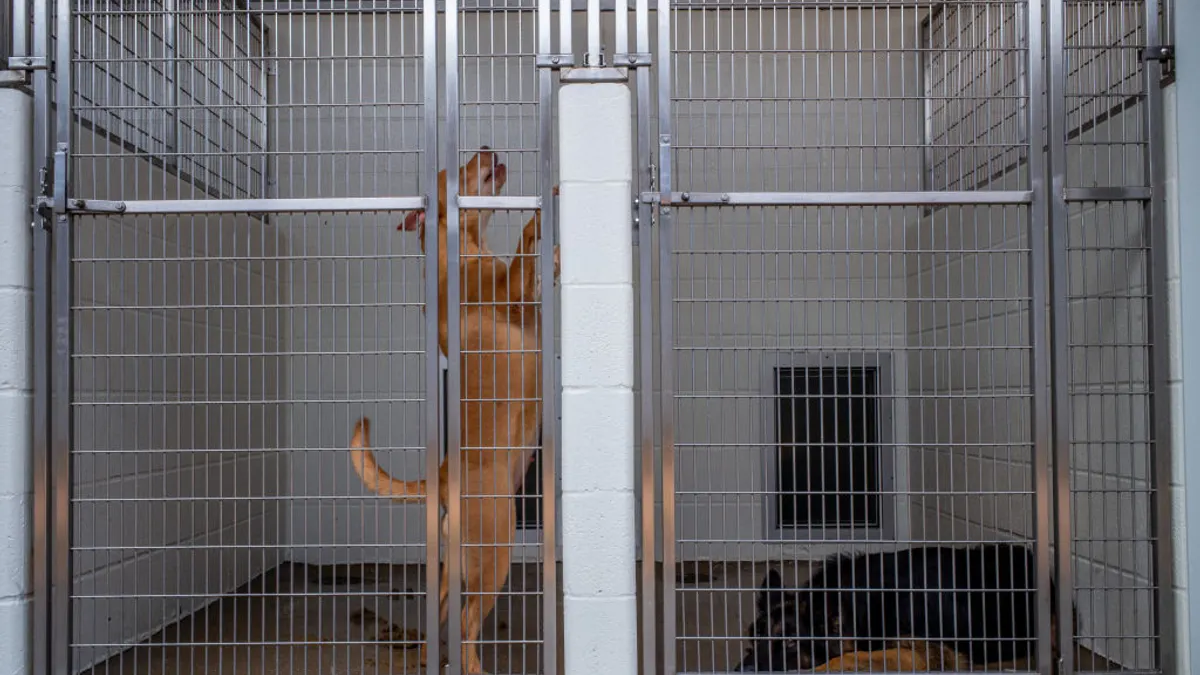
A former employee of the Animal Services Department for Miami-Dade County, Florida, failed to show she was terminated at the end of her probationary period due to her disability, rather than for poor performance, the 11th U.S. Circuit Court of Appeals determined Monday.
The plaintiff in Laughlin v. Miami-Dade County, Florida, was hired as an outreach specialist on a 12-month probationary period in February 2022, according to court documents. Several months later, she developed a range of symptoms, including migraines, dizziness, ringing in her ears, lightheadedness, difficulty swallowing and episodes of vomiting. She was diagnosed with a brain tumor, masses on her thyroid and an autoimmune disorder.
The worker received an accommodation of flexible hours and occasional remote work, and her relationship with her co-workers began to deteriorate, court documents showed. She alleged they became less responsive to her emails and calls and less willing to help her organize events. After she was assigned a new supervisor, the supervisor allegedly organized in-person meetings for days she was not in the office and created an events committee but did not add her to it.
Her co-workers also allegedly complained she was forgetful and they would have to pick up her slack, that she failed to submit receipts after an event in a timely fashion and that she made unprofessional statements.
The worker’s supervisor determined she had failed her probationary period and was “not able to dedicate all of [her] time to the work” and “not able to give 100% right now.”
Court finds no evidence of any kind
Despite these statements and treatment from the plaintiff’s co-workers, the 11th Circuit was unpersuaded of disability discrimination, considering three types of evidence: direct, circumstantial by way of pretext and circumstantial by way of establishing a “convincing mosaic” using a variety of factors.
Direct evidence requires a “rigorous standard,” the court said, requiring that discrimination be shown “without inference or presumption.” The supervisor’s comments at her failed probationary meeting did not rise to this level, the court determined.
Similarly, the plaintiff could not show pretext because she could not show the County’s stated reasons for the firing — lack of communication, failure to timely submit receipts — were inaccurate. While she argued the issues were minor, “we do not consider whether an employer’s stated reasons for dismissal are ‘prudent or fair,’” the court said.
Finally, the worker did not present a convincing mosaic of circumstantial evidence, despite pointing to more than 18 negative statements and actions from colleagues and superiors, the court said.
“Taken as a whole … her evidence merely indicates that her coworkers were upset and uncooperative with her when she worked from home. Indeed, they believed she performed poorly after she started working from home,” the court said.
An employer’s evidence of poor performance can often tank workers’ disability discrimination charges. In a recent, similar case of termination, an Ohio court found a Verizon dealer did not violate the rights of a worker with depression when it fired him for “repeated and well-documented performance and attendance deficiencies,” even though he argued those factors were related to his condition.
The employer also was not responsible for retroactively accommodating his disability by excusing the issues, the court said.