
Every conversation I have about artificial intelligence in HR eventually arrives at the same place.
Not prompts. Not policies. Not which platform to buy.
Confidence.
For all the excitement around AI, many HR professionals are still unsure where it fits. Some worry about accuracy. Others question whether it belongs anywhere near sensitive employee matters. And there is the persistent fear that AI is quietly replacing the human element of HR. Those concerns are understandable, but they are also keeping teams from experiencing what AI does well.
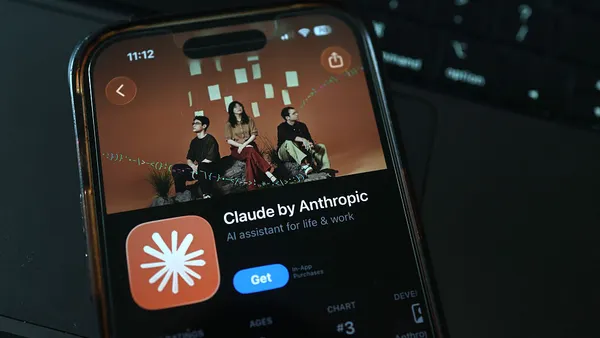
Anthropic recently published a survey of more than 50,000 Americans on their attitudes toward AI. One finding stood out: people who use AI every day at work are significantly less worried about losing their jobs to it than people who have never used it, 54 percent against 70 percent. That challenges the assumption that more exposure breeds more fear. The opposite appears to be true.
Once people start working with AI, they discover it is neither an oracle nor an HR professional. It is a tool and its value depends on how it is used. The conversation often swings between two extremes: AI as the answer to every workplace problem or a risk to avoid. Neither matches what I see with HR teams. The ones making real progress take a more practical route. They find the repetitive administrative work that eats their time and ask one question: could AI do this faster while people stay firmly in control of the outcome? More often than not, the answer is yes.
“I saw this recently with an HR team we were supporting. They were drowning in a recurring documentation task, think offer letters. Rather than buy a new platform, we built two AI agents within the customer's existing Microsoft environment to keep data secure. The first drafted from a locked template; the second checked that draft against a fixed set of criteria; and a person reviewed every output before it went anywhere. Work that once took most of a day now takes under 30 minutes, with higher quality because HR reviews and refines rather than starts from scratch. It also freed enough time to help that team stand up a leadership programme they simply could not have run before, because the administrative burden had always been in the way.”
The same pattern holds across drafting employee communications, building interview guides, creating onboarding materials, summarizing policy updates and producing performance documentation. AI gets you from blank page to workable draft far quicker. That does not remove the need for HR expertise. It frees you to spend less time producing content and more time applying judgment. Judgment is still the differentiator.
I have been vocal about the risk of generating handbooks or policies without proper human review. But the bigger risk sits earlier, in what goes into the tool. Feed live employee data, a grievance file or personal information into a system without knowing how it stores or trains on that data and you have a data protection problem before you have an AI one. AI cannot understand your culture, leadership philosophy or the legal nuance behind employment decisions, nor can it be accountable for its advice. That is why responsible adoption does not start with technology. It starts with capability and with clear rules about what data is allowed near it.
HR teams need room to experiment safely: a defined sandbox, low-risk tasks and clear ownership. Confidence is not built by another company-wide memo on AI governance. It is built through supervised practice.
This also means redefining success. The question is not whether AI can replace a process, but whether it can strip out the friction that stops HR people doing the work only they can do: coaching leaders, resolving complex employee issues and building trust. That is the real promise. Not automation for its own sake, but more capacity for the work that only people can do.
As AI improves, the organizations that gain most will not be those with the biggest technology budgets. They will be the ones that invest in their people, so those people know when to lean on the technology, when to challenge it and when human judgment should have the final word. That is where the useful conversations are now: HR leaders moving on from whether they should use AI to how they can use it responsibly.
Discover 10 practical ways AI can help HR teams save time, improve consistency and work smarter through real-world examples and demonstrations. Register here >>