Dive Brief:
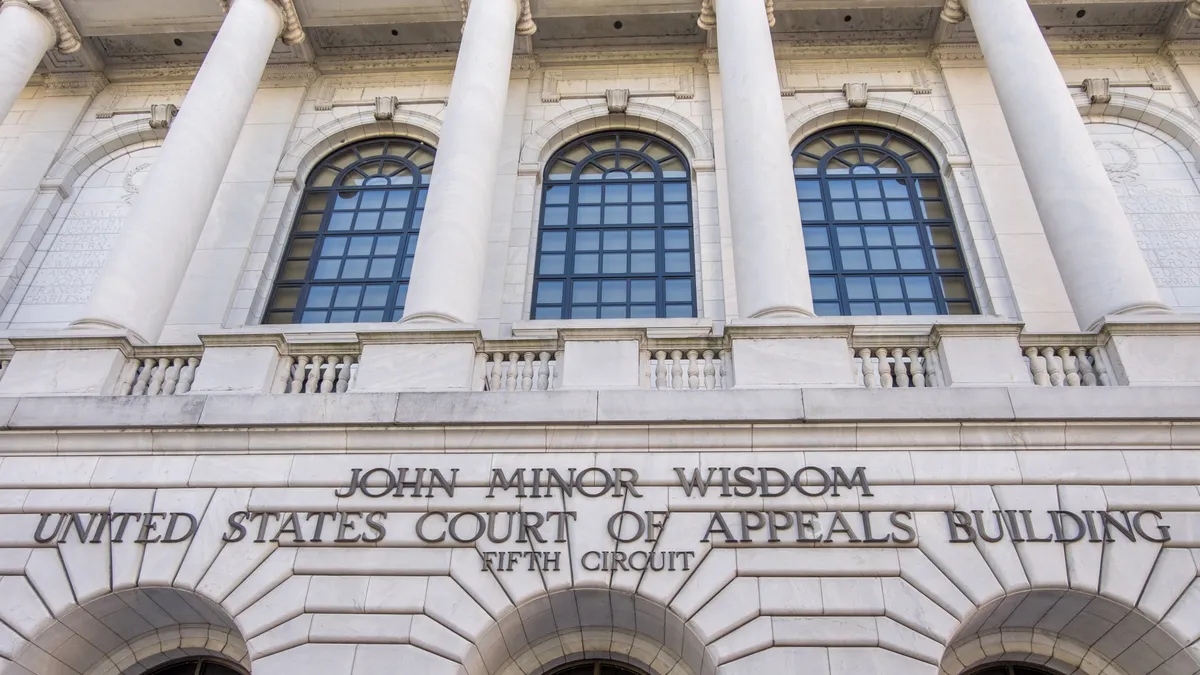
- An employer was unable to enforce employee arbitration agreements because a company representative never signed them, the 5th U.S. Circuit Court of Appeals held Dec. 17 (Mertens, et al. v. Benelux Corp.).
- Four members of the waitstaff at Palazio Men’s Club in Austin, Texas, sued their employer for alleged wage and hour violations. The employer moved to compel arbitration, pursuant to agreements the workers had signed.
- The club’s general manager, however, never countersigned the agreements. A district court held that because the agreement contained clear language that signatures were needed, it was unenforceable. The employer appealed, and the 5th Circuit upheld the lower court’s ruling.
Dive Insight:
Mertens was decided under Texas law, which takes into account the intent of the parties to an arbitration agreement, the 5th Circuit explained.
Signatures aren’t necessarily required to render such an agreement enforceable if the parties give their consent to the terms of the contract, and there’s no evidence of an intent to require both signatures as a condition to it becoming effective, the Mertens court said, citing circuit precedent.
In 2023, for example, the 5th Circuit held that an agreement between BJ’s Restaurant Operations Co. and a former employee was enforceable even though the employer never signed it. The agreement not only lacked explicit language requiring the signature, the appeals court said, but also included no place for the employer to sign.
Arbitration agreements remain an active area of employment law, with the U.S. Supreme Court poised to weigh in on a question involving interstate commerce. State law has been similarly active: a California law that limited such agreements drew legal challenges and was ultimately blocked, and an expanded Illinois law takes effect Jan. 1, 2026.