Dive Brief:
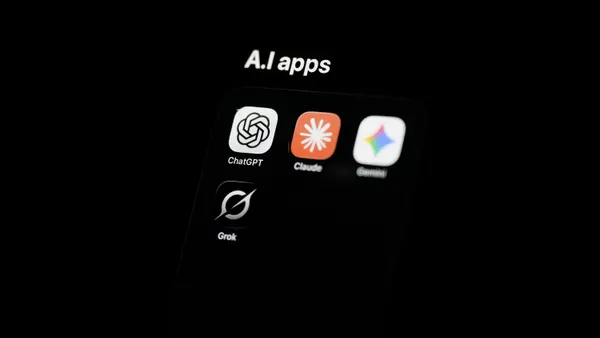
- With employers failing to provide the tools and resources workers need to use artificial intelligence in their jobs, more than 3 in 4 employees are finding and signing up for AI on their own — a trend referred to as “bring your own AI (BYOAI),” according to research released June 22 by resume building platform Resume Now.
- A May survey of 1,020 employed adults in the U.S. found that 23% of respondents said they use AI tools they sourced themselves daily; 20% use personally sourced AI tools a few times a week; 17% use them occasionally; and 16% use them rarely, Keith Spencer, a career expert, reported in a post.
- While BYOAI may help employees in the short term, “without clear oversight, this employee-led adoption can also create new questions around accuracy, data privacy, consistency and accountability,” Spencer said.
Dive Insight:
The BYOAI trend has evolved from a more fundamental and well-documented problem: As organizations race to integrate AI into the workforce, they’re failing to provide what employees need to harness the technology into a sustainable investment, the survey indicated.
BYOAI “proves how adaptable today’s employees are, but it also puts companies in a tough spot. Operating without guardrails, official tools, or proper training is a recipe for security headaches and wildly inconsistent work quality,” Spencer said.
Survey results highlight the issue. According to the findings, 41% of employees say they’re not getting the tools, training or guidance to ready them to use AI at work. Only 21% say they’ve received clear AI guidelines specific to their role, and just 19% say their employer provided comprehensive training on the tech with dedicated time or resources.
Noticeably, 52% of workers said their employer doesn’t supply any AI tools or only provides free or publicly available ones.
Data and AI skills are now as fundamental to the workplace as the ability to write, according to a February report from skill building platform DataCamp. Even so, about half of the U.S. and U.K. business leaders surveyed for the report said their workers significantly lack these skills.
Experts recently spoke with HR Dive about how to ensure AI readiness training programs, which are key to closing the gap, produce efficient outcomes. For starters, companies need a clearly stated AI policy outlining what tools are allowed and how they may be used, the experts said.
AI policies that provide clear guidance not only help employers avoid a compliance disaster but also help employees feel more comfortable about using AI tools, especially if they can collaborate and discuss tricky adoption issues, the experts added.
Also, expecting employees to immediately change the way they work is a big misstep in change management, the experts pointed out. Instead, learning and development professionals should create a roadmap and explain what each step of the journey is, they recommended.