One year ago, former employees of the U.S. Equal Employment Opportunity Commission came together with a mission: find lawyers to take on cases alleging discrimination against transgender workers that the agency had dropped.
In one fell swoop, EEOC in early February 2025 moved to dismiss pending gender identity bias lawsuits it had filed on behalf of workers during the Biden administration. The lawsuits didn’t reflect the policy positions of the newly installed Trump administration.
Within a week, a group of seven former agency officials had mobilized. “We wanted to make sure that workers were not harmed by that dismissal and that we could help ensure they had private council to represent them,” said Jenny Yang, a partner with Outten & Golden and former EEOC chair.
The ‘gender identity agenda’
The shift started with one of the first executive orders President Donald Trump signed the day he took office: “Defending Women From Gender Ideology Extremism and Restoring Biological Truth to the Federal Government.”
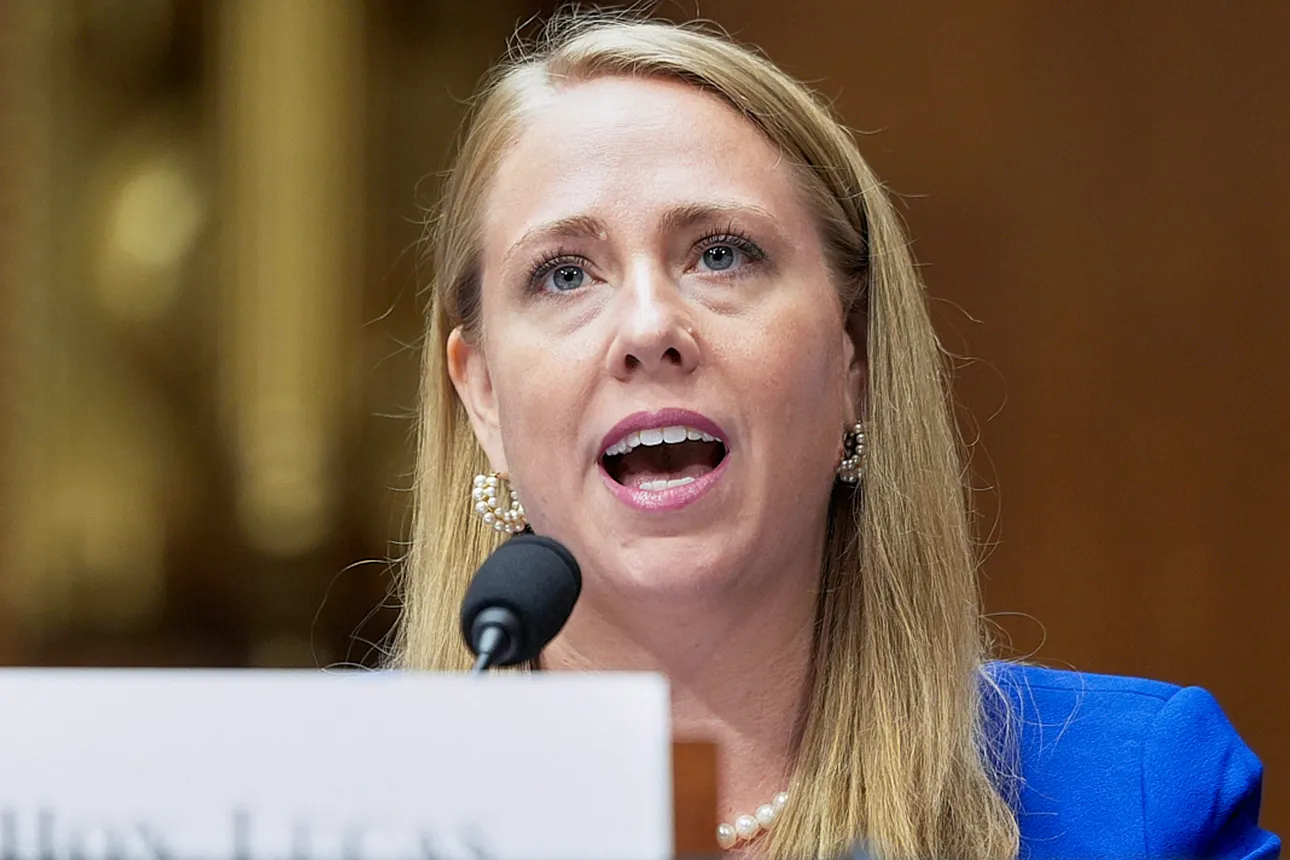
Then-Acting Chair Andrea Lucas said EEOC would focus on “rolling back the Biden administration’s gender identity agenda” in accordance with the order. The agency swiftly moved to stop its employees from processing claims alleging sexual orientation- and gender identity-based discrimination under Title VII of the Civil Rights Act, later resuming consideration of claims involving hiring, firing and promotion in accordance with the 2020 U.S. Supreme Court ruling in Bostock v. Clayton County.
It also moved to have gender identity-based claims in litigation — at least seven cases — dismissed. EEOC said in one filing that its continued litigation of the lawsuits “may be inconsistent with” the order as well as Office of Personnel Management guidance directing federal employees to comply with it.
Those on the other side of the aisle disagree. “The EEOC is simply wrong on the law,” said Jocelyn Samuels, former EEOC vice chair. “What EEOC in this administration is doing is extraordinarily damaging to the standard of the equal employment opportunity laws — to the [goal] of those laws to ensure that people can work in workplaces that are free from discrimination — and to the enforcement activities of the agency.”
But this may be more than typical partisan disagreement. As administrations change, it is normal for some to be more committed to the enforcement of civil rights laws on behalf of minority groups than others, said David Oppenheimer, clinical professor of law at the University of California, Berkeley, School of Law.
“It's completely understandable that when a president is elected who has not made civil rights enforcement a priority in his campaign, that he may not make it a priority in his administration,” Oppenheimer said. “This is wholly different. This is an attempt to set back the gains of the civil rights movement and to elevate income and opportunities for White men at the expense of everyone else.”
Are you a white male who has experienced discrimination at work based on your race or sex?
— EEOC Chair Andrea Lucas (@andrealucasEEOC) December 17, 2025
You may have a claim to recover money under federal civil rights laws. Contact the @USEEOC as soon as possible.
The EEOC is committed to identifying, attacking, and eliminating ALL race… pic.twitter.com/BYjbld5zdv
From that first meeting to help find representation for the allegedly aggrieved workers who EEOC would no longer represent, the group of former agency employees saw a void to be filled.
“I felt a personal sense of responsibility that those individuals who had brought those charges and who the EEOC brought the cases for that they weren’t just left out in the cold and abandoned by the agency,” said Karla Gilbride, former EEOC general counsel and deputy director of the litigation group at Public Citizen, a nonprofit consumer advocacy organization.
Through outreach to the private bar, the former agency workers were able to help find people to come forward to intervene in the cases and represent the individuals, Gilbride said.
Without the civil rights agency to inform workers of their rights when facing gender identity-based discrimination or to ensure employers understand their responsibilities to prevent such discrimination, there was “a critical function” the group could take on “given the EEOC’s abdication of its responsibilities to do so,” Samuels said.
And so, the group now known as EEO Leaders was created.
Filling a void
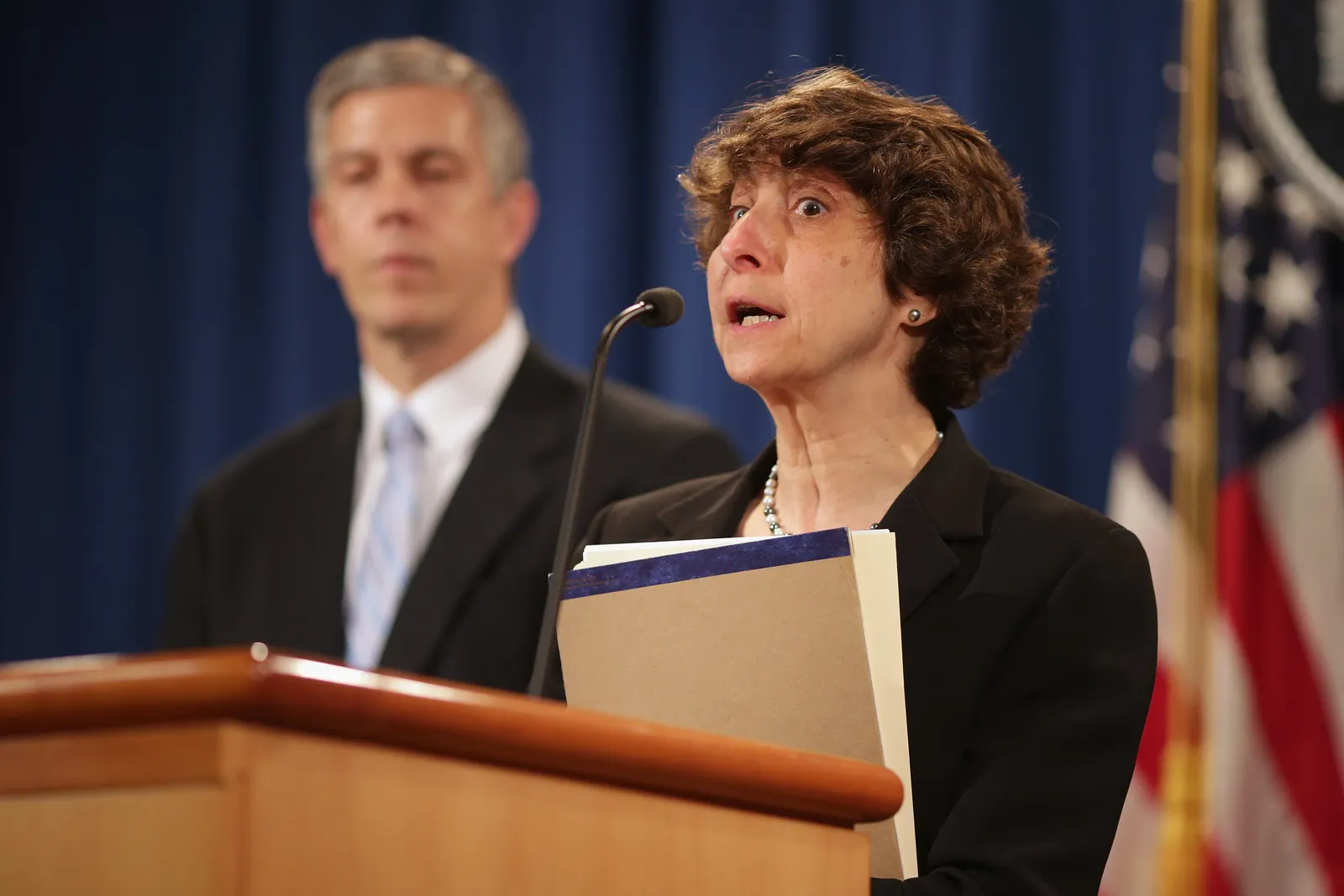
Today, EEO Leaders comprises a dozen former federal officials, both from EEOC and the U.S. Department of Labor’s Office of Federal Contract Compliance Programs, who served across multiple administrations. The all-volunteer group meets weekly over Zoom to identify potential upcoming actions by EEOC, DOL and the U.S. Department of Justice and determine which they can productively weigh in on, Samuels said.
“Chai [Feldblum] is the conductor of the train. She keeps us on track,” Samuels said.
“It takes a lot of time and effort to continue a group that has no staff,” said Chai Feldblum, EEO Leaders president and former EEOC commissioner. “I feel grateful that I have the bandwidth to give that to the group.”
Since its first Zoom meeting on Feb. 21, 2025, entitled, “The EEOC Cavalry,” EEO Leaders has issued 19 statements and has more in the works. The group provides the former officials with a way to speak with “one voice” about the changes taking place, Yang said.
“I think it's powerful that we have former career leaders, who have been with the agency for decades, who can really speak to commission practice over an arc of history and can reinforce what significant departures we're seeing from precedent,” Yang said.
Samuels said she views the group as a “counterweight” to the current EEOC — one that can “try to provide information to stakeholders about what we think the law continues to say, despite the EEOC assertions to the contrary.”
Thus far, the group has tackled the government’s anti-DEI stance, positions on disparate impact and sexual orientation- or gender identity-based discrimination, changes to voting procedures and EEOC’s rescission of its harassment guidance, among other flash point issues.
After EEOC published a letter to the CEOs, general counsels and board chairs of 500 of the largest U.S. employers warning them that their DEI efforts could run afoul of Title VII, EEO Leaders published a counter-letter within days.
“We are concerned that recent efforts by the EEOC may discourage you from engaging in lawful efforts to promote diversity, equity, and inclusion. We urge you to avoid pulling back from this work,” the EEO Leaders letter reads. “Retreating from practices that advance equal opportunity is not the prudent or safe choice — it is an unnecessary risk. The law has not changed. Your obligations — and your options — remain intact.”
The group’s letter says that “although the EEOC letter implies otherwise,” it remains legal for employers to collect demographic information, offer DEI training and support employee resource groups.
A shadow government?
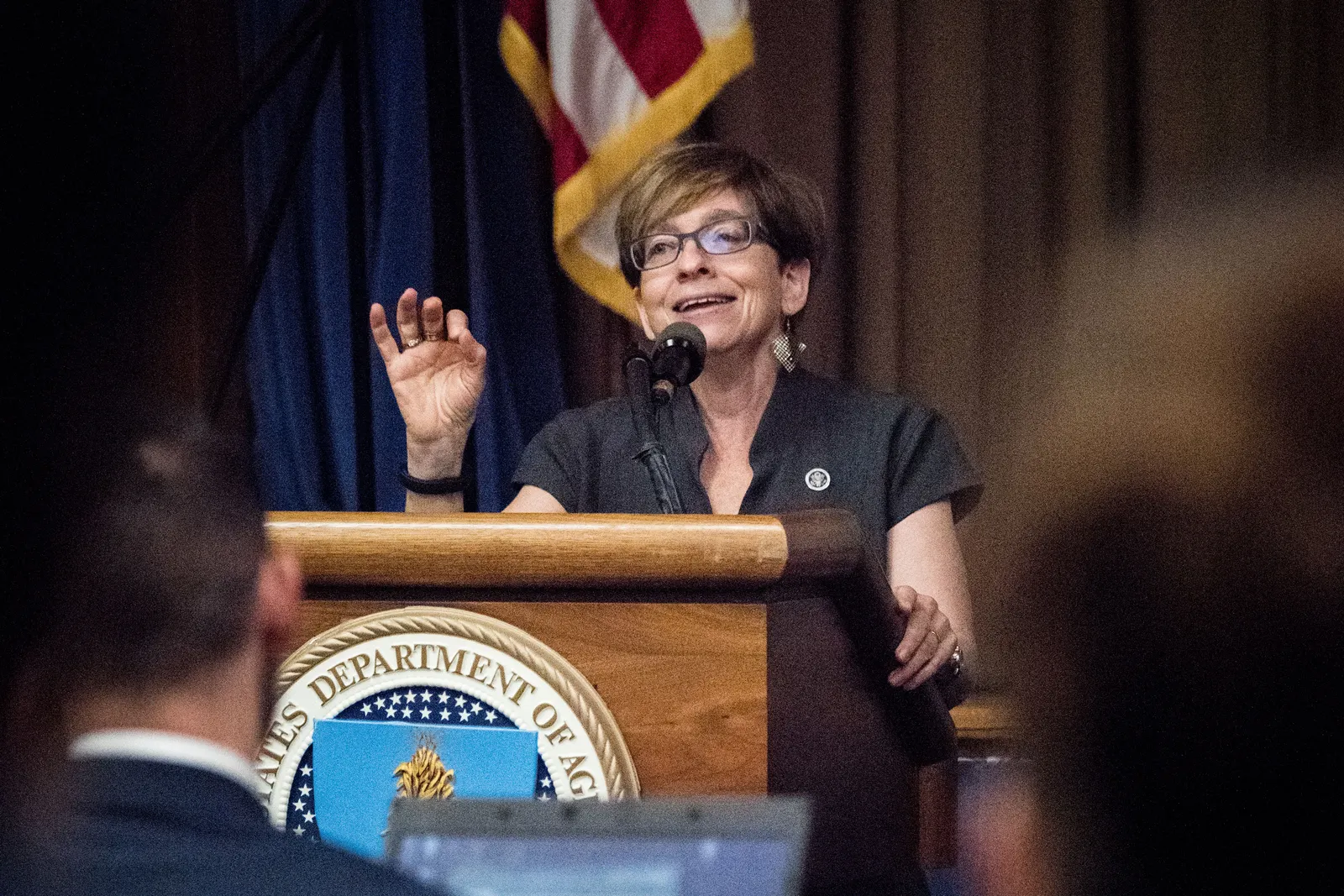
The group operates much like the shadow cabinets that exist in parliamentary systems, Feldblum said.
In the U.K., for instance, the Shadow Cabinet is a group of spokespeople the Leader of the Opposition party chooses “to mirror the Cabinet” and “to question and challenge their counterpart in the Cabinet,” per Parliament.
“In a sense, that's who we are. We're a shadow EEOC and provide the services and the assistance and the perspective that shadow cabinets in other countries do,” Feldblum said.
The concept is one that could be beneficial in the U.S., Feldblum said — one for other former government officials to consider.
The idea of a shadow government in the U.S. isn’t a completely new one. Then-U.S. Rep. Wiley Nickel, D-N.C., in November 2024 proposed in an op-ed for The Washington Post that Democrats form a shadow cabinet to hold the Trump administration accountable.
“We need to borrow from our British friends and appoint a shadow cabinet to fight back against the worst excesses of a second Trump administration,” Wiley wrote. “It’s democracy’s insurance policy. And it strengthens the government, too: There is no room for lazy ideas when rivals stand ready.”
So far, EEO Leaders has sent two letters directly to Lucas; the first was over their concern she was exceeding her authority under Title VII by questioning 20 major law firms on their DEI activities, and the second requested that she clarify her position on protections for LGBTQ+ individuals prior to her confirmation to another term on the commission.
“We have never received a response to any letter we have sent or to any document we have put out. There has been no effort to engage in a dialog with us,” Feldblum said.
EEOC did not respond to requests for interviews by HR Dive.
Looking forward
Looking ahead, the group plans to continue its focus on DEI — one of the first things attacked — as well as protections for LGBTQ+ individuals, Feldblum said.
It intends to monitor the integrity of the EEOC’s processes as the commission makes changes to its voting procedures and shifts more control to the chair.
And it will provide informal guidance on how employers can maintain a harassment-free workplace and comply with anti-discrimination laws.
The rescission of a harassment guidance in January, for example, is “contrary to what employers need,” Yang said. At the time, Commissioner Brittany Panuccio said the document “was an impermissible substantive rulemaking” and that the agency’s “statutory authority to issue rules is limited to procedural matters” under Title VII.
“Instead of supporting employers with resources to help them comply, it is choosing instead to make various statements — like on Twitter, on a YouTube video, in the press — and then asking employers to sort of read the tea leaves to fall in line with this administration's interpretation of the law, which is often contrary to decades of settled precedent,” Yang said.
The group expects to see more guidance rescinded, said Carol Miaskoff, former EEOC legal counsel, which she called “a real loss.”
EEO Leaders hopes to “fill that knowledge gap” through the statements it issues and the guidance it provides employers, Gilbride said.
The group also will continue to maintain a repository of information consisting of the documents that have been removed from the EEOC website, such as the harassment guidance.
Over time, the group’s role will likely evolve, Gilbride said, as members hear from the community about how they can be useful and meet the needs of stakeholders, “whether it's workers or employers or HR professionals or others.”
Visuals Editor Shaun Lucas contributed to this story.