HR may be a function that prides itself on managing people, but machines have occupied an outsized portion of the industry’s attention over the last twelve months. A chorus of thought leaders expect that focus to continue for the foreseeable future.
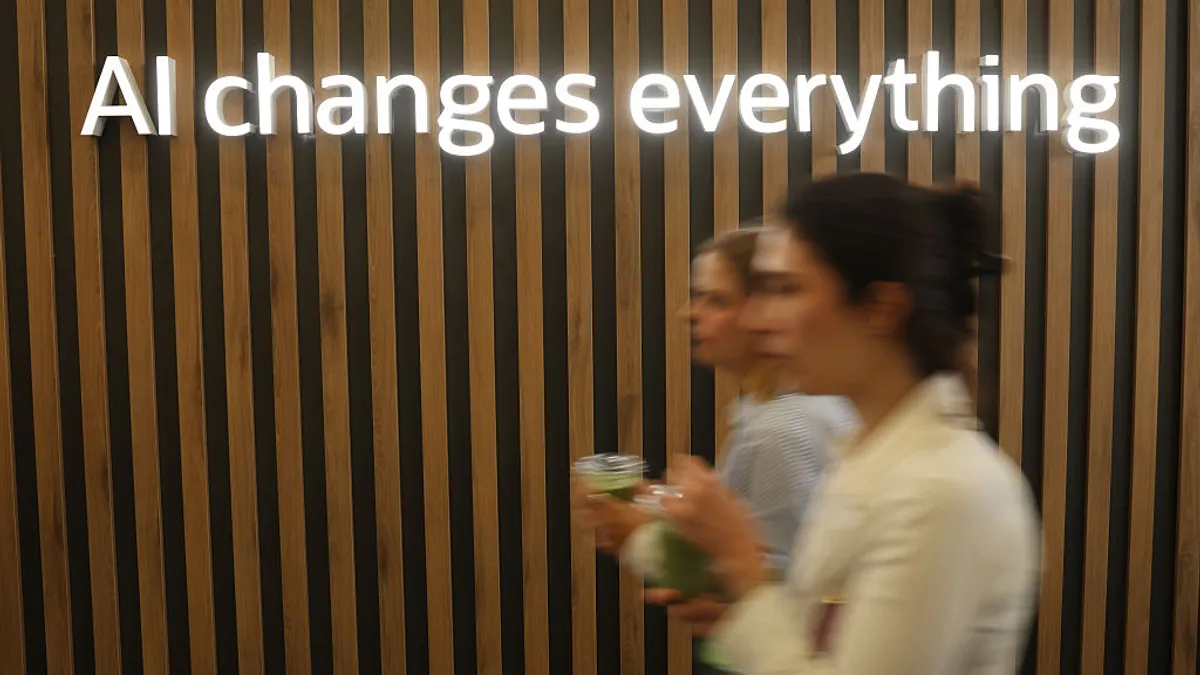
Discourse on artificial intelligence’s status as an economic bubble is more prevalent in the mainstream than ever. Yet, sources who spoke with HR Dive noted that HR has increasingly automated routine tasks and helped implement AI organization-wide. The next step, these experts say, is to distinguish the technology’s utility from its hype.
“Experimenting with AI will not be enough on its own, and not every AI-infused idea is worthwhile — how effectively HR teams integrate AI into everyday work to improve efficiency will be,” Lisa Moore, chief people officer at Yahoo, said in an email.
AI won’t be HR’s sole focus, however. People leaders will still need to dedicate significant energy to skills development and workplace culture. And as always, the compliance side of the house will present more than its share of challenges.
1. HR takes the next AI leap, integrating automation into management
Workplace AI integration can be divided into two parts, according to JR Keller, associate professor of HR studies at Cornell University’s School of Industrial and Labor Relations.
On one side, there is the use of AI to automate mundane tasks such as screening candidate resumes and answering employees’ benefits questions. The other, much trickier side is deciding how to deploy enterprise tools like Microsoft Copilot, which is an area where even the largest companies “don’t really have a roadmap of what they want to do with AI,” Keller said.
Lack of clear use cases is just one of the barriers to AI adoption that emerged last year, but Keller said some organizations have made progress on that front in part by integrating AI into management practices.
He pointed to an anecdote shared by Google co-founder Sergey Brin in which the company’s Gemini AI tool identified a soft-spoken engineer whose work made her a deserving candidate for promotion. The engineer, who later received the promotion, might have been overlooked had it not been for the AI’s input, Brin said.
Such examples show how AI can support managers without overriding them entirely, though HR leaders will need to ensure they are collecting the right kinds of data to inform AI tools, Keller said. That data is often already available but located within different siloes at varying levels of access, he added, so HR might need to ensure stakeholders are on board for broad data analysis initiatives to be successful.
2. AI’s acceleration hastens need for strong guardrails
Cautionary tales of AI-related job errors and fears of discrimination fueled by AI have tempered enthusiasm for the technology. Against that backdrop, HR leaders will need to focus on embedding AI responsibly and strategically, Moore said.
A complicating factor is staff that may be using AI in ways not officially recognized or endorsed by leadership. Keller said managers may, for instance, use AI tools to write performance reviews for their direct reports without taking into account an employee’s actual performance or duties.
“If they’re going to do that, it’s important for HR to say we either have a policy against using it, or that there’s a right way to use it,” Keller said.
3. Uncertainty pervades the talent market, but skills reign supreme
Layoffs at times hit historic levels in 2025. October job cuts alone were up 175% from one year prior and reached the highest single-month total during a fourth quarter since 2008, according to Challenger, Gray & Christmas. Notably, AI has been cited as a factor contributing to job loss as it may diminish opportunities for entry-level workers as well as operations and back-office workers.
These factors portend a gloomy outlook for the talent market, but if there’s one sign of clarity, it’s the belief that skills will be a top priority. A recent survey by McLean & Co. found that skills-based hiring had the strongest level of implementation and planned implementation among all emerging HR trends. Meanwhile, 54% of respondents said AI-specific upskilling would have high organizational impact moving forward, though only 1% had implemented such a strategy as of last year.
To jumpstart skills-based processes, HR might consider creating an inventory of employees’ existing skillsets using data analytics, Keller said. He cited a recent academic study of Johnson & Johnson that detailed the company’s creation of an “employee skills inference platform.”
According to the study, published in the Information Systems Journal, Johnson & Johnson used machine learning to identify employees’ skill proficiencies data stored within its HR information system. An AI engine scored employees’ skill level, and the scores were then validated by employees and their direct managers.
"Experimenting with AI will not be enough on its own, and not every AI-infused idea is worthwhile"

Lisa Moore
Chief People Officer, Yahoo
Researchers offered three best practices for organizations to follow in using AI-enabled solutions to map their own skill inventories: create a blueprint of the employer’s desired future workforce; engage with local data regulations and ethical considerations for data work; and ensure employees influence AI data inputs and outputs in order to compensate for AI blind spots.
4. ‘Reverse discrimination’ claims, boosted by remade EEOC, go to court
The U.S. Supreme Court’s unanimous decision last year in Ames v. Ohio Dept. of Youth Services struck down lower courts’ requirements that majority-group employees in “reverse discrimination” cases show background circumstances to support their claims. Legal observers anticipated that Ames could lead to a wave of future majority-group lawsuits, and a few have already been filed.
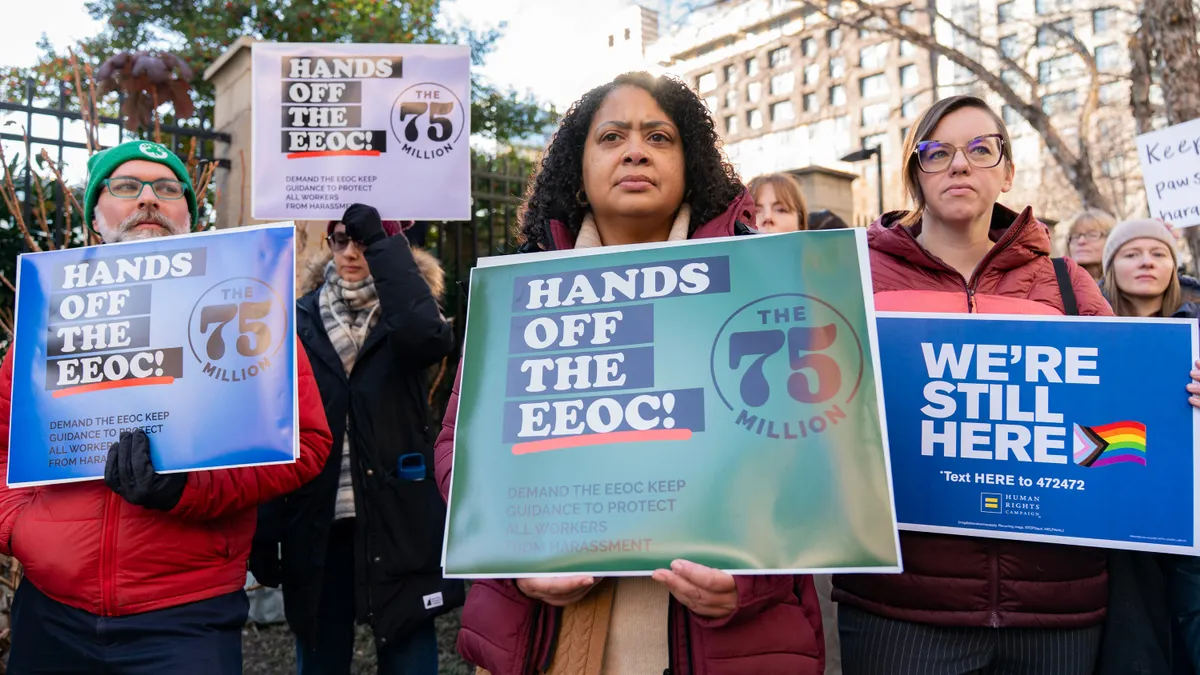
That trend stands to pick up steam thanks in part to a newly restaffed U.S. Equal Employment Opportunity Commission. EEOC Chair Andrea Lucas last month explicitly asked White male victims of workplace discrimination to contact the agency.
EEO Leaders, a group of former Democratic EEOC officials, responded to Lucas’ statement in a letter affirming that all forms of race and sex discrimination are illegal while noting that employers “can advance diverse and inclusive workplaces through numerous lawful actions” such as running diversity, equity and inclusion training programs and supporting affinity groups.
This storyline is a piece of the broader cultural and political battle over workplace DEI programs. Authorities up to and including the White House have sought to crack down on such initiatives, but employment-side counsel have consistently maintained that many DEI programs are legal and can contribute to employers’ business goals.
5. Employers confront ‘culture atrophy’
The pace of workplace change in the last year has left many employees struggling to keep up. In a way, “change has become ungovernable,” with many workplaces stuck in a state of “culture atrophy” that has made it difficult to foster a productive, engaged and skilled workforce, Gartner researchers concluded in the firm’s report on CHRO priorities for 2026.
Employers can drive cultural change by fostering more human connection between managers and employees, Moore said. This may be done in part by building time for frequent, high-quality check-ins that allow both parties to provide coaching and feedback. She noted that Yahoo also focuses on managerial development via a quarterly manager workshop that offers practical skills as well as access to an internal manager network for additional help.
“Human connection is a strategic advantage, and it starts with the managers we equip and empower,” Moore said, adding that it is important for managers to follow up on their interactions with employees to build trust. “That rhythm of clarity, feedback and iteration turns development into a continuous process rather than a once-a-year conversation.”