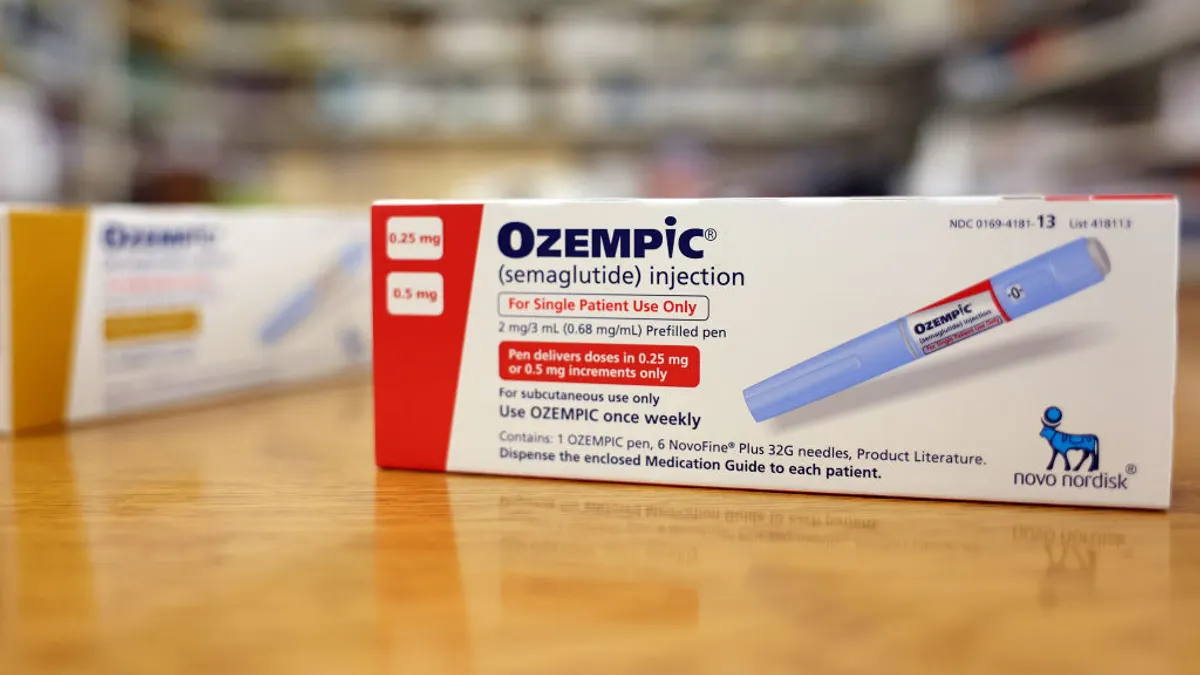
Companies on the fence about offering an employee benefits plan that covers GLP-1s may find the following data helpful: A report from risk consultation firm Aon, released Jan. 13, suggests workers’ sustained GLP-1 use can reduce employers’ costs over time.
Analysts looked at data for more than 50 million people, including 192,000 GLP-1 users, for a little over two years. By the 30-month mark, the medical cost growth was 6% lower for people with diabetes using GLP-1s compared to people with diabetes who didn’t use GLP-1s, researchers found.
Another key factor was consistency: The growth of medical cost was 9% lower for people with an 80% adherence to the medication.
Results were similar for people using GLP-1s for weight loss.
Additionally, Aon researchers observed that women who used GLP-1s experienced about a 50% lower incidence of ovarian cancer and about a 14% lower incidence of breast cancer compared to nonusers over the analysis period.
And whether an individual used GLP-1s for diabetes and weight management, they tended to need fewer hospitalizations for “major adverse cardiovascular events,” such as strokes. Outcomes were especially positive for women, though men also saw reductions in these events.
What GLP-1 findings mean for HR
Despite the drug’s popularity and workers clamoring for coverage, only 23% of employers cover GLP-1s, according to a SHRM benefits survey released last June.
By contrast, Aon’s research illuminates how GLP‑1s can become a part of an organization’s talent strategy, Aon's Head of Health for North America, Farheen Dam, suggested in a statement.
“The real impact comes when employers consider not just coverage, but also how these medications are used, supported and sustained over time,” Dam said. “By pairing thoughtful GLP-1 strategies with programs that encourage adherence and total well-being, organizations can improve outcomes for their workforce.”
As the financial burden of healthcare continues to rise for employers and employees alike, however, a cost-benefit analysis is crucial for business leaders.
The rising cost of healthcare in 2026
By Aon’s projection, healthcare costs for U.S. employers will increase by 9.5% in 2026. Researchers noted that prescription drugs make up about a third of total healthcare costs and are driving up overall healthcare costs each year — with GLP-1s increasingly to blame.
Similarly, a 2026 benefits cost outlook from HUB International reported that GLP-1s, regardless of their purpose, made a “significant impact” on the benefits landscape as a high-cost prescription drug.
Still, cancer, obesity and the latter’s co-morbid conditions can also drive up total healthcare costs, researchers noted.
“Conditions like obesity, diabetes and cancer are among the most pressing health challenges facing employees, their families and the organizations that support them,” Aon’s chief administrative officer, Lisa Stevens, said in a statement.
The positive outcomes confirmed by Aon’s data offer “real hope for advancing population health and helping millions of people lead healthier, fuller lives,” she added.