Tracey Diamond, a partner at Troutman Pepper Locke, specializes in employment law.
Picture this: An employee comes to your office with digital evidence of harassment: a voicemail from a co-worker making sexual comments and a text that includes a nude photo of the same person. It seems obvious that what the complaining employee is saying is true; the evidence is right in front of you. But what if it was all fabricated?
A responsibility to investigate

Title VII of the Civil Rights Act of 1964 makes it unlawful to discriminate against or harass an employee based on their sex and other protected categories. In 1998, the U.S. Supreme Court established what is known as the Faragher-Ellerth affirmative defense, providing employers with a defense against a claim of harassment.
The employer must satisfy two elements to successfully assert this defense: (i) the employer must exercise reasonable care to prevent and promptly correct any sexually harassing behavior, and (ii) the employee must have unreasonably failed to take advantage of any preventive or corrective opportunities provided by the employer.
To satisfy the first prong, employers have a duty to promptly and thoroughly investigate claims of harassment and take corrective action where there is a reasonable belief that improper conduct occurred. In the age of AI deepfakes, however, such investigations have become much more complicated, since it has become increasingly difficult to parse fact from fiction.
Deepfakes emerge in the workplace
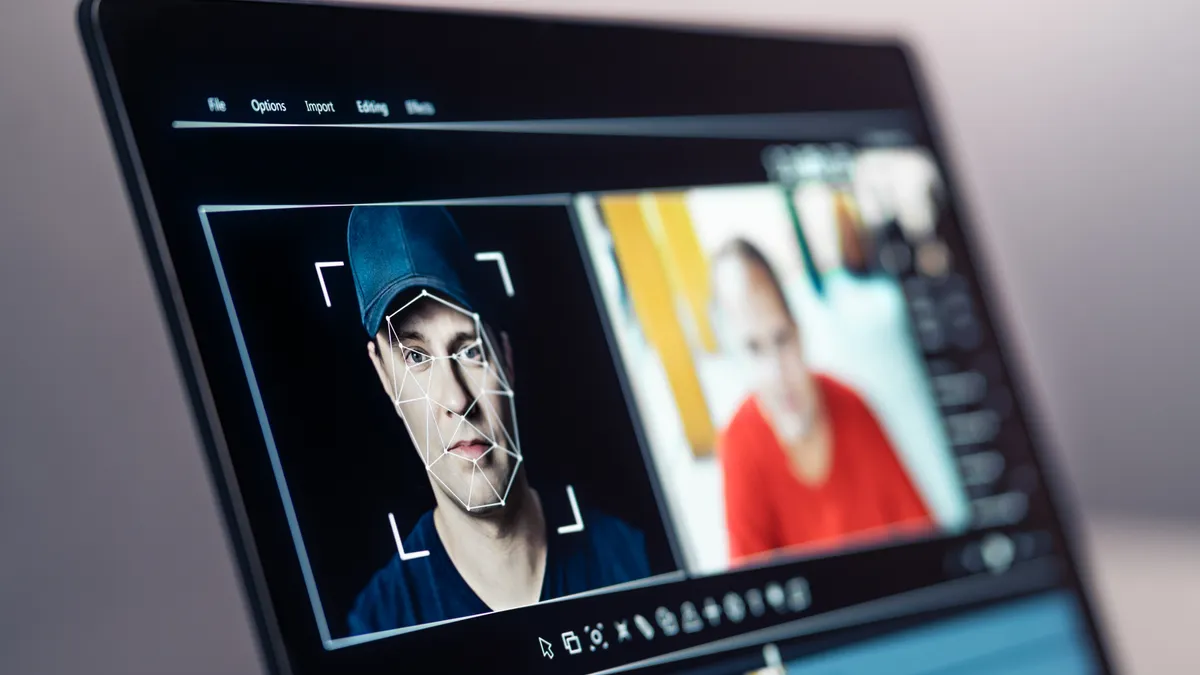
The term “deepfake” often is used to refer to when an individual uses artificial intelligence tools to generate images of another individual. This can include sexually explicit images designed to frame or humiliate a person.
The federal Take It Down Act, enacted in May 2025, makes it a crime to, among other things, knowingly publish an “intimate visual depiction of an identifiable individual created through the use of software, machine learning, artificial intelligence, or any other computer-generated or technological means . . . that, when viewed as a whole by a reasonable person, is indistinguishable from an authentic visual depiction of the individual.”
Additionally, pending legislation known as the Defiance Act would give victims the right to sue individuals who create pornographic images of them using AI deepfake technology. It has yet to be determined whether an employer would have vicarious liability under either of these statutes for the wrongful act of an employee in creating deepfake images. However, an employer that fails to investigate a complaint by an employee that a co-worker harassed him or her by distributing sexual AI-generated images risks liability under Title VII.
While the technology used to create deepfakes is still new, already there are several examples of lawsuits against employers who failed to adequately investigate claims that their employees were victims of AI deepfake technology. In one complaint, for example, a television meteorologist in Tennessee sued her employer after management failed to investigate deepfake sexual images created using her image. In another case, a Washington state trooper filed a lawsuit after co-workers circulated an AI generated video of him kissing another trooper. U.S. Equal Employment Opportunity Commission guidance also lists the sharing of sexually-demeaning AI-generated and deepfake videos and images of people as an example of harassing conduct that violates the law.
This brings us back to our hypothetical employee’s harassment complaint. With the advent of AI deepfake technology, an employer could risk liability if it simply takes the complainant’s evidence at face value. If the evidence is real, then the company would have a duty to take corrective action against the harassing employee (which, considering the pornographic nature of the evidence, likely would involve termination). If the evidence was fabricated, however, then the company must take action against the complaining employee or risk a harassment complaint from the co-worker.
What should employers do?
As an initial matter, if you have not updated your harassment policy to account for the use of AI technology, now is the time to dust it off. It is important to make it clear in your policy that the distribution of AI-generated images of co-workers will not be tolerated and could lead to termination. Consistently enforcing policies against AI misuse is key to ensuring that workers understand this conduct is not acceptable.
It is also important to clarify in your harassment policy that, while employees are protected against retaliation for all harassment complaints made in good faith, employees who bring false claims of harassment may be subjected to corrective action, including termination.
When an employee proffers evidence in support of a complaint of discrimination or harassment, you must consider the possibility that the evidence is fabricated rather than accept it at face value. In the case of our employee’s complaint, the company could examine the co-worker’s cell phone to see whether the text message is present. But the absence of the message would not be dispositive, since the co-worker could have simply deleted the message.
So, how can you tell what is fake and what is real?
While AI technology is getting better and better, there remain a number of indicators when evidence has been fabricated. For example, a deepfake may include unnatural blinking, mismatched lighting, glitches around the face or mouth, and robotic audio. A forensic analysis of all evidence is an essential component of any harassment investigation, including a determination whether the company’s own AI tools were used to create the deepfake image.
While AI deepfakes create a layer of complexity, the employer’s obligations remain the same. When an employee brings a harassment complaint, the employer must take it seriously and investigate the alleged misconduct, which includes weighing the evidence, assessing credibility and reaching a conclusion based on reasonable belief as to whether the conduct occurred. If the company concludes that the complainant was harassed, the employer must take corrective action and ensure that the harassing conduct is stopped.