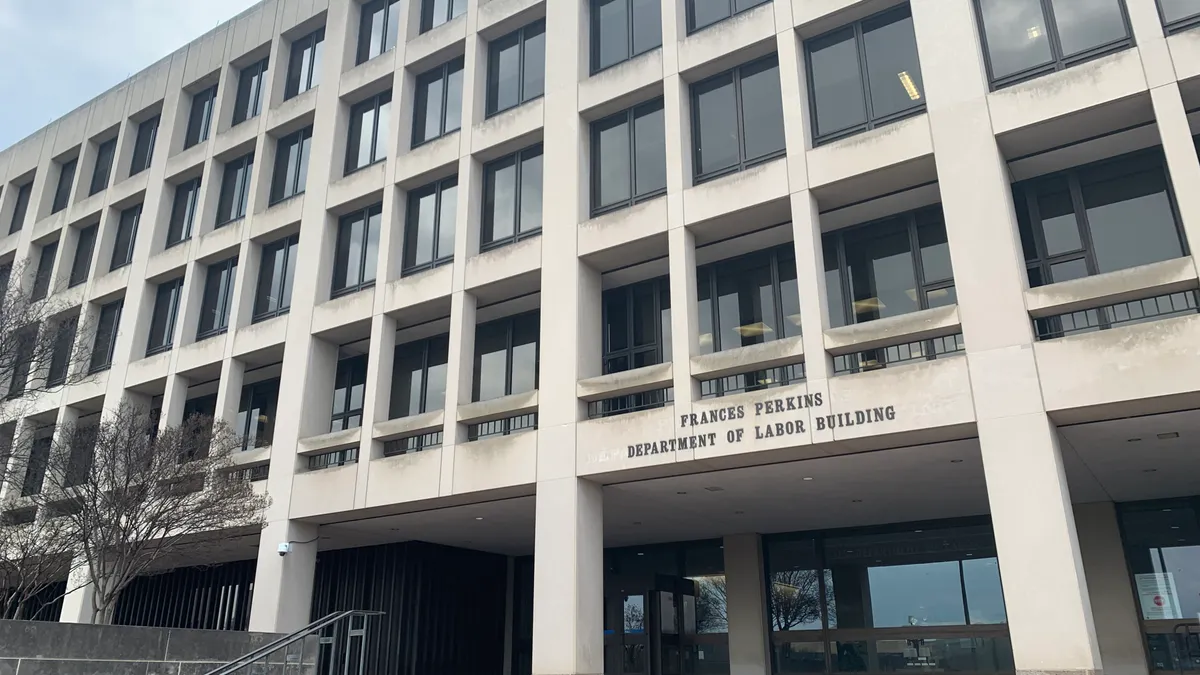
When it first launched in 2018, the U.S. Department of Labor’s Payroll Audit Independent Determination program, or PAID, allowed employers to self-report potential violations of the Fair Labor Standards Act.
The new iteration of the program, launched last year, has been expanded to include the Family and Medical Leave Act, among other laws. Federal regulators touted the program last month as beneficial for both employers and employees, arguing that it enables faster access to back pay and other remedies without the hassle of protracted litigation or enforcement.
Yet, even when PAID first launched years ago, employer-side attorneys questioned the program’s benefit. Specific concerns included the possibility that state regulators or other plaintiffs would sue employers whose participation in PAID was made public.
Experts now raise similar questions with respect to PAID’s FMLA use cases. Jeff Nowak, shareholder at Littler Mendelson and author of “FMLA Insights,” told HR Dive in an email that he is skeptical that the program will be popular with employers for a number of reasons, in part because it’s unclear how DOL might wield its knowledge of an employer’s interest in PAID.
“I am reluctant to counsel an employer to participate in this program,” Nowak said.
What FMLA violations can be resolved through PAID?
Not all employers can participate in the program. In order to be eligible, the employer has to be covered by the FMLA and must not have been found to have violated the FMLA within the last three years by DOL or a court of law. Participants also must not be currently party to any litigation asserting violations of FMLA practices relevant to the proposed self-audit.
Additionally, employers must not be under investigation by DOL for the FMLA practices at issue and must not have participated in PAID to resolve violations pertaining to those practices within the past three years.
DOL reserves the right to accept employers into PAID. Employers can’t participate anonymously, so if they apply and are rejected by DOL, it’s unclear what actions the agency might take against them, Nowak said.
“Will employers not accepted into the program come under closer scrutiny? Will employers volunteer to take on this risk? Time will tell,” he added.
According to DOL, employers may use PAID to resolve FMLA violations including miscalculation of available leave, incorrect determinations of an employee’s FMLA eligibility, improper assessments of attendance points for employees who take leave and improper categorizations of FMLA leave as unexcused absences.
Why should employers think twice?
In addition to the above issues, Nowak said it’s important to distinguish the nature of FMLA claims from their FLSA counterparts. Class claims, for instance, are common under the FLSA but “unheard of” under the FMLA, he noted. FMLA claims are instead most often pursued as single-plaintiff, private legal actions rather than those initiated by DOL itself.
“Given the modest risk of DOL-initiated litigation — particularly in comparison to FLSA claims — I struggle to identify a scenario where I might counsel an employer to fall on their sword to the DOL,” Nowak said. “Without the fear of class claims or DOL-initiated litigation hanging over my client’s head, I’m far more likely to defend the employer’s actions to the DOL and beyond.”