Dive Brief:
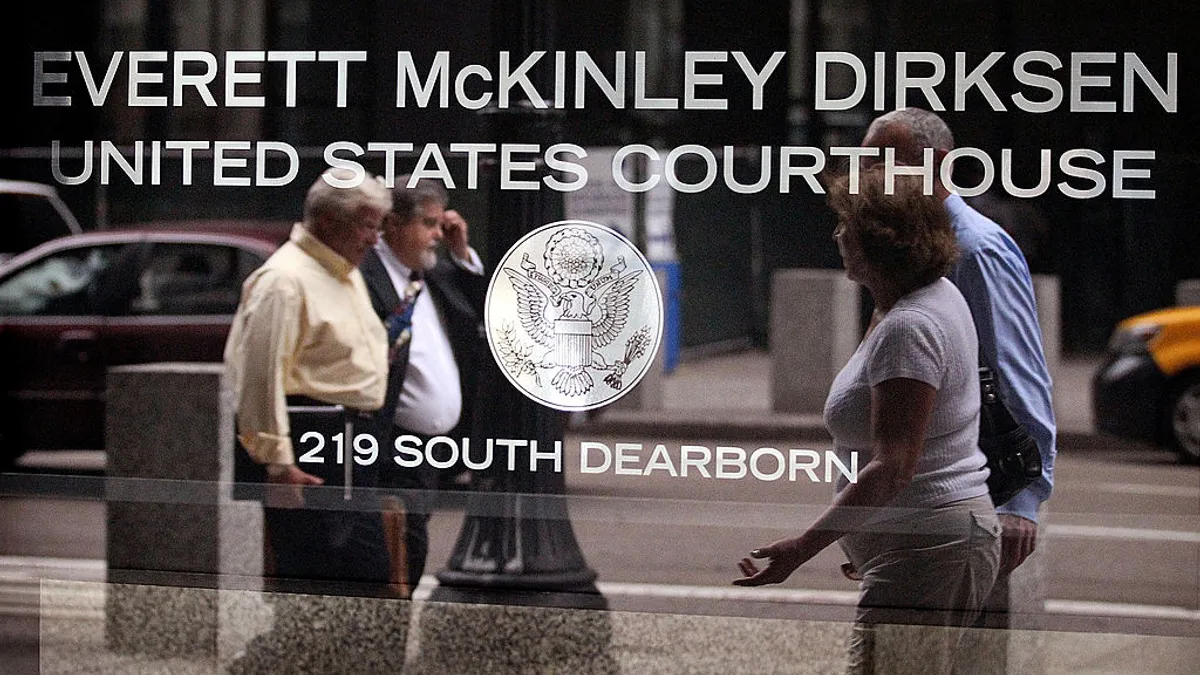
- An employer did not violate the Family and Medical Leave Act when it refused to grant a fired employee retroactive leave, the 7th U.S. Circuit Court of Appeals held Tuesday (Chitwood v. Ascension Health Alliance.)
- The employee, an HR specialist at Ascension Health Alliance, allegedly failed to return to work at the end of continuous leave, despite several warnings to do so. After being fired, she requested that her missed days be retroactively designated as intermittent FMLA leave, according to court documents.
- The employer declined to do so, and the employee sued, alleging FMLA interference and retaliation. A district court ruled in the employer’s favor, finding that the employee had not reported her absences as soon as practicable, as required by federal regulations and the employer’s policy. On appeal, the 7th Circuit agreed with the lower court. Neither the employer nor the plaintiff’s attorney responded to a request for comment.
Dive Insight:
In Chitwood, the 7th Circuit placed significant weight on the employer’s intermittent FMLA call-out policy.
Ascension required that employees needing leave alert its third-party leave administrator on the same day as their absence. It also required workers to notify their supervisors as soon as practicable.
The Chitwood plaintiff left a voicemail for the employer on the day she was terminated but, despite allegedly being familiar with its FMLA procedures, failed to mention a need for leave. Instead, she requested the retroactive designation the next day. Later, she could not show any reason why she was unable to report the absences on the days they occurred, the 7th Circuit said.
That failure doomed her interference claim: She was never denied leave to which she was entitled, the court concluded.
Her retaliation claim also failed; even though she previously used both intermittent and continuous FMLA leave “extensively,” the court said “the record is clear that it was [the employee’s] failure to return to work as directed — not her prior use of FMLA leave — that was the cause of her termination."
A U.S. Department of Labor guidance explains that employers may enforce call-out policies for FMLA leave, unless unusual circumstances prevent the employee from calling out. In that case, they must report a covered absence as soon as they reasonably can.
“The regulations make clear that, if the employee fails to provide timely notice, he or she may have the FMLA leave request delayed or denied and may be subject to whatever discipline the employer’s rules provide,” according to DOL.