Dive Brief:
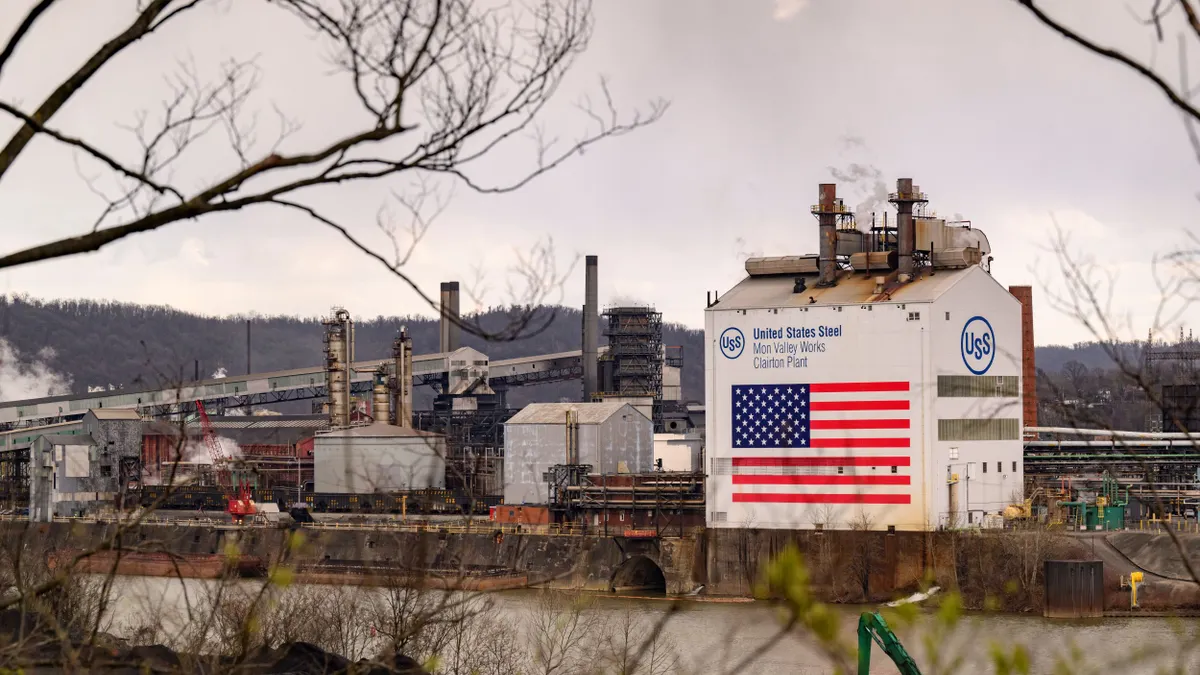
- U.S. Steel violated the Pregnant Workers Fairness Act when it refused to discuss available reasonable accommodations for a pregnant employee and shifted her role to menial work with less earning potential, the U.S. Equal Employment Opportunity Commission alleged in a Dec. 19 lawsuit, EEOC v. US Steel.
- The employee worked as a mobile equipment operator (MEO) at an ore mine in northern Minnesota, according to the complaint. After she became pregnant, her healthcare providers restricted her from operating physically jarring equipment, the lawsuit said. Although her role as an MEO allowed her to perform less strenuous tasks that met her restrictions, managers allegedly told her she could not be accommodated and placed her on sick leave for several weeks.
- Following her return, U.S. Steel assigned her menial work outside her regular role in an office under renovation, exposing her to cold air and dust, the complaint alleged. She experienced a miscarriage, and when she returned from bereavement leave, U.S. Steel again assigned her jobs outside her regular role in a remote part of the mine that sometimes lacked appropriate restroom facilities for women, according to EEOC.
Dive Insight:
The standout message here is that while EEOC has pivoted on multiple issues, it remains committed to enforcing the PWFA and protecting pregnant employees’ right to reasonable accommodation under the statute.
For example, EEOC announced on Dec. 29 that the agency had recovered $135,000 for two Florida workers who had alleged discrimination under the PWFA; both employees alleged that they were terminated from their respective companies after requesting a reasonable accommodation for their pregnancy.
The allegations against U.S. Steel call attention to a key practice: Under the PWFA, employers may not “require an employee to accept an accommodation other than a reasonable accommodation arrived at through the interactive process,” an EEOC guidance states.
According to EEOC, reasonable accommodations were available within the employee’s job description, but U.S. Steel allegedly failed to go through the interactive process to discuss them.
For example, the employee could have worked as a “fill-in” leader, assigning tasks and coordinating the crew, which her supervisors frequently tapped her to do and which paid an increased hourly rate, the complaint alleged. Her role also allowed her to perform other less strenuous tasks that met her restrictions, such as working control/dispatch or conducting training, while the most physically demanding work could be shifted to the crew, according to the complaint.
Instead, U.S. Steel removed her from her regular role and assigned her to menial office tasks and then, following her miscarriage, to more difficult jobs in a remote part of the mine, the lawsuit alleged.
Both assignments placed the employee in undesirable work environments and denied her opportunities for increased pay, according to the complaint. U.S. Steel allegedly took these actions to retaliate against the employee for requesting an accommodation for filing a charge with EEOC, the complaint said.
Employers should note that the PWFA also covers limitations related to childbirth or other pregnancy-related medical conditions. Recently, a Florida resort agreed to pay $100,000 to settle an EEOC lawsuit alleging it failed to accommodate and fired an employee after she asked for leave following a stillbirth.