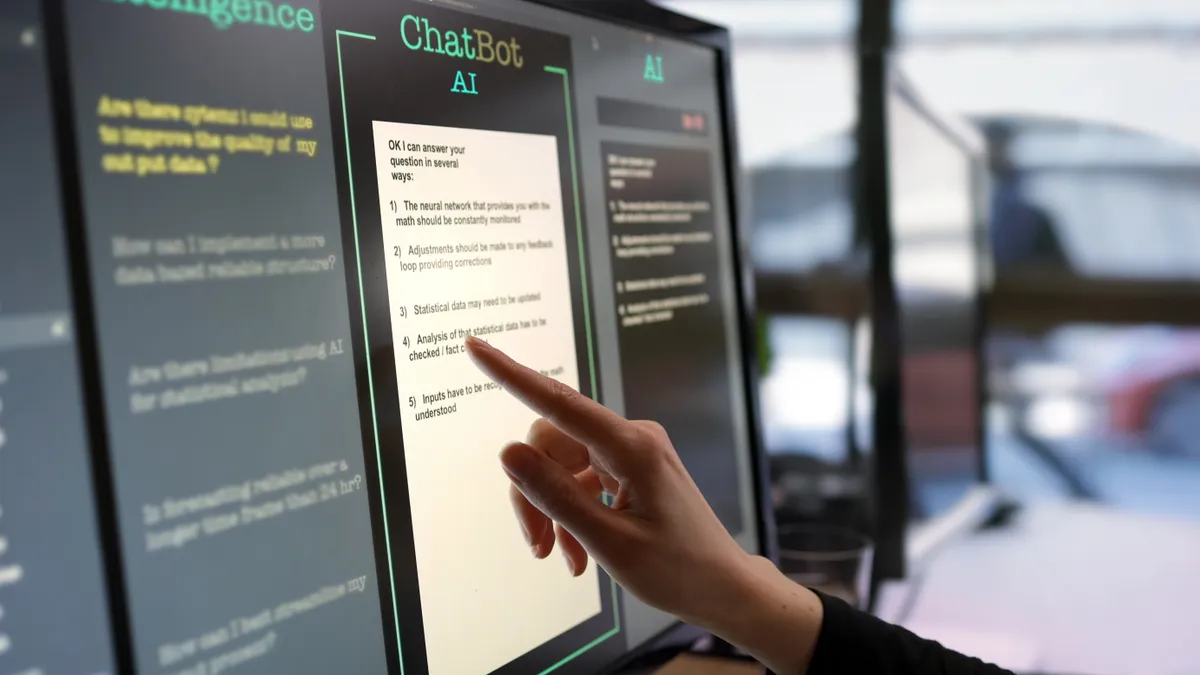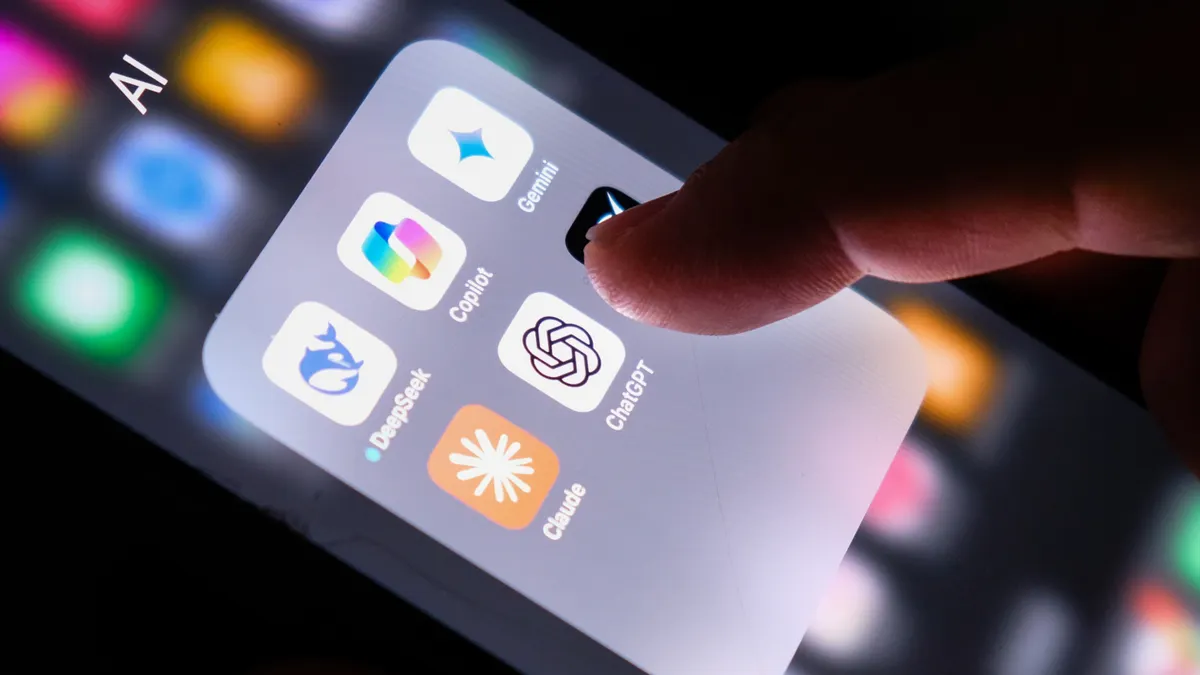
Like just about everything else in HR, L&D is facing changes, especially technological ones. The force behind that evolution? AI, of course.
AI is challenging L&D professionals to realize their potential as strategists, all while they must also make sure workers don’t feel overwhelmed by transition, experts told HR Dive.
On top of that, AI adoption has created a demand for workers that are more than simply comfortable with AI tools, and has led to the development of new tools through which L&D is done.
We spoke to two HR leaders about what they’re excited about for L&D modernization in 2026.
AI is creating an upskilling demand
Since AI is changing how people work, it’s a new priority for HR efforts at many organizations. Most L&D leaders are on board. In a recent study, Go1 surveyed over 2,000 L&D professionals and found that 69% agree AI can deliver the most value when it comes to upskilling.
“L&D leaders are facing a once-in-a-generation challenge,” said Chris Eigeland, CEO of Go1. “AI has created the biggest need for upskilling and reskilling in my lifetime, and perhaps ever.”
The challenge is two-fold because these changes are both technical and cultural. If a company is using AI, employees will need guidance in how to work with those changes — changes they may not be comfortable with. “Many are balancing excitement with fear, as well as uncertainty about how AI fits into their day-to-day roles,” Eigeland said.
L&D needs to address both concerns, starting with awareness beyond a general understanding that it is a tool that can be used. Training needs to be job- and person-specific. “When an accountant can see how AI spots errors in a P&L and saves 30 minutes, that’s when adoption sticks,” he said.
This makes L&D leaders strategic roles, too. “Their jobs are to create the conditions for experimentation, to guide leaders and teams through rapid change, and to ensure that learning becomes a strategic lever, not an afterthought,” he said.
Kara Ayers, senior vice president of global talent acquisition at Xplor Technologies, sees this shift, too. “The role is continuing to evolve into more of a strategic aspect of the people strategy, and really anticipating future skills and not just responding to current gaps,” she said.
New opportunities with new technology
AI is giving companies new ways to train their people, too. It’s not just seminars and modules anymore.
One of those new AI-enabled technologies is immersive learning, like with virtual reality simulations “that put people in realistic situations,” said Ayers. Xplor Technologies is looking at simulations for everything from leadership development to sales training. With sales, for example, an employee can go through a pitch or go through a demonstration in a virtual world and get feedback before doing the real thing.
This way of training can also make learning how to do something less intimidating for people, she said. That doesn’t mean VR simulations will replace peer-to-peer learning, but a virtual tool can be used in tandem to help people who might be uncomfortable with peer to peer at first. Immersive learning can also help from a diversity and inclusion standpoint, addressing different learning styles “and being able to adapt to those needs,” Ayers said.
Overall, AI is helping L&D leaders create different avenues for how to train people as well as provide opportunities to people where they are, she added, whether that’s through more traditional methods of learning and development, online courses or simulations.
While immersive learning isn’t new when it comes to training, her company hasn’t had the capacity to incorporate it when it comes to learning and development. “That is going to be a game changer for us,” she said.
Being able to meet workers where they are most comfortable can help rocket forward L&D, Eigeland said. But it takes work — and leadership and strategy.
In that same study, Go1 found that 62% of organizations see discrepancies between planned and actual learner engagement. They also found that learner behavior often does not align with company expectations, as centralized programs may not cater to the diverse learning styles of employees.
What people want is different, too, as 49% of employees want more control of personalization and 44% want more human interaction.
“One of the biggest opportunities is the ability to provide learning that is tailored to the tasks people actually perform,” he said. “Instead of broad training that covers general concepts, employees will receive guidance that connects directly to their roles and responsibilities.”