What HR pros need to know about AI in the workplace
Getty Images
Note from the editor
Employers may be bullish on artificial intelligence, but recent research indicates CHROs lack confidence that managers can guide employees in using the technology at work.
Training can help, experts told HR Dive, but other challenges have emerged, too, including employee skepticism and the use of unapproved AI on the job.
Read on for expert insights on how HR can guide AI implementation in this new world of work.
CHROs split on whether managers can lead through AI-driven change, Gallup finds
In addition to managerial training, HR leaders said their organizations are investing in “centers of excellence” and “internal AI champions.”
By: Ryan Golden• Published Aug. 19, 2026
Half of the 102 CHROs included in Gallup’s Global CHRO Roundtable lack confidence that managers within their organizations have the ability to guide employees in using artificial intelligence at work, according to the results of a recent survey.
Perhaps in response to these concerns, 57% of CHROs told Gallup that they were providing AI training for people managers, and 62% said they were creating centers of excellence as well as “internal AI champions” to encourage effective use of the tech.
Gallup said that the results are reflective of divided employee sentiment concerning AI’s effect on work culture. The firm also noted that AI adoption does not necessarily improve workplace culture but that managers and leaders can influence positive reception if they are equipped with clear communication, resources and support.
The findings track with previous queries of executives, including a July ManpowerGroup Talent Solutions report in which only 3% of those surveyed — CHROs included — said their leaders were “highly prepared” to direct AI adoption.
Managers' own estimation of their preparedness doesn’t appear much better; a recent Indeed and YouGov survey that found 43% felt either poorly equipped or completely unequipped to lead AI transformation.
Managerial preparedness is an area of emphasis for several reasons, not the least of which is employee confidence. When leaders fail to communicate about AI tools, it can create a "vacuum" that causes employees to feel anxiety about the tech and the effect it may have on their jobs, Mercer said in a 2025 report. A transformation leader for the consulting firm said leaders must acknowledge uncertainty and talk through change, and Mercer advised HR teams to invest in managerial training, AI literacy and psychological safety by encouraging AI experimentation.
Gallup’s data suggest HR executives might be attuned to that guidance. More than three-quarters of members on the CHRO Roundtable said they were encouraging peer learning and experimentation with AI, and nearly half were offering role-specific AI learning or certifications. Fewer respondents had taken other actions, like embedding AI skills into job expectations or performance goals.
HR also must remember to lead with empathy and invest in human skills as technological change advances, a message that permeated SHRM26 sessions in June. A speaker at the conference outlined a five-point framework for maintaining humanity in the age of AI.
Article top image credit: Sascha Schuermann via Getty Images
AI skills gap persists despite widening personal use
Companies assuming employees will bring AI skills into their jobs will set themselves up to fail, according to CompTIA Vice President of Research Seth Robinson.
By: Roberto Torres• Published July 22, 2026
Less than one-quarter of artificial intelligence use by professionals is tied to business-related activities as a looming skills gap threatens adoption at scale, according to CompTIA data. The organization surveyed 1,000 business and technology pros for the recent report.
More than 4 in 5 respondents use AI tools several times per month, but fewer than one-third describe themselves as having a high level of familiarity with AI, the study showed.
“There can’t be an assumption that, at an individual level, people are going to come in with sufficient AI knowledge that can be applied in the workforce,” Seth Robinson, VP of research at CompTIA, told CIO Dive. “That assumption needs to be validated.”
The headwind adding the most friction to enterprise AI efforts is not related to compute access or costs; instead, it’s employees. Shoring up people strategies is key to automating operations.
Workers have applied their personal familiarity with AI tools to systems in the office, but experimentation has concentrated around lighter, repetitive tasks.
“They’re struggling to see exactly how their entire workflow is going to transform,” Robinson said. “And that's not really on them.” The responsibility lies with enterprise leaders to integrate AI, build workflows that can adapt and create valuable use cases, Robinson added.
As AI budgets swell and CIOs grow more leery of runaway spending, establishing learning and training programs can affect returns on investments, according to DataCamp. A larger share of leaders who reported positive ROI on their investments also reported having more mature AI literacy efforts in place.
Part of the challenge with readying a human workforce to fully embrace AI comes from the nature of the technology, which represents a shift from prior technology adoption efforts, according to Robinson.
AI operates differently from the software employees have been using for years, Robinson said. While traditional software is deterministic and relies on fixed rules to deliver the same result, AI is probabilistic, generating outputs based on statistics and likelihoods.
“Internalizing that and truly understanding what that means to have a piece of software that's giving you an answer that needs to be validated, not just for the applicability to the question at hand but even its correctness, that's a new notion for a lot of people to grasp,” Robinson said.
There's a quiet irony playing out in workplaces right now. Teams are drowning in repetitive tasks, so they adopt a flashy AI tool to help. Then another. Then another. But they end up feeling busier than ever, with the extra stress of having to learn new tools.
Maybe the problem was never a shortage of technology. Maybe it’s the wrong kind of technology, layered on top of already-complicated workflows and disconnected data.
Information isn't the same as insight
You probably have more data than ever before. Headcount numbers, turnover rates, benefits enrollments, employee spend amounts, engagement survey results, the works.
But having information and having insight are two very different things.
Picture an HR manager trying to figure out why one team'sengagement dropped. They pull a report from one system. They cross-reference headcount from another. They dig up turnover metrics from a third. Then they dump it all into a spreadsheet and try to connect the dots.
Will AI help them gain better insights? AI that only sees engagement scores can tell you they went down. But AI that can also see overtime hours, compensation history, and recent manager changes can give you insight into why they went down, and which employees are most at risk because of it.
When your data sits in silos, your AI works with fragments. It guesses at relationships it can't actually see. But when your HR, Finance, and IT data live in one connected system, the AI reads across all of it at once. It notices when an engagement dip lines up with a spike in workload. It catches a payroll error before it costs you. It flags a retention risk while there's still time to do something about it.
Less busywork, more of the work that matters
When AI works from connected data, a lot of repetitive, time-consuming work simply goes away. HR professionals stop being data wranglers and start being strategic partners. Managers stop reacting and start planning. Employees get faster answers and a better experience. AI takes care of repetitive tasks, and your people move forward and make an impact.
When it works from all your data across HR, Finance, and IT, AI can take on tedious tasks like:
Turning receipt photos into categorized, ready-to-submit expense reports.
Resolving employee data gaps before they hold up payroll.
Flagging missed punches and time corrections fast, then explaining payroll variances in plain language before you submit.
Automating IT device and access provisioning for new hires, so day one runs smoothly without a pile of tickets.
Answering employee questions about a policy or their benefits, with a link back to the source.
From cleaning up messes to preventing them.
When your AI has access to the full picture, you stop learning about problems after they've already happened. You see the retention risk three months before the resignation. You catch the timecard error before payroll runs. You know new hires start with a welcoming experience and everything they need to get started. You spot the engagement dip while a coaching conversation can still change the outcome.
That's the move from reactive to proactive: from firefighting to getting ahead of what's coming next.
So maybe the real question isn't whether your AI is smart enough. It's whether your data is connected enough to let it prove it.
What would change for your team if every decision started with the full picture instead of a partial one?
AI mandates may stir up religious objections. HR should prepare now.
“If you’re encountering this, there’s a good chance you might be the test case,” one employer-side attorney told HR Dive.
By: Ryan Golden• Published May 4, 2026
In 2012, a West Virginia coal miner’s religious objection to his employer’s use of a biometric hand scanner led to his firing and, after a lengthy legal dispute, an award of more than half a million dollars in damages. Legal experts believe a similar controversy may befall unsuspecting employers that have deployed artificial intelligence in the workplace.
Religious discrimination claims have exploded in frequency within the past few years, said James Paul, shareholder at Ogletree Deakins. Paul, who said he’s been advising companies on employment law for about two decades, noted that he rarely fielded clients’ questions about religious objections or inquiries for the majority of his career.
Then the COVID-19 pandemic hit, and with it, a slew of requests from employees challenging employers’ policies on vaccination, masking, testing and similar issues. This spurred a “rapidly increasing trend,” according to Paul. In earlier times, “maybe I would get one objection a month or one inquiry a month, sometimes once every two months,” he said. “Currently, not a day goes by where I don’t get two or three.”
In 2026, another trend is consuming HR and employers writ large: AI. The technology has become a disruptive force, with 91% of CHROs in a March poll by CHRO Association and the University of South Carolina’s Darla Moore School of Business stating that AI was their most immediate area of concern.
The two trends have now begun to meet, Paul and others told HR Dive, and without much case law to guide compliance, employers may find themselves preparing for novel questions as they navigate that collision.
“If you’re encountering this, there’s a good chance you might be the test case,” said Evan Peña, partner at Quarles & Brady. “No employer wants to be in that position.”
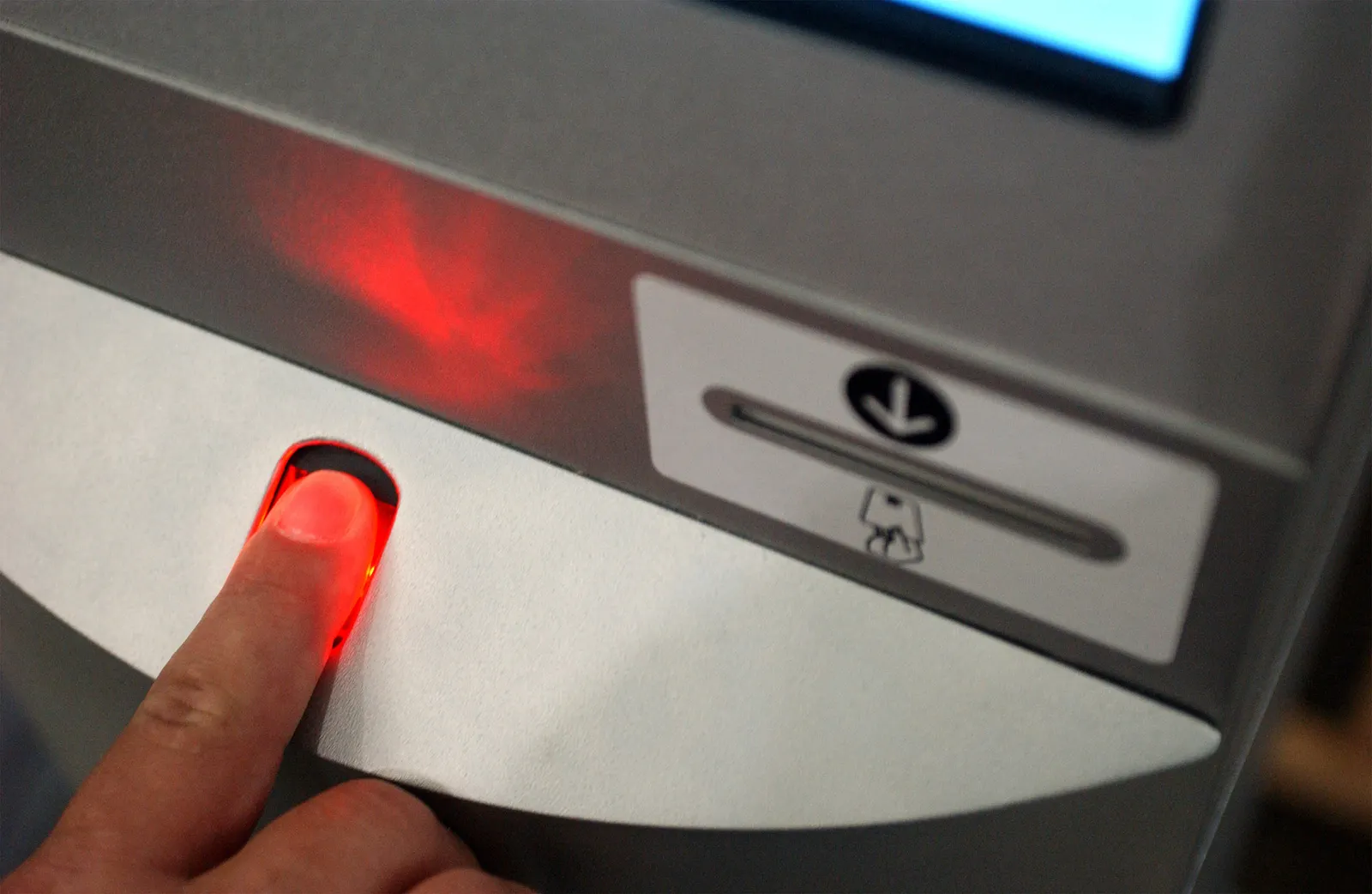
A fingerprint scanner at the Minneapolis-St. Paul International Airport on July 7, 2004, in Fort Snelling, Minn. A mid-2010s lawsuit involving a coal miner's religious objection to the use of a biometric hand scanner may provide some insight to employers about religious accommodation requests involving AI tools, attorneys said.
Eric Miller via Getty Images
The complex nature of religious objections to AI
Resistance to AI is not exclusive to those with religious or spiritual beliefs. Many organizations have reported instances in which employees are hesitant to adopt the tech or are outright hostile toward using AI.
But when a religious objection to AI is raised, according to Paul, it tends to deal with one of two categories: AI’s environmental impact and the infrastructure and energy required to power it or the loss of autonomy in human decision-making that may be accompanied by AI — especially in the case of “agentic” AI. Either may cut against an employee’s personal convictions.
Others may be concerned that using AI is unethical because it can displace human workers or because it could be, and by some accounts has been, used to conduct illegal acts, especially in the context of AI warfare, said Nancy Delogu, shareholder at Littler Mendelson.
Sources who spoke to HR Dive could not cite any specific mainstream religious texts or organizations that prohibit AI use altogether. Paul noted that some large religious groups have issued ethical guidelines regarding AI, though such documents tend to speak about use of AI in an ethical manner rather than directing adherents to avoid all such use.
However, an employee’s sincerely held religious belief or practice does not have to be approved, directed or communicated on by any kind of organized religion, Paul said. Even where an organized religion has taken a moral stance on a particular issue, that statement may leave room for individual adherents to formulate their own convictions, he added.
For example, the plaintiff in the aforementioned West Virginia miner case, EEOC v. Consol Energy, Inc., feared damnation as a result of using a hand scanner, a technology he believed would be used by the Christian Antichrist to identify followers with the mark of the beast.
“That was an example of a unique and unusual belief or objection that wasn’t really backed up by organized religion or actual doctrine, and yet it was successful under the law because the individual demonstrated to the jury that it was a sincerely held belief,” Paul said.
Federal courts have been hesitant to question sincerely held beliefs, according to Peña. He pointed to the U.S. Supreme Court’s 2022 Kennedy v. Bremerton School District decision, in which the court avoided a discussion about the sincerity of a high school football coach’s belief that he had to offer a prayer at midfield after games. Such deference means it could be difficult for employers to challenge sincerity, even if the belief or practice appears unusual, he said.
Regulators, including the U.S. Equal Employment Opportunity Commission, are similarly reluctant to call a sincerely held belief into question. For that reason employers should be “very cautious” before attempting to challenge an employee’s religious belief on its own, said Nathaniel Glasser, member of the firm at Epstein Becker Green.
“To the extent that they have objective information that an employee does not have a sincere belief or that the belief is not religious in some way or another, that may be possible,” he said. “But that’s a potentially risky endeavor.”
A man prays in a church in Birmingham, England, on Dec. 24, 2018. Employers should ensure they have an understanding of an employee’s specific religious objection to AI when processing requests, sources told HR Dive.
Christopher Furlong via Getty Images
For starters, focus on necessity
Employers can’t reasonably grant all accommodation requests they receive, and when it comes to AI, it could be difficult for employers to determine whether an employer’s objection is truly religious or is more akin to discomfort. But federal laws are clear that if an employer is faced with a religious accommodation request, the analysis is the same, said Delogu.
“The employer has to take a look and try to understand what the objection is and whether that can be accommodated,” she added.
Delogu gave the example of one request fielded by a client from an employee whose work involved the creation of digital films and videos. The employee claimed that it was against his religious beliefs to work on projects that incorporated AI-generated imagery. Delogu said the client in question was still in the process of gathering information to address the request, but that such scenarios demonstrate the multitude of questions involved.
For instance, an open question existed as to whether AI categorically includes digital tools that automatically enhance an image and whether the employee had already used such tools in the past. The client also needed to drill down into whether the objection extended to the act of uploading the employee’s work to an AI platform or whether the employer would even be capable of preventing such an upload from occurring in the first place.
“That’s as close as I’ve seen to the technology itself being an issue,” Delogu said.
A baseline consideration is whether an employee who has a religious objection to AI really needs the tech to perform their essential job functions. If not, a simple accommodation may be to exempt them from organizational AI use requirements, Paul said.
In Consol Energy, the plaintiff could have been accommodated via an alternative method to clock in or record his work hours. If the same logic were extended to an employee requesting exemption from using an AI-powered search engine, for example, Paul said an employer could instead permit the employee to use non-AI tech or even a physical reference book.
HR teams also might consider past decisions the organization has made with respect to employees who refuse to use AI for nonreligious reasons, Peña said. If those employees are able to perform their work without issue, that could be damaging to any refusal to accommodate on the employer’s part. Employers aren’t wedded to past precedent, Peña said, “but it is relevant, and a jury’s going to look at that.”
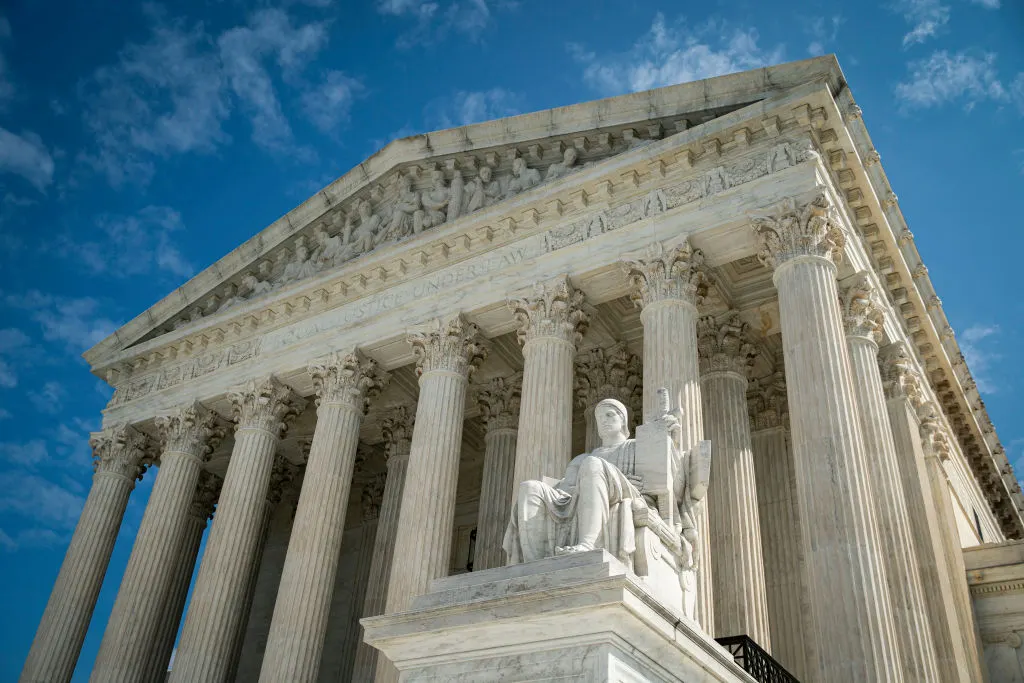
The U.S. Supreme Court building on Sept. 28, 2020, in Washington, D.C. A 2023 decision of the court heightened the standard under which employers must show that a religious accommodation request poses undue hardship.
Al Drago via Getty Images
Showing undue hardship could prove tricky
Employers face a higher burden to show that a proposed religious accommodation poses an undue hardship under Title VII of the 1964 Civil Rights Act following the Supreme Court’s 2023 Groff v. DeJoy decision. There, the court held that the burden posed by an accommodation must be “substantial in the overall context of the employer’s business.”
The court’s bar can be a difficult one for employers to meet, said Peña, particularly for larger employers. For that reason, accommodation decisions are more often a function of the specific job the employee holds and whether the business can provide an effective accommodation, he added.
But an interesting wrinkle concerns AI’s efficiency and whether the tech could advance to the point where employees who use it far outperform those who don’t.
Peña offered a hypothetical of two customer service employees, one who uses AI and one with a religious exemption who does not. If the former is completing 40 customer tickets per day while the latter completes only three per day, Peña said that could raise the question of whether the employee with substantially low productivity is really completing their job’s essential functions.
EEOC’s post-Groff guidance notes that employers may take into account factors such as increased operating costs, infringement on the rights of other employees and decreased efficiency when analyzing potential undue hardship. This analysis will be a fact-based, individualized determination, Glasser said, and the more objective factors an employer can point to, the better their chances of showing that opting out of AI use would pose undue hardship.
“Employers should be thinking now about the types of AI tools being offered to their employees and what those tools are intended to do with respect to each individual that’s going to be using them,” he added.
Another factor to consider is whether AI is so ubiquitous in a given work process or job that opting out would be unfeasible. Glasser illustrated this using a hypothetical manufacturing assembly line. The line incorporates AI such that even workers who perform only manual tasks are interacting with goods whose production is at least partly AI-assisted.
If a manual worker in this example asks for a religious accommodation permitting her to avoid interacting with products made by AI, that may be a very difficult ask for an employer, Glasser said. Evaluating the request could involve parsing just how distant a given job’s relationship is to AI.
“Employers will likely have to be prepared to engage in those discussions and get a better understanding of the underlying [religious] belief and what the employee believes they can and cannot do vis a vis AI,” Glasser said.
Fall back on process
Regardless of an employer’s ultimate determination, it should treat religious accommodation requests consistently, said Tracey Diamond, partner at Troutman Pepper Locke. It’s a best practice, she added, for the employer to designate an internal point-of-contact who can receive such requests, consider them and process them fairly and consistently.
AI may present novel challenges, but much of the standard for evaluating accommodation requests remains the same, according to Paul. That includes documenting all aspects of the evaluation, from the specifics of the request itself to any operational burdens, anticipated costs, impracticalities and other issues that may show undue hardship.
“It bears repeating that there may be some requests from people who share those beliefs out of left field, and we’ve got to treat those seriously.”
Nancy Delogu
Shareholder, Littler Mendelson
A common problem is that employers often don’t have the same robust processes for dealing with religious accommodation requests as they do for similar requests, such as those for disability-related accommodations, Paul said. He advised HR teams to audit their policies and procedures, down to the forms they use to process requests, to ensure they have an effective framework.
Employers also must not begin the process on the wrong foot, namely by doubting the sincerity of a particular religious belief, Delogu said. Similarly, HR can’t outright reject requests that would be difficult to accommodate. Those evaluating accommodation requests must take time to understand what the employee is asking for and speak with the employee about potential alternatives.
“It bears repeating that there may be some requests from people who share those beliefs out of left field, and we’ve got to treat those seriously,” Delogu said.
Article top image credit: Oli Scarff via Getty Images
Can AI make the workplace more accessible?
In honor of the Americans with Disabilities Act anniversary, a July report showcases the positive potential of artificial intelligence.
By: Caroline Colvin• Published Aug. 3, 2026
The majority of people (60%) surveyed by the University of Phoenix and Harris Poll said that artificial intelligence is improving their ability to understand accessibility, especially in the workplace. The groups collected responses in late June from 1,019 employed adults aged 18 and older, all of whom had taken a professionally presented training or school course in the previous year.
Celebrating the anniversary of the Americans with Disabilities Act, which was signed into law July 26, 1990, researchers sought to find the effect of AI on accessibility at work, including aspects such as access to assistive technology and workplaces adhering to standards such as the Web Content Accessibility Guidelines.
Of the respondents, 89% said that workflows, including the creation of accessible documents, could be improved by AI.
Much has been made of AI’s ability to recreate human biases. It’s for this reason that municipalities like New York City implemented an AI in hiring law in 2023. Since then, other states have followed suit, including California and Texas.
While AI use at work is still largely unregulated, Kelly Hermann, vice president of accessibility and student affairs at University of Phoenix, was bullish on the ability of AI at work to bolster inclusion.
“If accessibility is built in from the beginning, organizations are more likely to create AI-enabled environments that are universally usable,” Hermann said in a statement. “Clearer content, better summaries, accurate captions, and multiple formats can help workers and learners with disabilities, but they also help busy adults, multilingual learners, mobile users, and anyone trying to absorb information quickly.”
Article top image credit: Getty Images
Front-line workers say they don’t mind AI but want transparency
Most employees said their trust in an organization depended on how it explained its AI use.
By: Lara Ewen• Published July 21, 2026
Front-line workers in the U.S. want more transparency when it comes to artificial intelligence in the hiring process, according to new research from Propeller Insights commissioned by AI company Fountain.
Respondents to the recent survey said they weren’t against AI, but wanted companies to be more transparent about when and how they’re using it. Only 1 in 4 said they were opposed to AI in hiring, while nearly 3 in 4 said their trust in an organization was shaped directly by how it explained its AI use.
Almost 50% of workers said they’re more comfortable with AI use in hiring when they know there’s a person looking at final decisions, and 42% said they wanted to be able to ask for a person to communicate with at any point in the hiring process, per the report.
The survey of more than 1,000 U.S. front-line workers, conducted in June, found that employees are comfortable with AI when it comes to specific hiring duties such as scheduling interviews (40%), communication about roles (38%) or candidate screening (29%).
Front-line workers also named several benefits of AI when it came to hiring and workforce management, with 15% citing consistent communication and updates and 22% saying that AI tools led to faster hiring. In addition, nearly 1 in 4 said AI reduced bias in decision-making.
Workers’ experiences with hiring have been less than ideal, per the report. One out of five applicants over the past year reported a lack of communication or updates, and 62% of applicants said they were ghosted after multiple rounds of interviews.
Almost 20% said the most exasperating part of the process was being rejected by automated systems without being given any clear reason why. Another 32% said they never heard back during their most recent interview.
“Frontline workers want respect and honesty,” Fountain CEO Sean Behr said in a statement. “They know AI is part of the process. They’re asking to be kept in the loop. Tell me where I stand. Tell me who decides. Follow through when you say you will. The industry spent years deploying AI and forgot those basics.”
Nearly 4 in 10 U.S. candidates said they have already walked away from a hiring process because it included an AI interview, according to an April report by hiring platform Greenhouse.
HR professionals may also end up missing out on “hidden talent” that AI tools overlook, the founder and CEO of a workforce development organization told SHRM26 attendees in June.
Article top image credit: Spencer Platt / Staff via Getty Images
Rising ‘bring your own AI’ trend can spell trouble for employers, expert warns
Without clear oversight, employee adoption of personally sourced AI tools can lead to issues with accuracy and compliance, career expert Keith Spencer said.
By: Laurel Kalser• Published July 2, 2026
With employers failing to provide the tools and resources workers need to use artificial intelligence in their jobs, more than 3 in 4 employees are finding and signing up for AI on their own — a trend referred to as “bring your own AI (BYOAI),” according to research released June 22 by resume building platform Resume Now.
A May survey of 1,020 employed adults in the U.S. found that 23% of respondents said they use AI tools they sourced themselves daily; 20% use personally sourced AI tools a few times a week; 17% use them occasionally; and 16% use them rarely, Keith Spencer, a career expert, reported in a post.
While BYOAI may help employees in the short term, “without clear oversight, this employee-led adoption can also create new questions around accuracy, data privacy, consistency and accountability,” Spencer said.
The BYOAI trend has evolved from a more fundamental and well-documented problem: As organizations race to integrate AI into the workforce, they’re failing to provide what employees need to harness the technology into a sustainable investment, the survey indicated.
BYOAI “proves how adaptable today’s employees are, but it also puts companies in a tough spot. Operating without guardrails, official tools, or proper training is a recipe for security headaches and wildly inconsistent work quality,” Spencer said.
Survey results highlight the issue. According to the findings, 41% of employees say they’re not getting the tools, training or guidance to ready them to use AI at work. Only 21% say they’ve received clear AI guidelines specific to their role, and just 19% say their employer provided comprehensive training on the tech with dedicated time or resources.
Noticeably, 52% of workers said their employer doesn’t supply any AI tools or only provides free or publicly available ones.
Data and AI skills are now as fundamental to the workplace as the ability to write, according to a February report from skill building platform DataCamp. Even so, about half of the U.S. and U.K. business leaders surveyed for the report said their workers significantly lack these skills.
Experts recently spoke with HR Dive about how to ensure AI readiness training programs, which are key to closing the gap, produce efficient outcomes. For starters, companies need a clearly stated AI policy outlining what tools are allowed and how they may be used, the experts said.
AI policies that provide clear guidance not only help employers avoid a compliance disaster but also help employees feel more comfortable about using AI tools, especially if they can collaborate and discuss tricky adoption issues, the experts added.
Also, expecting employees to immediately change the way they work is a big misstep in change management, the experts pointed out. Instead, learning and development professionals should create a roadmap and explain what each step of the journey is, they recommended.
Article top image credit: Getty Images
The evolving role of AI in the workplace
As AI continues to gain traction in today’s business landscape, it is rapidly becoming embedded in the workplace. HR leaders are uniquely positioned to guide a strategic and holistic approach that balances the benefits, risks, and objectives of AI while maximizing return on investment.
included in this trendline
CHROs split on whether managers can lead through AI-driven change, Gallup finds
Can AI make the workplace more accessible?
AI skills gap persists despite widening personal use
Our Trendlines go deep on the biggest trends. These special reports, produced by our team of award-winning journalists, help business leaders understand how their industries are changing.